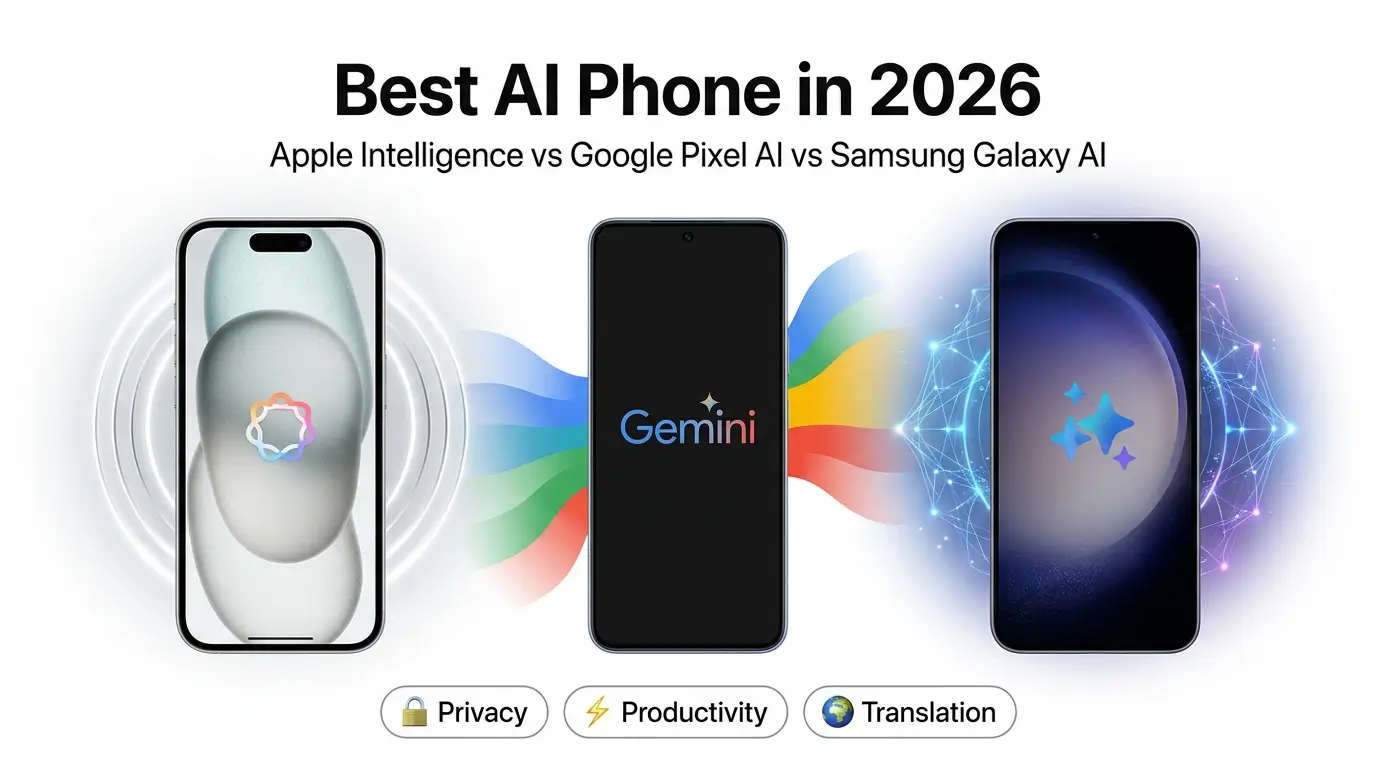
Galaxy AI vs. Apple Intelligence is becoming one of the biggest topics of discussion in the smartphone industry. A few years ago, most people compared phones based on camera quality, battery life, and performance. Today, artificial intelligence has become another major factor influencing buying decisions.
If you’re planning to upgrade your smartphone, you have probably seen Samsung promoting Galaxy AI and Apple highlighting Apple Intelligence. Both companies promise smarter experiences, better productivity, and more useful everyday features.
I’ve followed smartphone launches and AI features for several years, and one thing I’ve noticed is that most people rarely use every AI feature advertised by manufacturers. In practice, a few genuinely useful tools often matter more than dozens of features you’ll never open after the first week.
But after researching both ecosystems and following smartphone technology closely for years, I believe the real question isn’t which company has more AI features. The better question is:
Which AI ecosystem will actually improve your daily life?
In this article, I’ll compare Apple Intelligence and Galaxy AI from a practical user perspective rather than just looking at marketing claims.
Understanding the Two AI Ecosystems
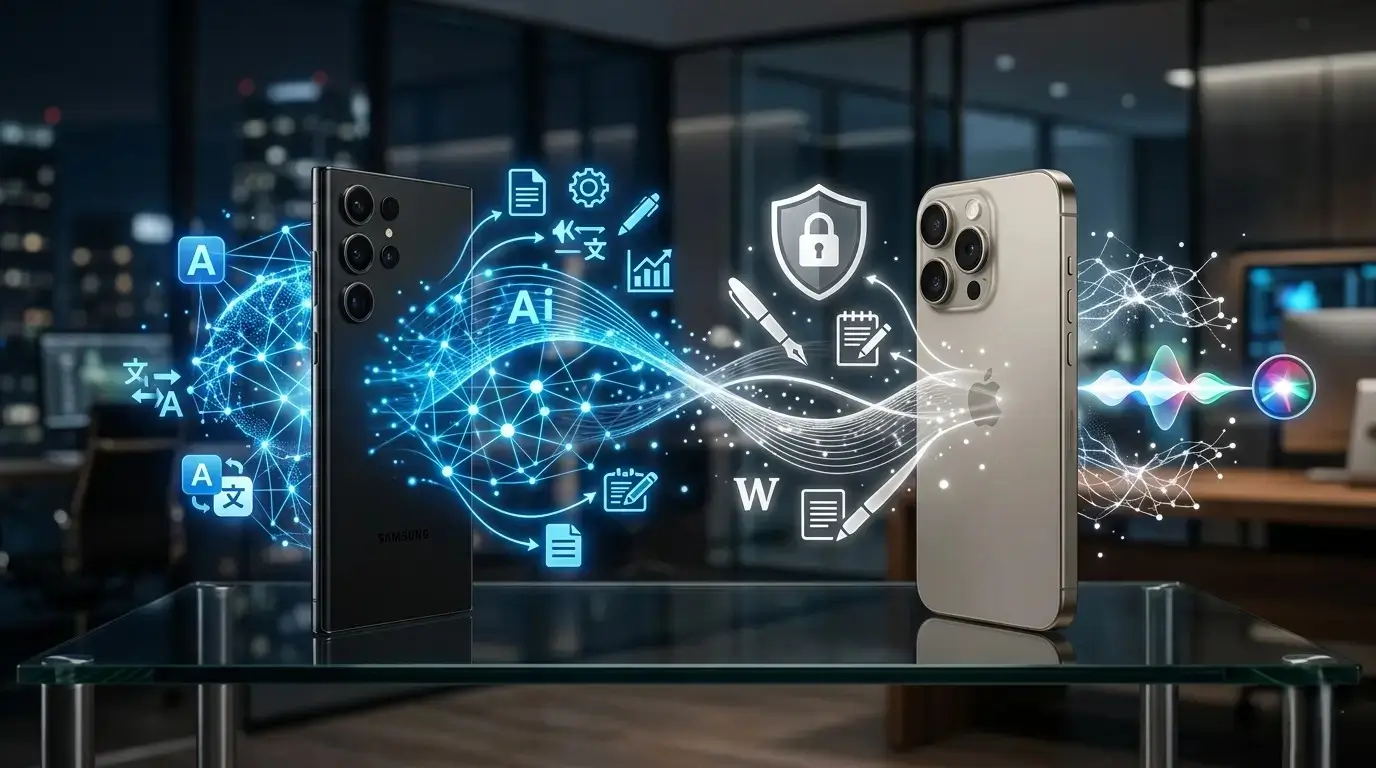
Both Apple and Samsung are investing heavily in artificial intelligence, but their approaches are quite different.
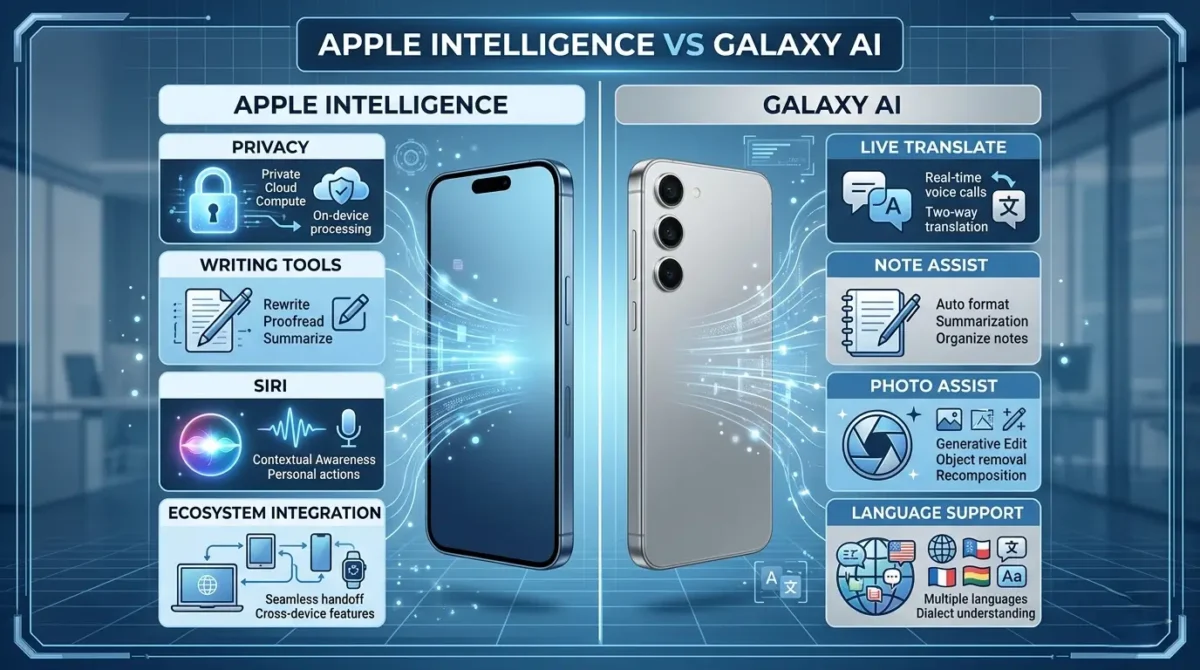
Apple Intelligence focuses on privacy, on-device processing, and deep integration across Apple’s ecosystem.
Galaxy AI focuses on offering a broader collection of AI-powered tools, language support, productivity features, and creative capabilities across a wider range of devices.
Neither approach is necessarily better for everyone. It depends on how you use your devices.
Apple Intelligence: A Privacy-First Approach
When I look at Apple Intelligence, the first thing that stands out is Apple’s focus on privacy.
Instead of sending everything to cloud servers, Apple tries to process as much information as possible directly on the device. For more advanced tasks, Apple uses Private Cloud Compute, which is designed to protect user data while still delivering powerful AI capabilities.
Some of the most useful Apple Intelligence features include:
- Writing Tools for rewriting, proofreading, and summarizing text
- Smart Reply suggestions
- Notification Summaries
- Priority Messages in Mail
- Live Translation
- Image Playground
- Genmoji
- Improved Siri experiences
What I personally like is that these features feel integrated into the operating system rather than existing as separate apps.
For users already invested in the Apple ecosystem, Apple Intelligence becomes even more valuable because it works across iPhone, iPad, and Mac devices.
What Apple Does Well
- Strong privacy protections
- On-device AI processing
- Excellent ecosystem integration
- Useful productivity features
- Consistent user experience
Where Apple Still Has Room to Improve
- Limited support for older devices
- Some AI features are still rolling out gradually
- Fewer language options compared to Samsung
- Less flexibility for users who enjoy customization
Galaxy AI: More Features and More Flexibility
Samsung has taken a different path.
While Apple emphasizes simplicity and privacy, Samsung focuses on providing as many practical AI tools as possible.
Many Galaxy AI features are genuinely useful for communication, productivity, and content creation.
Popular Galaxy AI features include:
- Live Translate
- Interpreter Mode
- Note Assist
- Transcript Assist
- Photo Assist
- AI-powered image editing
- Call Assist
- Writing Assist
- Creative Studio tools
One thing that impressed me during my research is Samsung’s commitment to bringing Galaxy AI features to older devices. Not everyone upgrades every year, and Samsung’s broader device support makes AI accessible to more users.
Another major advantage is language support. Samsung currently offers broader multilingual capabilities across many AI features.
What Samsung Does Well
- Large collection of AI tools
- Excellent translation features
- Strong photo editing capabilities
- Wider device compatibility
- Better language support
Areas Where Samsung Could Improve
- Some features rely on cloud processing
- Feature availability can vary by region
- User experience can differ between devices
- Bixby still lacks the ecosystem integration Apple offers
Apple Intelligence Features vs Galaxy AI Features
When people compare Apple Intelligence features and Galaxy AI features, they often focus only on the number of available tools.
I don’t think that’s the best way to evaluate AI.
In everyday usage, the quality of implementation matters more than the length of a feature list.
Apple’s strengths lie in:
- Productivity
- Notifications
- Writing assistance
- Privacy
- Ecosystem integration
Samsung’s strengths lie in:
- Translation
- Communication
- Photo editing
- Language support
- Device availability
This is why choosing the best AI smartphone ecosystem depends heavily on your personal priorities.
Which Platform Is Better for Privacy?
If privacy is your highest priority, Apple currently has an advantage.
Apple Intelligence was designed around on-device processing from the start. Apple also provides more transparency regarding how information is handled when cloud processing is required.
Samsung has improved significantly in this area and provides privacy controls, but its approach remains more hybrid.
For most users, both platforms are likely secure enough. However, privacy-conscious users may feel more comfortable with Apple’s approach.
Which Platform Is Better for Everyday Productivity?
This is where the competition becomes much closer.
Apple Intelligence provides excellent writing assistance, email tools, and notification management.
Galaxy AI offers powerful note summarization, transcription features, translation capabilities, and communication tools.
If your work involves writing, email management, and productivity apps, Apple may have a slight advantage.
If your work involves communication across different languages or frequent content creation, Samsung may offer more practical benefits.
Explore AI Device Rankings and Comparisons
If you’re comparing the latest AI smartphones, I recommend checking our AI Phone Rankings to see how devices compare in AI capabilities and NPU performance.
You can also browse our AI Device Rankings to explore smartphones, tablets, and AI PCs in one place.
For side-by-side comparisons, try our AI Device Comparison Tool to compare AI platforms, chipset information, and local AI capabilities.
My Personal Verdict
After comparing both ecosystems, I don’t think there is a universal winner.
If you already use an iPhone, Mac, or iPad, Apple Intelligence is the obvious choice. The ecosystem integration and privacy-first approach are genuinely impressive.
However, if you want access to more AI tools, broader language support, and a wider selection of compatible devices, Galaxy AI currently offers more flexibility.
Personally, I think Apple Intelligence feels more polished, while Galaxy AI feels more ambitious.
The good news is that consumers benefit regardless of which platform they choose because competition is pushing both companies to improve rapidly.
Final Thoughts
The battle between Galaxy AI and Apple Intelligence is only getting started.
Artificial intelligence is becoming a core part of modern devices, and future updates will likely bring even more powerful capabilities.
For now, my advice is simple:
Don’t choose a phone based solely on marketing claims or the number of AI features.
Choose the ecosystem that fits how you actually use technology every day.
In the long run, that decision will matter far more than any individual AI feature.