Category: AI Hardware

AI Hardware encompasses processors, NPUs, GPUs, memory, and specialized accelerators that power modern AI workloads. Explore AI chips, performance metrics, hardware architecture, and the technology behind on-device AI.

How Android and iOS Schedule AI Tasks (CPU, GPU, and NPU Explained)

When you use features like AI photo enhancement, live translation, voice assistants, or object recognition, your smartphone must decide where those AI tasks should run. Some workloads are better suited for the CPU, others for the GPU, while modern devices…

Why Edge AI Chips Use Integer Arithmetic

What Is Integer Arithmetic in Edge AI Chips?How Edge AI Chips Use Integer Arithmetic in AI ProcessingSimple IdeaHow it worksExample:What happens during processing?Architecture of Edge AI Chips Using Integer ArithmeticPerformance Benefits When Edge AI Chips Use Integer ArithmeticReal-World ApplicationsLimitations of…

Sparse vs Dense AI Models: Which Is Better for On-Device AI?

Quick SummaryWhat Are Dense and Sparse AI ModelsSparse vs Dense AI Models: Key DifferencesSparse vs Dense AI Models in Modern AI SystemsPerformance vs Efficiency Trade-offsWhat Is Mixture-of-Experts (MoE)?Power & Thermal BehaviorMemory & Bandwidth HandlingSoftware Ecosystem & ToolingReal-World DeploymentWhat This Means…

Neuromorphic vs Traditional AI Chips: The Future of Wearable AI

Traditional vs Neuromorphic AI Chips: What They DoArchitectural Differences Between Neuromorphic and Traditional AI ChipsPerformance Comparison: Speed, Latency, and ThroughputPower Efficiency and Thermal BehaviorMemory Architecture and Bandwidth OptimizationSoftware Ecosystem and Development ChallengesReal-World Applications and DeploymentWhich Design Is More EfficientKey Takeaways…

AI Model Loading Time on Devices: Hidden Bottleneck Explained

What Is AI Model Loading Time on Devices?How AI Model Loading Time on Devices WorksAI Model Loading Time on Devices Architecture ExplainedPerformance Characteristics of AI Model Loading Time on DevicesReal-World Applications of AI Model Loading Time on DevicesLimitations of AI…

TinyML vs Large AI Models: What Works Best for Edge Devices

What Each Architecture DoesTinyML vs Large AI Models: Architectural DifferencesPerformance Comparison: Critical Runtime DifferencesPower and Thermal Differences Between TinyML and Large AI ModelsTinyML vs Large AI Models: Memory and Bandwidth RequirementsSoftware Ecosystem & ToolingTinyML vs Large AI Models: Real-World DeploymentWhich…

Edge TPU vs Mobile NPU: How AI Accelerators Differ on Devices

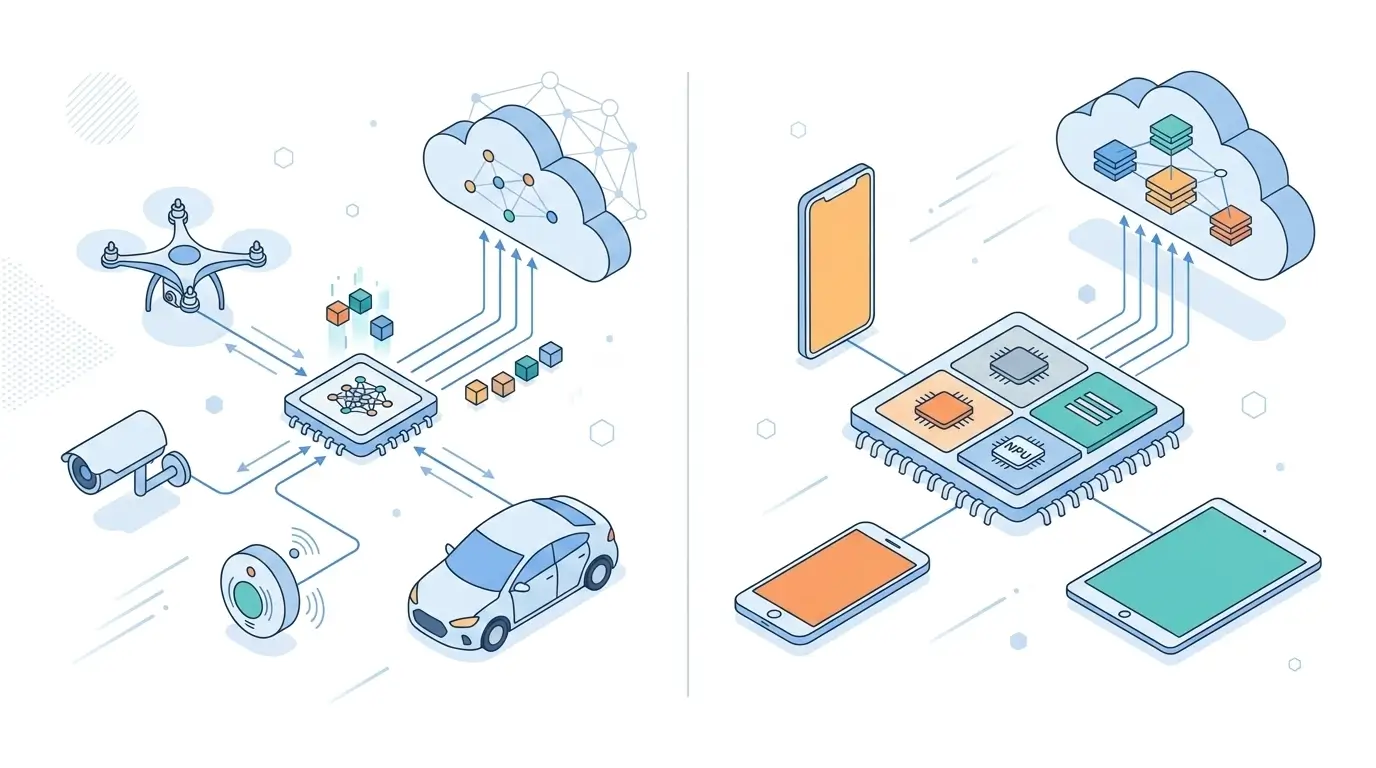
Edge TPU vs Mobile NPU: What Each Architecture Is Designed ForEdge TPU vs Mobile NPU Architecture ComparisonEdge TPU vs Mobile NPU Architecture ComparisonPower Efficiency and Thermal Constraints in Edge TPU vs Mobile NPUMemory & Bandwidth HandlingSoftware Ecosystem & ToolingReal-World Edge…

Dedicated Neural Engine vs Shared Accelerator Designs

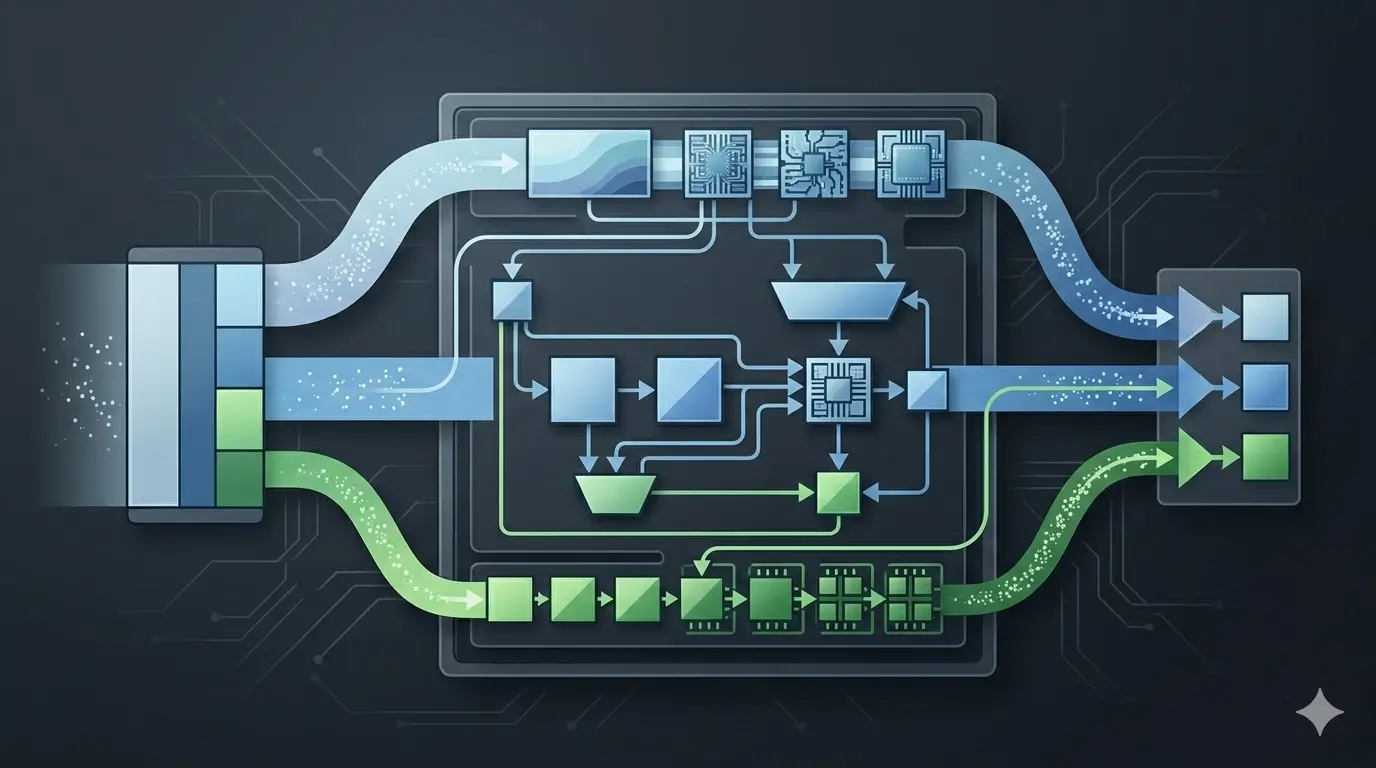
Dedicated Neural Engine vs Shared Accelerators: Architecture Comparison for AI ChipsDedicated Neural Engine vs Shared Accelerators: Core ArchitecturePerformance ComparisonPower & Thermal BehaviorMemory & Bandwidth HandlingSoftware Ecosystem & ToolingReal-World DeploymentWhich Design Is More EfficientKey Takeaways Dedicated Neural Engine vs Shared Accelerators…

Edge AI vs Hybrid AI vs Cloud AI: Architecture Comparison

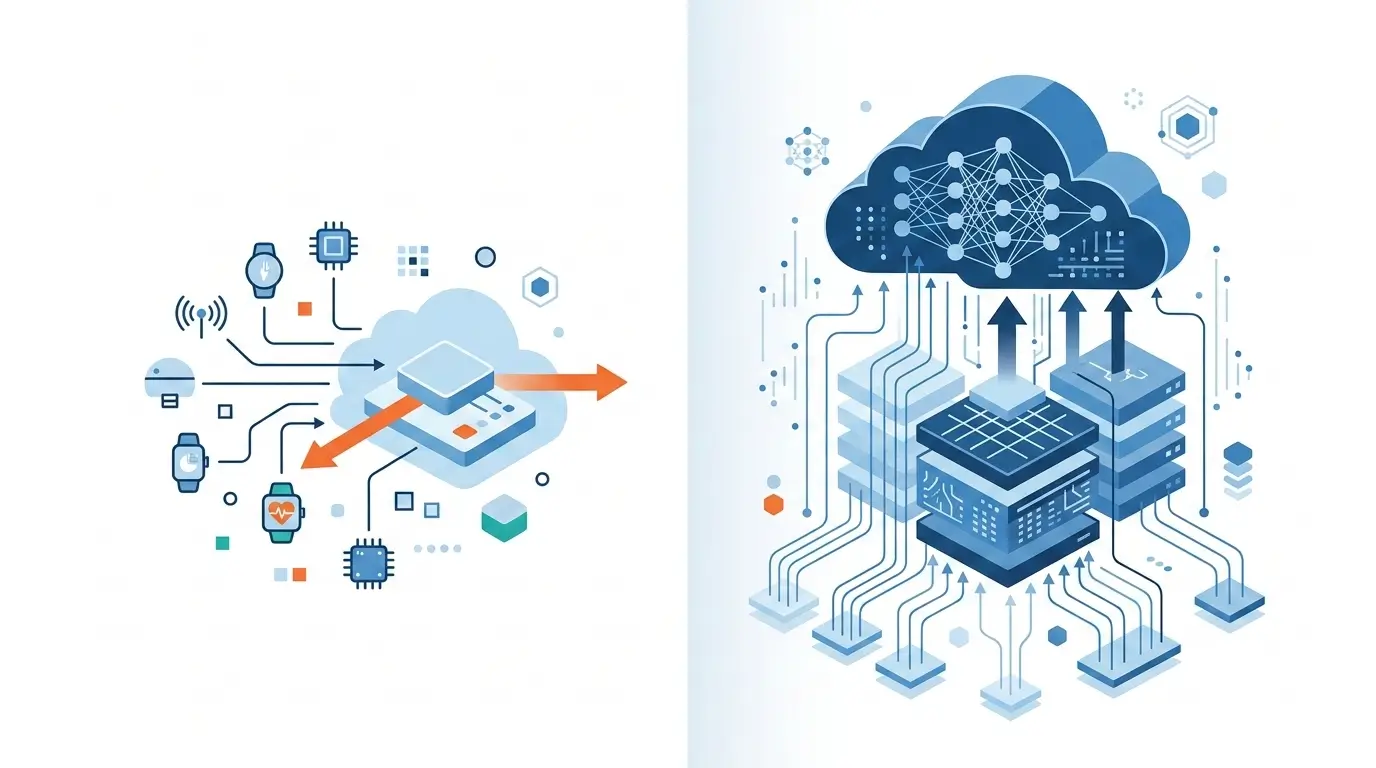
What It IsHow It WorksArchitecture OverviewArchitectural ComparisonPerformance CharacteristicsPower Efficiency and Performance BottlenecksReal-World ApplicationsLimitationsWhy It MattersKey Takeaways Edge AI vs Hybrid AI vs Cloud AI describes three different ways artificial intelligence workloads are deployed. Edge AI runs inference directly on local…

Sustained AI Performance vs Peak TOPS: What Benchmarks Hide

Understanding Peak TOPS and Sustained AI PerformanceWhy Peak TOPS and Sustained AI Performance DivergeAI Accelerator Architecture Behind Peak and Sustained PerformancePeak vs Sustained Performance Across AI HardwareReal-World AI Workloads and Sustained PerformanceEngineering Limits Behind the Peak vs Sustained GapWhy Sustained…

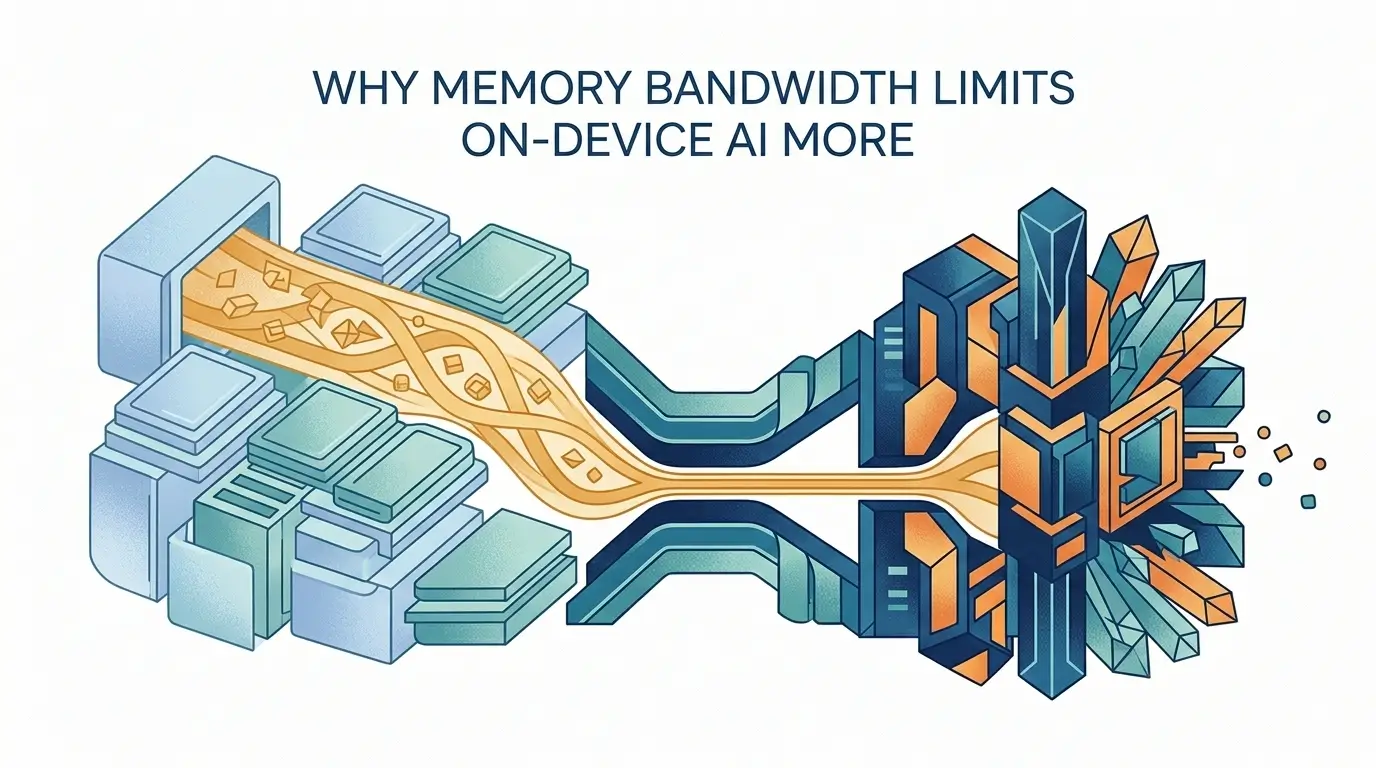
Why Memory Bandwidth Limits On-Device AI More Than Compute Power

What Is Memory Bandwidth in On-Device AI HardwareHow Memory Bandwidth Bottlenecks AI InferenceOn-Device AI Architecture and Memory Bandwidth ConstraintsPerformance Characteristics: Why Memory Bandwidth Limits On-Device AIReal-World On-Device AI Workloads Affected by Memory LimitsKey Limitations of Memory Bandwidth in Mobile AI…

INT8 vs FP16 vs INT4: Which Precision Is Best for Edge Devices?

INT8, FP16, and INT4 are different ways devices balance performance, power efficiency, and accuracy. FP16 offers higher accuracy but uses more power. INT8 provides the best balance between efficiency and performance, making it widely used in smartphones and laptops. INT4…