Buying a new smartphone in 2026 isn’t as straightforward as it used to be. A few years ago, most people compared phones based on the camera, battery life, display quality, or processor. While those things are still important, there’s now another feature grabbing everyone’s attention—Artificial Intelligence (AI).
Almost every smartphone brand is promoting AI in some way. Apple talks about Apple Intelligence, Samsung highlights Galaxy AI, Google continues to expand Gemini, and brands like Xiaomi, HONOR, and OnePlus are adding their own AI-powered features.
But here’s the big question: Do these AI features actually make your phone better, or are they just another marketing trend?
The answer isn’t as simple as yes or no.
Some AI tools can genuinely save you time and make everyday tasks easier. Others are interesting to try once but rarely become part of your daily routine. That’s why it’s important to understand what an AI phone really offers before spending extra money on one. What Makes an AI Phone Actually Useful in 2026? Here’s What Really Matters Before You Buy
Smartphone companies have found a new buzzword in 2026: AI.
Whether you’re looking at the latest iPhone, Samsung Galaxy, Google Pixel, or even phones from Xiaomi, HONOR, and OnePlus, almost every new device is being promoted as an AI phone. Product launch events are filled with demonstrations of AI writing emails, translating conversations, editing photos, and even answering questions like a personal assistant.
It all sounds impressive. But if you’re planning to spend ₹50,000, ₹80,000, or even more on your next smartphone, one question matters more than anything else:
Will these AI features actually make your life easier?
The answer depends on which AI features you’re getting.
Some AI tools genuinely save time every day. Others are little more than flashy demonstrations that you’ll probably use once and forget about. That’s why choosing the right AI phone isn’t about counting how many AI features it offers. It’s about understanding which features you’ll actually use.
In this guide, we’ll explain what an AI phone really is, which AI features are worth paying for, which ones are mostly marketing, and what you should look for before buying your next smartphone.
Quick Summary
If you’re short on time, here’s the quick version:
- AI is becoming a standard feature on premium smartphones, but not every AI tool is useful.
- Writing assistance, live translation, voice summaries, and AI photo editing offer the biggest everyday benefits.
- On-device AI is generally faster, more private, and often works even without an internet connection.
- A long list of AI features doesn’t automatically make a phone better.
- Battery life, software updates, camera quality, and overall performance still matter more than AI gimmicks.
Why Is Every Smartphone Suddenly Talking About AI?
A few years ago, smartphone brands competed by offering better cameras, brighter displays, faster processors, and longer battery life.
Those upgrades still matter today, but AI has become the latest area of competition.
Apple has introduced Apple Intelligence.
Samsung continues to expand Galaxy AI.
Google is building more AI features around Gemini.
Meanwhile, brands like Xiaomi, HONOR, and OnePlus are also bringing AI-powered tools to their latest smartphones.
It might feel like AI appeared overnight, but that’s not really the case.
Your smartphone has been using AI for years.
Features like Face Unlock, portrait photography, spam call detection, predictive typing, and adaptive battery management all rely on machine learning.
What’s changed in 2026 is that smartphones are now powerful enough to run much smarter AI models directly on the device. Instead of only improving photos or predicting your next word, phones can now understand language, summarize information, translate conversations, and assist with everyday tasks.
That’s the biggest difference.
AI is moving from the background to the center of the smartphone experience.
What Exactly Is an AI Phone?
Despite all the marketing, the idea is actually simple.
An AI phone is a smartphone that uses artificial intelligence to help you complete everyday tasks faster and more efficiently.
Instead of opening multiple apps or doing everything manually, AI helps simplify common activities.
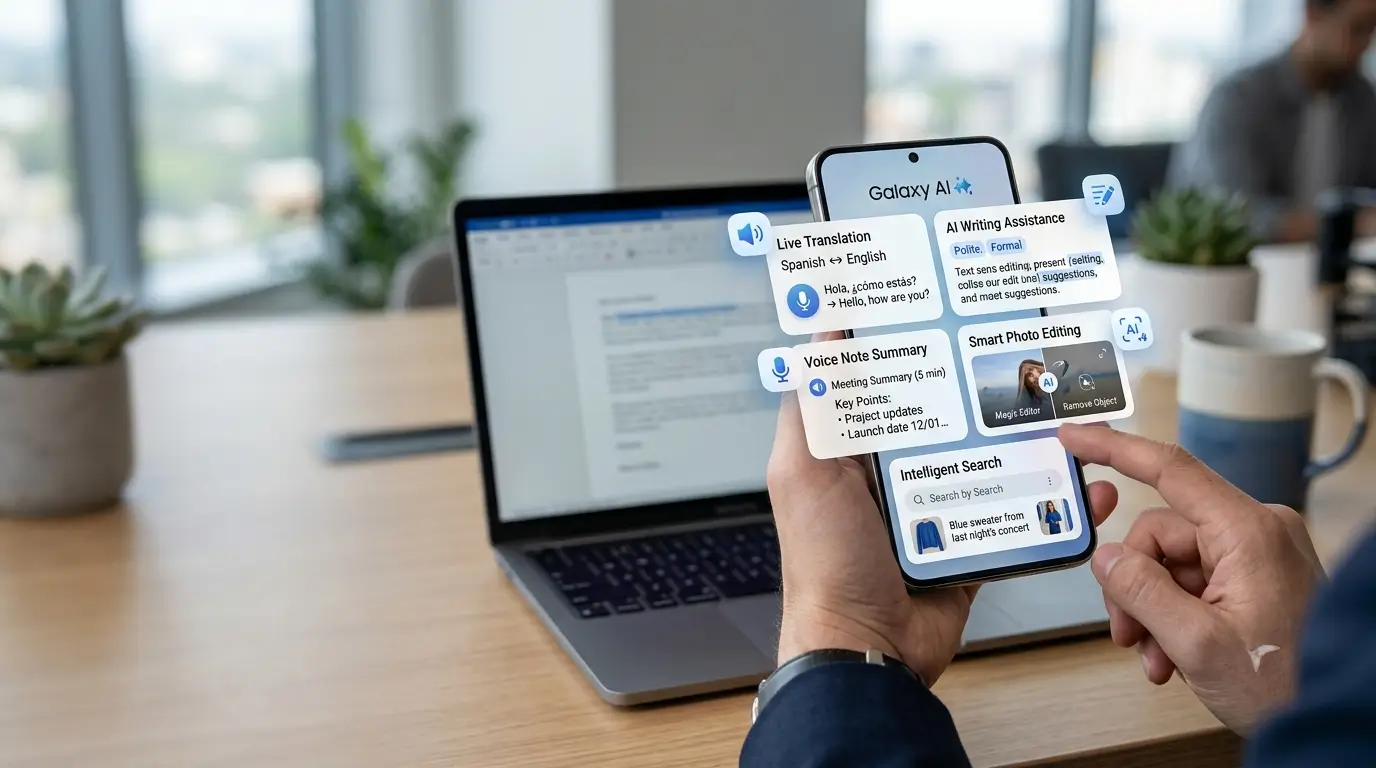
For example, your phone can:
- Rewrite an email before you send it.
- Summarize a long meeting recording.
- Translate a conversation in real time.
- Remove unwanted objects from photos.
- Search thousands of pictures using natural language.
- Organize notes automatically.
The goal isn’t to replace you.
It’s simply to save time by reducing repetitive work.
AI Phone vs Traditional Smartphone
| Feature | AI Phone | Traditional Smartphone |
|---|---|---|
| Writing Assistance | ✅ Yes | ❌ Limited |
| Live Translation | ✅ Built-in | ⚠️ Usually requires separate apps |
| Voice Note Summaries | ✅ Available | ❌ Not supported |
| Smart Photo Editing | ✅ AI-powered | Basic editing only |
| Natural Language Search | ✅ Yes | Keyword search only |
As you can see, AI phones aren’t completely different devices. They simply add smarter tools that make everyday tasks easier.
What Makes an AI Phone Worth Buying?
Every smartphone company claims its AI is the smartest.
But instead of asking which phone has the most AI features, ask yourself three simple questions.
1. Does it save me time?
The best AI removes repetitive work.
Imagine finishing an email in half the time because AI helped improve your writing.
Or removing a stranger from your holiday photo with one tap instead of spending ten minutes editing it manually.
Small improvements like these quickly add up.
2. Does it protect my privacy?
Some AI features process information directly on your phone.
Others send your requests to cloud servers before generating results.
Generally speaking, on-device AI offers better privacy because your information stays on your phone whenever possible.
It’s also faster for many everyday tasks.
3. Will I actually use it?
This is probably the most important question.
Some AI features sound exciting during product launches, but rarely become part of daily life.
Others quietly save time almost every day.
The most useful AI is often the AI you barely notice because it simply makes everyday tasks easier.
AI Features You’ll Actually Use Every Day
Many smartphone companies love showing futuristic AI demonstrations.
In reality, the features most people use are usually much simpler.
Let’s look at the ones that genuinely improve daily life.
Live Translation
Travelling becomes much easier when your phone can instantly translate conversations, menus, signs, and messages.
Instead of switching between different apps, everything happens automatically on one screen.
It’s useful for holidays, business trips, or even talking with friends who speak another language.
AI Writing Assistant
Almost everyone writes something on their phone every day.
Emails.
WhatsApp messages.
Notes.
Social media posts.
AI writing tools can help by:
- Fixing grammar mistakes
- Rewriting awkward sentences
- Changing the tone of your message
- Summarizing long text
- Expanding short notes into complete paragraphs
Rather than replacing your writing, AI simply acts like an editor that helps you communicate more clearly.
Voice Notes and Meeting Summaries
Recording meetings and lectures isn’t new.
What’s changed is what happens afterwards.
Instead of replaying a 40-minute recording, AI can automatically convert speech into text, identify important points, and create a summary within seconds.
For students, journalists, business professionals, and content creators, this is one of the most valuable AI features available today.
AI Photo Editing
AI isn’t just improving smartphone cameras anymore.
It’s making photo editing much easier, too.
Many AI phones can now:
- Remove unwanted people from the background
- Erase distracting objects
- Improve blurry pictures
- Brighten dark photos
- Organize thousands of images automatically
These tools save time while producing surprisingly natural results.
Most Useful AI Features
| AI Feature | Daily Usefulness | Worth Paying For? |
|---|---|---|
| Live Translation | ⭐⭐⭐⭐⭐ | ✅ Yes |
| AI Writing Assistant | ⭐⭐⭐⭐⭐ | ✅ Yes |
| Voice Note Summaries | ⭐⭐⭐⭐⭐ | ✅ Yes |
| Smart Search | ⭐⭐⭐⭐☆ | ✅ Yes |
| AI Photo Editing | ⭐⭐⭐⭐☆ | ✅ Yes |
| AI Wallpapers | ⭐⭐☆☆☆ | ❌ Not really |
Looking at the table, one thing becomes clear.
The AI features that provide the most value aren’t necessarily the flashiest ones. They’re the tools that quietly help you save time during everyday tasks without changing how you already use your phone.
On-Device AI vs Cloud AI: What’s the Difference?
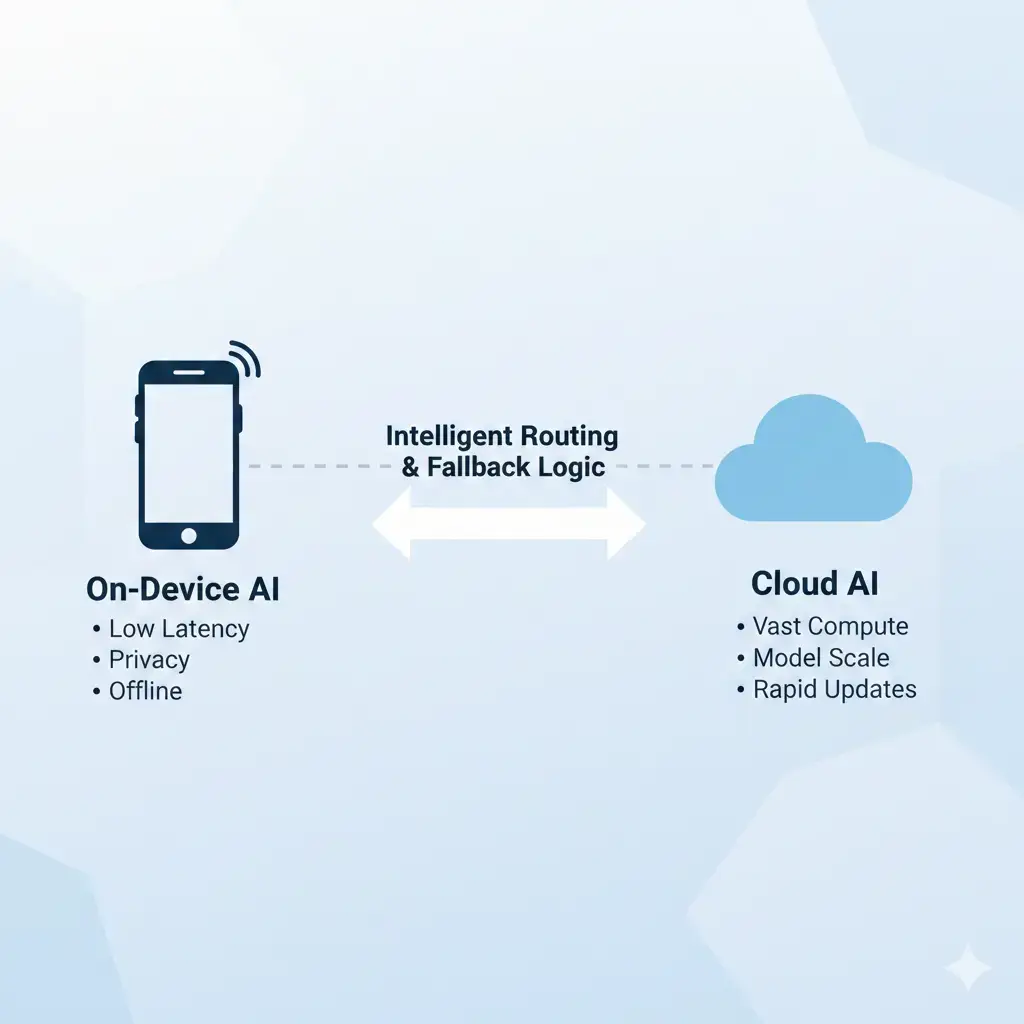
If you’ve been researching AI phones, you’ve probably come across two common terms: on-device AI and cloud AI. While they sound technical, the idea is actually quite simple.
On-device AI means your phone processes AI tasks using its own hardware. The information stays on your device, making the experience faster and more private. Many on-device features can also work without an internet connection.
Cloud AI, on the other hand, sends your request to powerful servers on the internet. Those servers process the task and send the result back to your phone. This allows more advanced AI features, but it usually requires an internet connection and may take a little longer.
Most modern AI phones use a combination of both. Simple tasks like writing suggestions, photo editing, or language translation often run on the phone itself, while more demanding tasks rely on cloud computing.
On-Device AI vs Cloud AI
| Feature | On-Device AI | Cloud AI |
|---|---|---|
| Speed | Faster | Depends on the internet speed |
| Privacy | Better | Data is processed on remote servers |
| Internet Required | Usually No | Yes |
| Best For | Writing, translation, photo editing | Complex AI requests, image generation |
| Battery Impact | Efficient for everyday tasks | Depends on network and workload |
For most users, the best experience comes from phones that intelligently switch between both methods depending on the task.
Does AI Drain Your Battery?
One of the biggest concerns about AI phones is battery life.
The good news is that occasional AI tasks don’t have a major impact on battery performance.
Modern smartphone processors include dedicated AI hardware that handles these tasks much more efficiently than older chips.
You’ll still use more battery while gaming, recording 4K videos, or streaming content than you will by asking AI to summarize a document or improve a photo.
The biggest battery impact usually comes from cloud-based AI tasks because they require both internet connectivity and additional processing.
Why Hardware Still Matters
Software often gets all the attention, but the hardware inside your phone plays an equally important role.
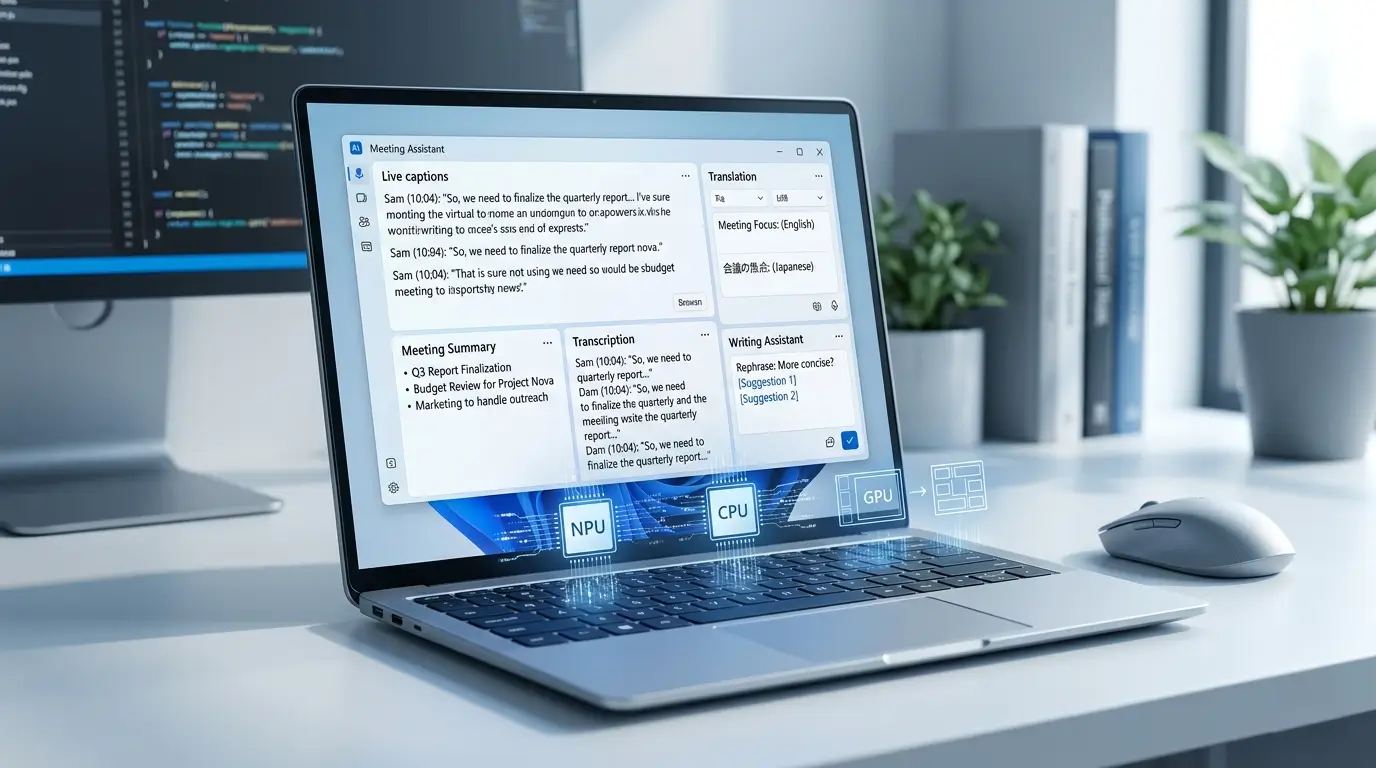
Modern smartphones use three main processors:
- CPU for everyday tasks and apps
- GPU for graphics and gaming
- NPU (Neural Processing Unit) for AI features
The NPU is designed specifically to handle AI tasks quickly while using less power.
However, don’t get too focused on technical numbers or marketing claims.
A well-optimized phone with good software support often delivers a better AI experience than a phone with impressive specifications but poor optimization.
In everyday use, you’ll notice smooth performance far more than benchmark scores.
AI Features That Are Mostly Marketing
Not every AI feature deserves the same attention.
Some tools genuinely make life easier, while others are mainly designed to impress during launch events.
Examples of AI features that many people rarely use include:
- AI-generated wallpapers
- AI stickers and emojis
- Cartoon avatars
- Celebrity voice effects
- Social media filters
These features are entertaining for a few days, but they usually don’t become part of your daily routine.
Instead, focus on AI tools that solve real problems, such as writing assistance, voice summaries, smart search, and photo editing.
Those are the features you’ll continue using long after the excitement of buying a new phone has worn off.
Quick Buying Checklist
Before you spend money on an AI phone, ask yourself these questions.
✅ Will I actually use these AI features every week?
✅ Are the features available in my country and language?
✅ Does the phone process important AI tasks on the device for better privacy?
✅ Will the phone receive software updates for several years?
✅ Does it still offer excellent battery life, camera quality, and overall performance?
If the answer is “yes” to most of these questions, an AI phone could be a worthwhile upgrade.
Which AI Features Offer the Most Value?
| AI Feature | Daily Value | Should You Care? |
|---|---|---|
| Writing Assistant | ⭐⭐⭐⭐⭐ | Absolutely |
| Live Translation | ⭐⭐⭐⭐⭐ | Absolutely |
| Voice Note Summaries | ⭐⭐⭐⭐⭐ | Absolutely |
| AI Photo Editing | ⭐⭐⭐⭐☆ | Yes |
| Smart Search | ⭐⭐⭐⭐☆ | Yes |
| AI Wallpapers | ⭐⭐☆☆☆ | Not really |
The pattern is clear. The most useful AI features are the ones that save you time every day, not the ones that simply look impressive during a product launch.
Buying Advice
If you’re shopping for a new smartphone in 2026, don’t choose one simply because it advertises the most AI features.
Instead, focus on the complete experience.
A great smartphone should still offer:
- Good battery life
- Reliable cameras
- Fast performance
- Long software support
- Useful AI features that match your daily needs
AI should be viewed as an extra benefit, not the only reason to upgrade.
Is an AI Phone Worth Buying?
For many people, yes.
If you regularly write emails, attend online meetings, travel, edit photos, or work with documents, AI can make those tasks quicker and easier.
However, if you mainly use your phone for social media, messaging, and watching videos, AI alone probably isn’t worth paying a large premium.
Think of AI as something that improves your existing smartphone experience rather than completely changing it.
Frequently Asked Questions
What is an AI phone?
An AI phone is a smartphone that uses artificial intelligence to improve everyday tasks such as writing, translation, photography, voice recording, and searching for information.
Do AI phones work without the internet?
Many AI features can work offline if they run directly on the device. More advanced AI tools usually require an internet connection.
Does AI drain battery life?
Not significantly during normal use. Heavy gaming, video recording, and streaming still consume much more battery than occasional AI tasks.
Is on-device AI better than cloud AI?
For privacy and speed, yes. However, cloud AI is still useful for more demanding tasks that require larger AI models.
Are AI phones more secure?
Phones that process more AI tasks locally generally provide better privacy because less personal information needs to be sent to external servers.
Should I buy a phone just for AI?
No. AI should be one factor in your decision, alongside battery life, camera quality, software updates, display quality, and overall performance.
Which AI feature is the most useful?
Writing assistance, live translation, voice note summaries, smart search, and AI-powered photo editing are the features most people are likely to use regularly.
Will budget phones also get AI features?
Yes. Many AI features are gradually making their way to mid-range and budget smartphones, although premium devices usually receive the latest capabilities first.
The Bottom Line
Artificial Intelligence is becoming an important part of modern smartphones, but it’s important to separate useful features from marketing hype.
The best AI phone isn’t the one with the longest list of AI tools. It’s the one that helps you complete everyday tasks faster without making your phone more complicated.
When choosing your next smartphone, look beyond the buzzwords. Focus on features you’ll actually use, such as writing assistance, live translation, voice summaries, smart search, and photo editing.
At the same time, don’t forget the basics. A reliable camera, long battery life, smooth performance, and years of software updates will have a much bigger impact on your daily experience than a handful of flashy AI tricks.
In the end, the smartest phone isn’t the one that talks the most about AI. It’s the one that quietly makes your life easier every single day.