Local AI gadgets are becoming one of the most important trends in consumer technology. Unlike traditional cloud-based AI services, these devices process data directly on the hardware, helping improve privacy, reduce latency, and enable offline functionality.
Advances in Neural Processing Units (NPUs), edge AI chips, and optimized machine learning models are making it possible for fitness trackers, earbuds, smart glasses, and health devices to perform AI tasks without continuously sending personal data to remote servers.
This article explores how local AI gadgets work, their benefits and limitations, and the emerging devices that are bringing on-device intelligence to consumers.
Quick Facts About Local AI Gadgets
- What they do: Run AI directly on the device (no cloud required)
- Key hardware: Neural Processing Units (NPUs) / Edge AI chips
- Main benefit: Privacy-first AI with offline functionality
- Typical use cases: Fitness coaching, health monitoring, sleep tracking
- Power usage: Usually under 5W for wearable devices
- Model type: Quantized, lightweight AI models
- Biggest trade-off: Slightly lower accuracy vs large cloud AI systems
- Best for: Privacy-focused users and offline environments
Table of Contents
As artificial intelligence becomes more common in consumer devices, concerns about privacy, data security, and cloud dependence are also increasing. Many AI-powered products rely on cloud servers to process user data, which can introduce privacy risks and require a constant internet connection.
Local AI gadgets take a different approach. Instead of sending data to remote servers, these devices perform AI processing directly on the hardware using specialized components such as Neural Processing Units (NPUs) and edge AI accelerators.
This approach offers several advantages, including improved privacy, lower latency, faster responses, and offline functionality. As AI hardware continues to advance, local processing is becoming a practical option for fitness devices, smart earbuds, sleep trackers, wearables, and other consumer technologies.
In this guide, we explore how local AI gadgets work, their benefits and limitations, and several emerging devices that showcase the growing shift toward on-device intelligence.
The Promise of On-Device Intelligence: Reclaiming Your Digital Autonomy

This privacy-first design is part of a much larger shift from cloud-dependent AI toward on-device intelligence, a transition we explored in detail in our guide on how on-device AI compares to cloud AI in modern gadgets. The shift away from constant cloud reliance is driven by several growing digital concerns. Data breaches have become frequent enough that many users now expect them. Every single incident seems to chip away a little more at our trust, exposing our personal vulnerabilities in ways that make you just wanna sigh. Whether it’s sensitive health information, your financial records, or just the mundane habits that make up your day, the inherent risk of centralizing vast, vast troves of personal data has become undeniable. It’s like putting all your eggs in one massive, internet-connected basket. This architecture also aligns with global privacy frameworks that encourage minimizing data transfer and local processing, such as the principles outlined in modern data protection regulations.
Local AI directly tackles this critical vulnerability head-on. By doing all the heavy lifting, all the processing of information, entirely on the device itself, these gadgets drastically shrink the “attack surface” for cyber threats. Think about it: there’s just less data whizzing across potentially insecure networks and way less stuff stashed on remote servers that can be targeted by bad actors.The concept is simple, but the implications are significant.
This particular architectural choice also aligns perfectly with evolving privacy regulations – you know, the big ones, like Europe’s GDPR – which place a huge premium on user data protection and local processing wherever it’s feasible. The sheer peace of mind that comes with knowing your most personal insights, your deepest digital secrets, stay solely within your control is, I’d argue, a powerful, powerful draw for a lot of people. It’s not just about compliance; it’s about feeling secure.
Beyond just security, the benefits extend into pure practicality and performance. Seriously, imagine a fitness tracker that provides instantaneous form correction, giving you feedback in real-time, not hampered by network lag because it’s waiting for data to bounce off a server somewhere. Or what about a health monitor that keeps chugging along flawlessly even when you’re completely off-grid, miles from the nearest Wi-Fi signal or cell tower? That reliability fundamentally changes how these devices are used.
Local AI enables truly offline functionality, making devices way more reliable companions regardless of your connectivity status.
That distinction matters. This immediacy translates into snappier responses and, frankly, a much more fluid user experience, because the computation is happening mere milliseconds away, right in your hand or on your body, not thousands of miles away in a data center. It’s about empowering the device to be genuinely smart, to be intelligent and useful, without needing a constant digital umbilical cord tethering it to the internet. This approach enables devices to provide intelligent features while reducing reliance on continuous cloud connectivity.
How Local AI Works: Edge Chips and Lightweight AI Models

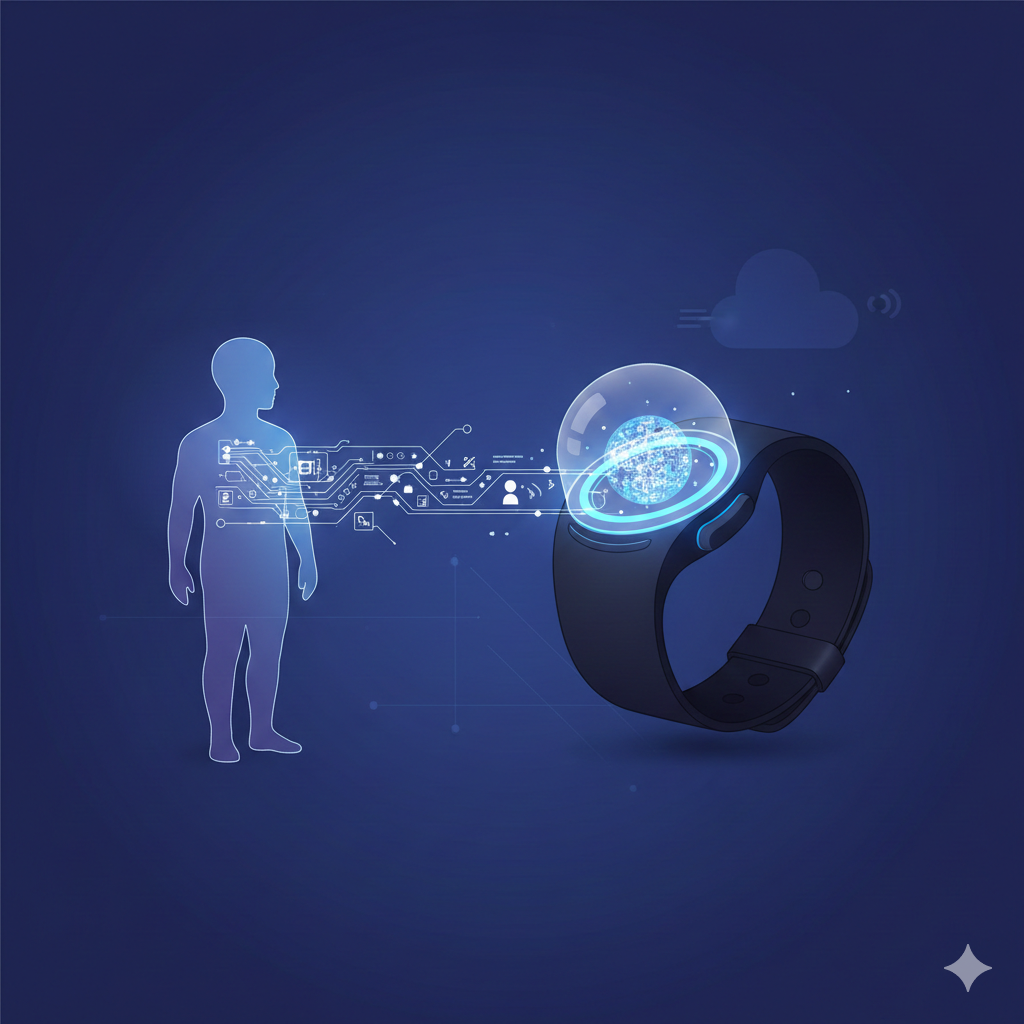
Local AI gadgets processing data directly on-device without cloud
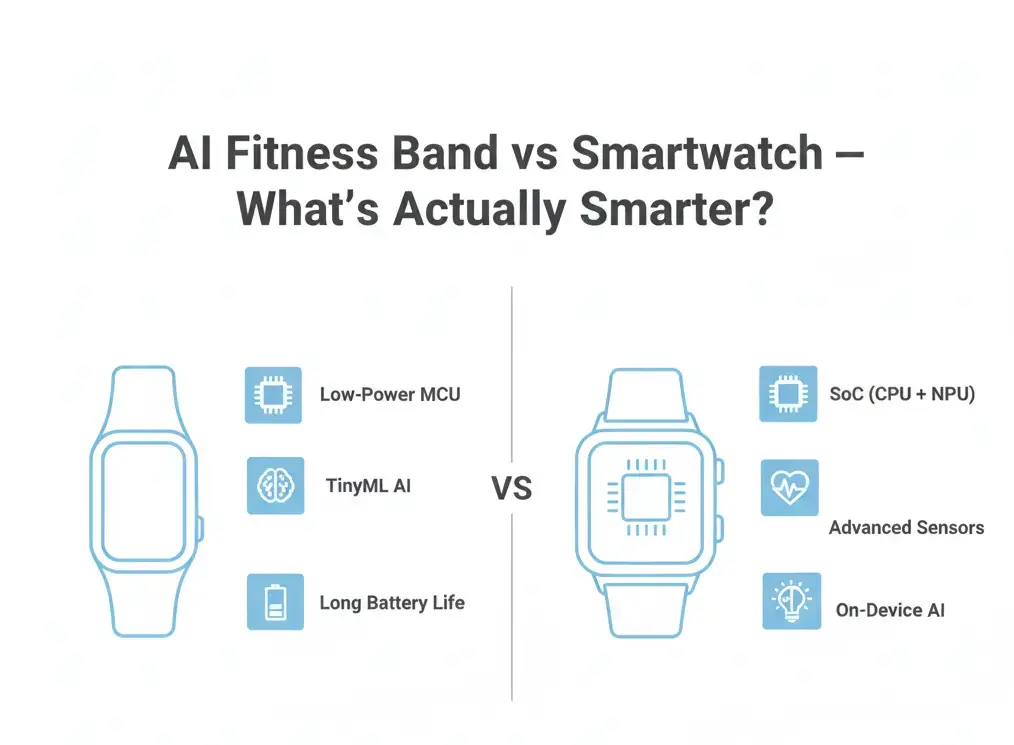
So how does this actually work? It comes down to specialized hardware and software designed to run AI directly on the device. At the very heart of these local AI gadgets are things called Neural Processing Units (NPUs) and advanced edge chips. Now, unlike your computer’s traditional CPU, which is kind of a generalist, good at everything but not super specialized in one thing, NPUs are purpose-built accelerators. They’re designed specifically for the parallel computations that are inherent to machine learning tasks. This means they can process vast amounts of data quickly and efficiently, making real-time AI inference on a tiny, portable device a very tangible reality. It functions as a dedicated processor optimized for AI inference. Modern edge AI relies on dedicated neural processing hardware similar to the mobile AI architectures described by major chip manufacturers. Techniques like model quantization allow neural networks to run efficiently on limited hardware, a method widely used in mobile AI frameworks.
These chips aren’t just powerful for their size; they’re also remarkably power-efficient. Many wearable and portable devices are designed to balance AI performance with battery efficiency through specialized hardware and optimized software. You don’t want your smart watch dying halfway through the day just because it’s doing some clever AI stuff. This efficiency is further bolstered by the software side of things: we’re talking about quantized AI models.
Quantization reduces model size and computational load while preserving most practical accuracy. A quantized model is kinda like a highly optimized, slightly compressed version of that same photo. These models are specifically engineered to run efficiently on edge hardware, often by reducing the precision of the numerical representations they use – basically, making the data a bit “lighter” – without significantly compromising accuracy. It’s a clever trick that allows big ideas to fit into small spaces.
While a massive cloud-based AI model might have billions of parameters and require immense computational power (and an equally immense electricity bill), quantized models are streamlined. They often operate within a constrained memory footprint, typically leveraging a modest RAM right there on the device itself. This potent combination of dedicated hardware and optimized software lets these gadgets pull off some pretty complex AI tasks – stuff like voice recognition, object detection, or biometric analysis – directly on the device, keeping your data local and, most importantly, secure. This is the technical trade-off behind local AI. From an engineering standpoint, this is what makes local AI viable.
Featured Local AI Gadgets for 2026
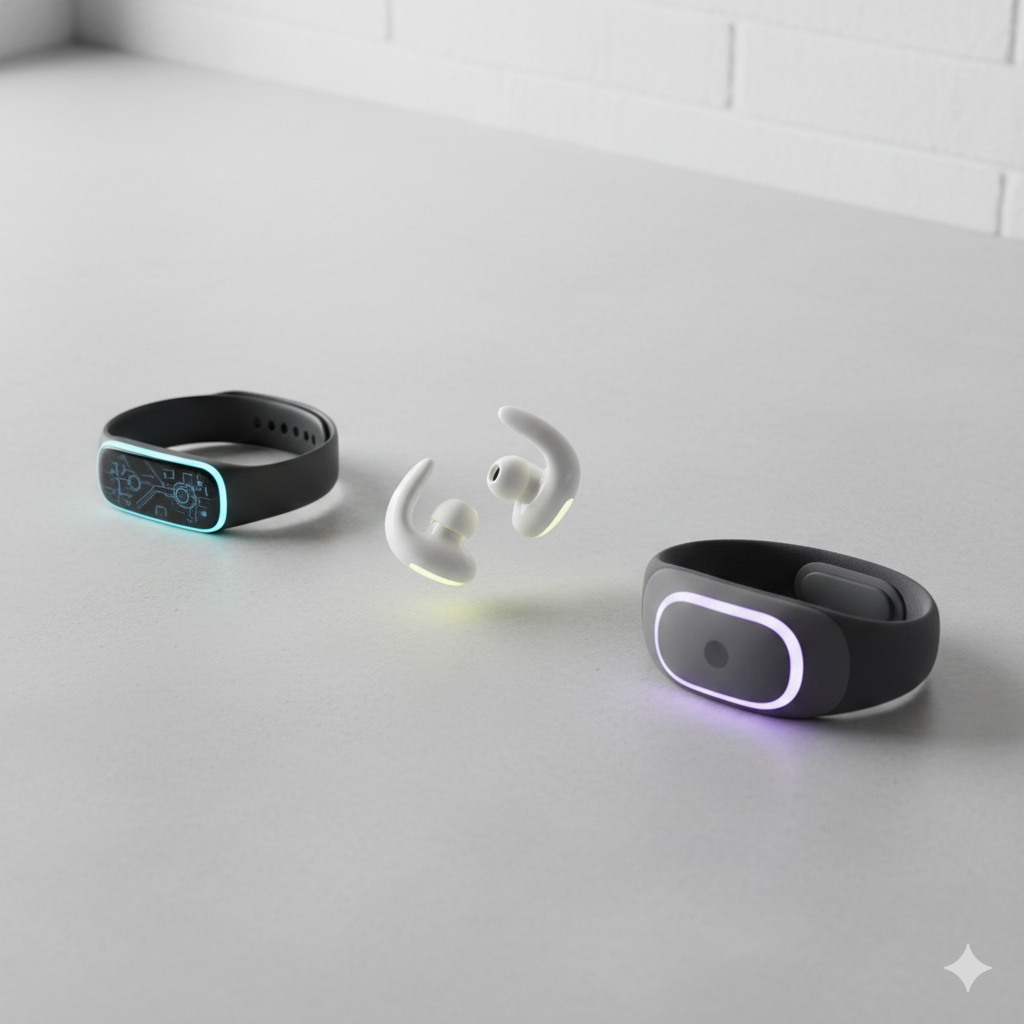
Local AI is moving beyond smartphones and laptops into wearables, health devices, smart audio products, and other consumer electronics. As AI hardware becomes more efficient, more tasks that previously required cloud processing can now be performed directly on the device.
However, local AI is not expected to replace cloud AI entirely. Many future products will likely use hybrid approaches that combine on-device processing for privacy-sensitive tasks with cloud services for more complex workloads.
For consumers, the key benefit is greater control over personal data, faster response times, and improved offline functionality. As AI hardware continues to evolve, local processing is expected to become a standard feature across many categories of consumer technology.
Featured Local AI Gadgets for 2026
The following devices are included as examples of products that publicly promote on-device or local AI capabilities. Product specifications, availability, and features are based on information available from company announcements, official product pages, crowdfunding campaigns, or manufacturer materials at the time of writing. As some products are still emerging, specifications and availability may change.
BodyPark ATOM: Your Personal Fitness Coach
Imagine a fitness companion that truly understands every single nuance of your movement – every subtle adjustment, every tiny wobble – without ever needing to upload a single video clip or data point to some external server. That, my friends, is the core promise of the Humai BodyPark ATOM. Devices like this represent a growing category of AI-powered wearables, similar to the practical AI devices we covered in our breakdown of AI wearables transforming daily routines. Positioned as a dedicated AI fitness tracker, this device is specifically designed to provide extensive, deep-dive local analysis of your workouts.
According to information published by BodyPark, the ATOM is designed as an AI-powered fitness companion focused on workout analysis, movement tracking, and personalized fitness guidance. As the product is still in its early commercialization stage, real-world performance and final capabilities should be evaluated based on future product releases and independent testing.
This level of truly personalized coaching, which traditionally would’ve needed a human trainer or, at the very least, some seriously heavy cloud-connected systems, now happens entirely on the device itself. Furthermore, its motion recognition capabilities are pretty robust, extending to identifying specific exercises and movements, tailoring its feedback and tracking accordingly. For privacy-conscious athletes, who isn’t privacy-conscious these days when it comes to their body data? – This could be a genuine game-changer, allowing highly personalized training without that nagging fear of your biometric data being exposed.
Now, it’s important to kinda frame expectations around its current status. The Humai BodyPark ATOM’s journey to market is rooted in Kickstarter, which, by its very nature, always involves a degree of speculation. While its developers are projecting a retail price somewhere around 200–300 and anticipate shipping in 2026, these figures and timelines are, as with so many early-stage projects, totally subject to the inherent complexities of product development, manufacturing, and, well, just getting things done. The final product’s actual capabilities and its widespread availability will definitely become clearer as it transitions from crowdfunding excitement to the reality of mass production. Execution will matter more than promises.
TOZO Open X2 Pro: Smart Health Monitoring in Your Ears
The earbuds many of us wear daily are steadily evolving into far, far more than just systems for audio delivery. The TOZO Open X2 Pro represents a pretty significant leap forward, transforming what used to be a familiar, simple accessory into a discreet, on-device health monitoring hub. This device integrates advanced local AI for a whole range of health and audio-related tasks, all tucked away right there in your ears. This kind of private biometric analysis is also becoming common in modern wearables, including smartwatches that use AI to interpret health signals — something we explored in our guide on how AI makes smartwatches smarter.
Its primary innovation, from what I can gather, lies in its on-device health tracking. While the specific metrics it’ll track are still kinda emerging, the implication is that these earbuds might collect and analyze biometric data from within the ear canal itself, with the explicit goal of keeping all that sensitive information entirely local.
This could encompass anything from heart rate variability to activity levels, or even early stress indicators, with all the processing staying private. Crucially, the Open X2 Pro also leverages local AI for its audio capabilities. This includes seriously advanced noise cancellation, where the AI model intelligently processes ambient sounds on the fly to create a quieter listening experience. And here’s where it gets really interesting: potentially biometric analysis through acoustic signals. This could mean detecting unusual cough patterns or even analyzing vocal biomarkers, with, you guessed it, all that processing staying private. If implemented well, this would set a higher privacy bar for hearable devices.
The real question for a device like this, though, is the actual depth and accuracy of its “health tracking.” How good will its local AI model be at differentiating between background noise and crucial biological signal when it’s trying to perform biometric analysis? How frequently can it update its internal models to improve accuracy without relying on cloud-based retraining, which kinda defeats the purpose? And crucially, what will be the mechanisms for us, the users, to easily interpret and act on this highly personalized, yet locally stored, health data? Will it be clear? Will it be actionable? These are the areas where practical implementation, and not just cool tech, will be absolutely key to its success. Much will depend on transparency around data handling and model limitations.
DreamPilot: Advanced Sleep Analysis on Your Head
Sleep. It’s one of the most vital, yet often overlooked, aspects of our health, and monitoring it has traditionally involved either super rudimentary trackers or seriously complex, cloud-connected systems. The DreamPilot sleep headband aims to totally disrupt this by offering a deeply personal, on-device approach to understanding your nocturnal cycles. It’s not just tracking; it’s analyzing.
This innovative headband integrates sophisticated EEG sensors directly against your scalp. These sensors collect actual brainwave data, which, for anyone serious about sleep, is the most direct and accurate measure of sleep activity you can get. The device then leverages on-device brainwave analysis to detect and differentiate between all the various sleep stages: light sleep, deep sleep, and REM. It’s not just guessing; it’s reading your brain.
Unlike devices that simply send raw, often unintelligible, data to the cloud for heavy computation, the DreamPilot processes these intricate biological signals internally. The goal? To generate insights into your sleep quality, duration, and patterns without ever transmitting your precious brain activity data off-device. This level of privacy for such incredibly sensitive personal health data is, honestly, a pretty compelling proposition. Brainwave data is among the most sensitive categories of personal information.
As with many cutting-edge devices, the DreamPilot’s projected availability and pricing warrant cautious observation. Current developer expectations place its cost at over $300 in 2026. This premium pricing definitely suggests a focus on advanced technology and probably a niche market for serious sleep enthusiasts or those with really acute privacy concerns. As an emerging product category, adoption may initially be limited to users seeking advanced sleep analytics and privacy-focused health monitoring.
The long-term accuracy of its local EEG analysis, especially when compared to medical-grade polysomnography (which is the gold standard, by the way), will be a critical factor in its wider adoption. Furthermore, that nagging question of model updates – how the device learns and refines its understanding of sleep patterns over time without cloud connectivity for continuous improvement – remains an important consideration for its sustained efficacy. Can it get smarter over time without phone-home? That’s what we need to know.
At a Glance: Local AI Gadgets in 2026
To provide a clearer picture of this emerging category, here’s a brief overview of the three featured local AI devices:
| Feature/Device | Humai BodyPark ATOM | TOZO Open X2 Pro | DreamPilot Sleep Headband |
|---|---|---|---|
| Primary Function | AI Fitness Companion | Smart Audio & Health Monitoring | Advanced Sleep Analysis |
| Local AI Task | Rep-tracking, Form Correction, Motion Recognition | Health Biometrics, Noise Cancellation, Audio Processing | EEG Brainwave Analysis, Sleep Stage Detection |
| Data Processed On-Device | Movement data, Pose estimation | Biometric signals (e.g., heart rate), Acoustic data | Brainwave patterns (EEG) |
| Estimated Price | ~200–300 | Not specified in research | >$300 |
| Availability Notes | Projected 2026 shipping (Kickstarter-based) | New product, Expected 2026 retail | Projected 2026 availability |
Understanding the Trade-offs and Future Outlook
While local AI gadgets clearly offer some significant advantages, especially when it comes to privacy and truly offline functionality, it’s pretty crucial to acknowledge their current limitations. Look, the technological landscape is always moving, and while on-device intelligence is advancing at a crazy pace, it still faces certain constraints when stacked up against its beefy, cloud-powered counterparts. There are clear limits to what on-device AI can handle today.
What Local AI Can and Cannot Do (Yet)
One of the primary concerns, to be totally honest, still revolves around accuracy. Cloud-based AI models, with their access to immense computational resources and truly vast, continually updated datasets, can often achieve superior performance. Early observations suggest that these on-device models might, in some really complex tasks, lag behind cloud accuracy by a margin . That difference, while potentially narrowing as the tech gets better, could be noticeable in scenarios demanding pinpoint precision – think medical diagnoses versus a general health overview.
Furthermore, the sheer scale of cloud models allows for incredible versatility. Local AI models, often pretty constrained by a device’s memory and processing power, are typically limited to under a few billion parameters. This means they might struggle big time to achieve the multimodal depth you see in super-advanced cloud-based AI systems like GPT-4o, which can seamlessly integrate and interpret text, images, and audio all at once. For highly complex, truly open-ended tasks that need a broad contextual understanding, local AI still has quite a bit of ground to cover. These new gadgets are really designed for specific, focused AI tasks rather than trying to be some kind of generalized super-intelligence.
Power consumption also remains a delicate balancing act. While edge chips are certainly efficient, intense, continuous AI processing can still, no surprise, impact battery life. Speculative projections suggest that Running AI workloads locally can affect battery life depending on the device, workload, and hardware efficiency. That’s a pretty tangible trade-off users will definitely need to weigh against the benefits of local processing. Battery life remains a practical constraint, particularly for wearables.
Finally, a practical concern, and one I think about a lot, for lost or stolen devices is the potential lack of remote data wipe capabilities. If sensitive data resides entirely and only on the device, its loss could pose a pretty unique security challenge without cloud-based remote management. How do you wipe something you can’t connect to? However, this is a design choice that could definitely vary by manufacturer as the market matures; I’m betting some smart people are already working on local encryption and secure self-destruct mechanisms, but it’s not a given right now.
The Competitive Landscape and Emerging Trends
The emergence of dedicated local AI hardware isn’t happening in a vacuum. It’s part of a much broader industry reorientation. Products like the Rabbit R1 and the Humane AI Pin represent more ambitious, even general-purpose, attempts at local AI-centric hardware. They’re trying to distill core smartphone functionality into simpler, more intuitive interfaces. These devices, while still kinda finding their feet and facing their own set of challenges and mixed reviews, definitely underscore the market’s growing appetite for intelligent hardware that prioritizes direct user interaction over complex app ecosystems. It shows people want this.
Beyond these dedicated, often purpose-built gadgets, local AI is also getting integrated into existing product categories. Smart glasses, like the Ray-Ban Meta ones, are already leveraging edge vision capabilities to perform real-time image analysis and provide contextual information without needing a constant cloud connection. Similarly, NAS (Network Attached Storage) devices, for example, the EAGET Minis, are starting to incorporate local AI for tasks like intelligent file organization and media management, keeping your data right there on your home network where it belongs.
The most significant signal of this trend, however, comes from those tantalizing, speculative reports regarding industry giants. The potential for Major technology companies is increasingly integrating more on-device AI capabilities into smartphones, laptops, and wearable devices. This broader industry trend suggests that local AI processing will continue to play a larger role in future consumer products, which really validates this privacy-first approach. If a company with Apple’s market influence embraces local AI as a core differentiator, it could rapidly accelerate mainstream adoption and truly push the entire industry towards robust on-device processing as a standard feature, not just a niche selling point. That’s when things get really interesting.
Looking forward, there’s gonna be an increasing demand for more transparent information. As these devices mature, users will absolutely need verified NPU benchmarks to truly understand real-world performance capabilities. We’ll also need long-term accuracy testing to compare them head-to-head against evolving cloud AI solutions – which, let’s face it, aren’t standing still either. Crucially, as some devices start to explore hybrid AI models (where some tasks are local, but others might get offloaded to the cloud under specific, pre-defined conditions), vendor transparency regarding these fallback mechanisms will be paramount. Users deserve to know precisely when and why their data might leave their device, even if it’s just temporarily. Clear disclosure of when data remains on-device and when cloud services are used will be important for maintaining user trust.
The Future of Local AI Gadgets
None of this is free. The shift towards local AI gadgets in 2026 marks a pretty significant inflection point in our whole relationship with technology. It’s a direct response to years of digital drift, an honest acknowledgement that convenience really shouldn’t have to come at the expense of our privacy. While these early devices present a compelling vision for what’s possible, they also highlight the ongoing challenge of balancing seriously advanced capabilities with the inherent limitations of purely on-device processing. This balance between privacy and capability will define the next generation of consumer devices.
From empowering fitness enthusiasts with private, immediate feedback to offering discreet, secure health monitoring and profound insights into our sleep cycles, these gadgets are seriously redefining what’s possible when intelligence resides right at the edge. They aren’t just mere technological novelties; they are, I’d argue, foundational steps towards a more secure, more autonomous, and ultimately, a much more personal digital future.
As the industry moves forward, it’s gonna be fascinating to watch how these devices evolve, how their local AI models learn and adapt without constant cloud supervision, and how manufacturers navigate that delicate balance between privacy, raw performance, and overall accessibility. Will local AI fundamentally alter our expectations for all future gadgets, turning privacy from a niche concern into a default expectation? Whether that expectation becomes standard will depend on how these early products perform.
What Buyers Should Look For in Local AI Gadgets
When evaluating local AI devices, buyers should consider more than just AI marketing claims.
Dedicated AI Hardware
Look for devices that include dedicated AI processors such as NPUs, AI accelerators, or specialized edge AI chips. These components are designed to run AI workloads efficiently while minimizing power consumption.
Privacy and Data Handling
Check whether AI processing occurs entirely on-device or whether some data is transmitted to cloud services. Privacy policies should clearly explain how user data is collected, stored, and processed.
Offline Functionality
One of the main advantages of local AI is the ability to operate without a constant internet connection. Devices that continue providing core AI features offline often deliver a better user experience.
Software Support
AI features improve over time through software updates. Buyers should consider whether manufacturers provide long-term software support and transparency regarding AI feature updates.
Battery Life
Local AI processing can improve responsiveness, but it also consumes power. Understanding the balance between AI capabilities and battery life is important when comparing products.
Frequently Asked Questions
What is a local AI gadget?
A local AI gadget processes artificial intelligence tasks directly on the device instead of sending data to cloud servers, improving privacy and reducing latency.
Are local AI devices more secure than cloud AI?
They reduce exposure because personal data stays on the device, but security still depends on hardware encryption and device protection.
Do local AI gadgets work without the internet?
Yes. Many local AI devices can perform their core AI functions without an internet connection because data processing occurs directly on the device rather than in the cloud. However, some products may still require internet access for updates, synchronization, or advanced cloud-based features.
Why isn’t all AI local yet?
Cloud AI still offers higher processing power and larger models. Local AI trades some accuracy for privacy and speed.
Will smartphones also use local AI?
Yes. Major chip makers are already integrating stronger NPUs, and future phones are expected to run more AI tasks on-device.