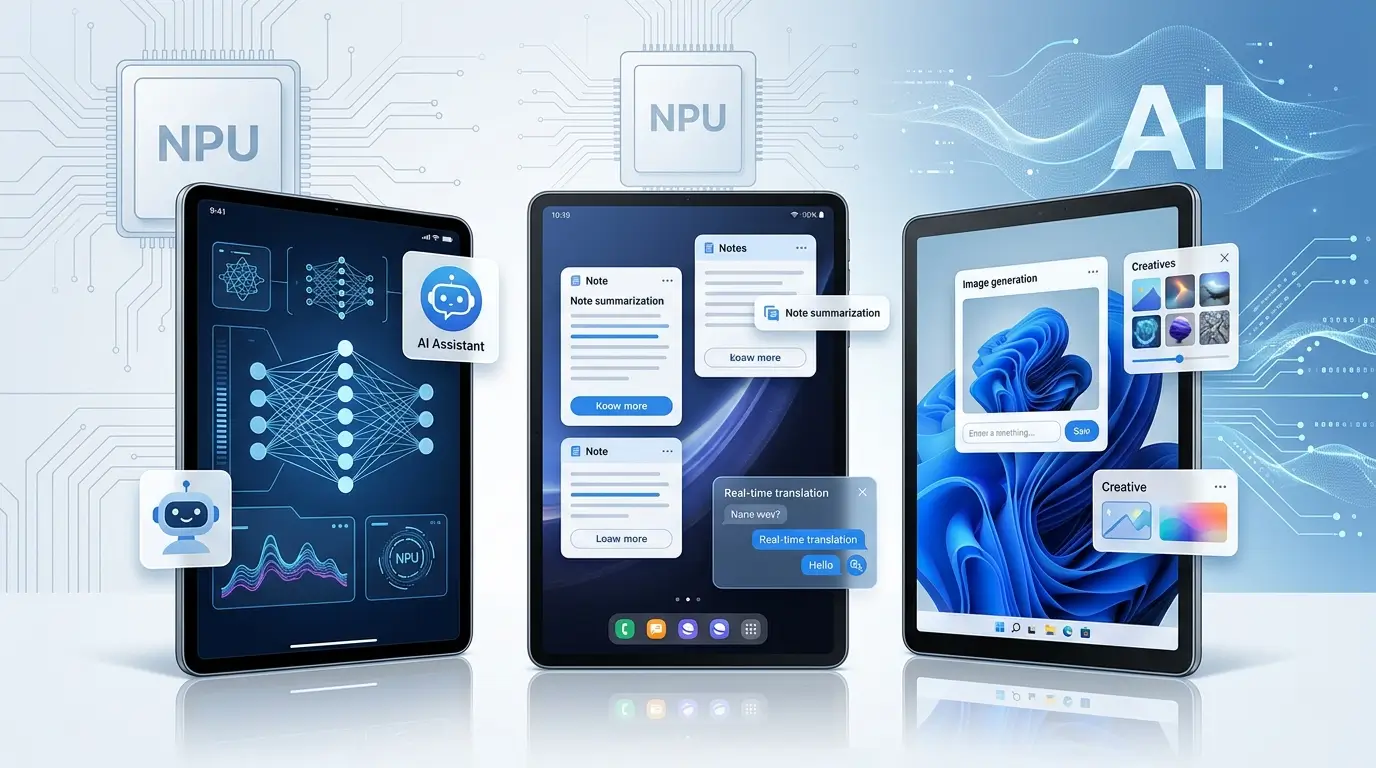
The best AI tablets in 2026 are no longer defined solely by display quality or processor speed. Modern tablets increasingly rely on dedicated Neural Processing Units (NPUs) to power AI features such as note summarization, image generation, translation, and intelligent assistants.
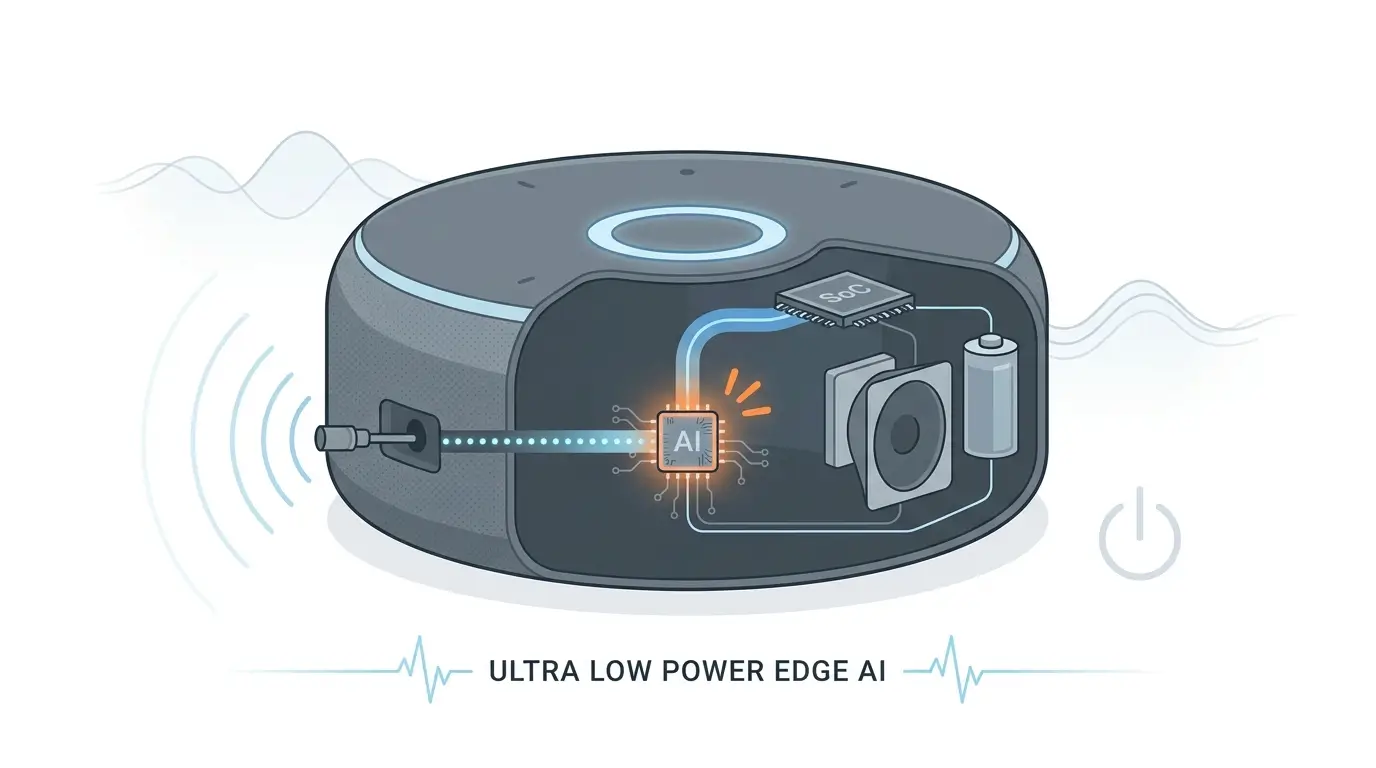
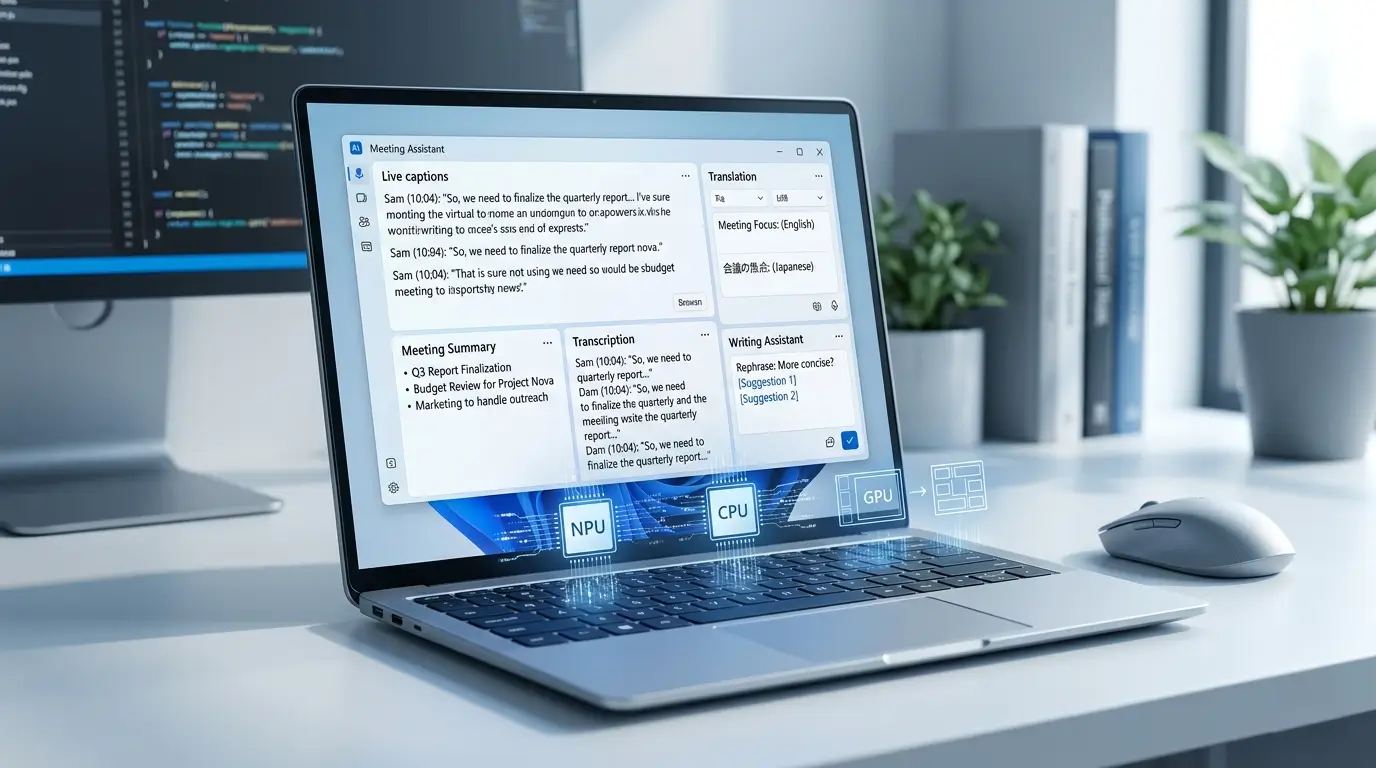
Unlike traditional CPUs and GPUs, NPUs are designed specifically for AI workloads. They can accelerate speech recognition, image processing, transcription, summarization, and other machine learning tasks while consuming less power. As a result, AI capabilities are becoming a major factor when choosing a premium tablet.
However, comparing AI tablets is not as simple as looking at TOPS (Trillions of Operations Per Second) ratings. Software optimization, memory capacity, AI features, and ecosystem support often have a greater impact on real-world performance than raw specifications alone.
This guide ranks the best AI tablets available in 2026 based on overall AI capability, software ecosystem, memory configuration, efficiency, and practical AI features. Rather than focusing solely on marketing claims, we evaluate how well these devices deliver useful on-device AI experiences for students, professionals, creators, and everyday users.
Quick Summary
| Rank | Tablet | Best For | Where to Buy |
|---|---|---|---|
| #1 | Samsung Galaxy Tab S10 Ultra | AI note-taking and productivity | Check on Amazon |
| #2 | Apple iPad Pro 13-inch (M4) | Premium AI and creative workflows | Check on Flipkart |
| #3 | Apple iPad Pro 11-inch (M4) | Portable AI productivity | Check on Flipkart |
| #4 | Samsung Galaxy Tab S10+ | Balanced AI tablet experience | Check on Amazon |
| #5 | Samsung Galaxy Tab S11 Ultra | Latest Galaxy AI features | Check on Flipkart |
| #6 | Apple iPad Air 13-inch (M3) | Value-focused AI workflows | Check on Amazon |
| #7 | Apple iPad Air 11-inch (M3) | Students and everyday users | Check on Amazon |
| #8 | Lenovo Yoga Pad | Budget AI tablet option | Check on Amazon |
| #9 | Samsung Galaxy Tab S9 Ultra | Large-screen productivity | Check on Flipkart |
| #10 | Other AI-capable premium tablets | Niche requirements | Check on Amazon |
What Makes a Tablet Good for AI?
Several factors determine how capable a tablet is for artificial intelligence workloads.
NPU Performance
The Neural Processing Unit is the dedicated AI accelerator inside a device. It handles tasks such as voice recognition, image enhancement, language translation, and AI assistants more efficiently than a traditional processor.
Higher NPU performance generally enables faster AI processing and improved battery efficiency during sustained workloads.
Memory Capacity
Modern AI models require significant memory resources. Tablets with 16GB or more RAM can handle larger AI models, better multitasking, and more demanding workflows than devices limited to 8GB.
Memory Bandwidth
AI workloads frequently move large amounts of data between memory and processing units. Faster memory subsystems can improve responsiveness, particularly when working with generative AI applications.
AI Software Ecosystem
Hardware is only part of the equation. The software ecosystem determines how useful AI features are in practice.
Examples include:
- Apple Intelligence on iPadOS
- Galaxy AI on Samsung tablets
- AI-powered productivity tools on Windows-based tablets, including Microsoft Copilot+
Strong software integration often matters more than raw AI performance numbers. For example, Apple’s tight hardware-software integration allows Apple Intelligence features to feel highly responsive, while Samsung combines Galaxy AI with productivity-focused tools such as Note Assist, Transcript Assist, and Circle to Search.
Similarly, Windows-based AI devices increasingly rely on Copilot+ experiences and dedicated NPUs to accelerate local AI workloads. Understanding the differences between Apple’s Neural Engine, Qualcomm’s Hexagon NPU, and MediaTek’s AI processors can help explain why AI experiences vary across devices.
Real-World AI Features
The best AI tablets support practical workloads such as:
- AI note-taking
- Voice transcription
- Real-time translation
- AI-powered photo editing
- Image generation
- Document summarization
- AI productivity assistants
For most users, these real-world capabilities matter far more than benchmark numbers.
Top 10 AI Tablets in 2026
1. Samsung Galaxy Tab S10 Ultra
The Samsung Galaxy Tab S10 Ultra is one of the most capable AI tablets available today. Powered by the MediaTek Dimensity 9300+ platform and Samsung’s Galaxy AI ecosystem, it combines a large 14.6-inch AMOLED display with advanced AI productivity features.
Key AI features include Note Assist for automatic note summarization, Transcript Assist for meeting recordings, Sketch to Image for AI-generated artwork, Circle to Search, and real-time translation tools. The included S Pen makes it particularly attractive for students and professionals who rely on handwritten notes.
Best for: Students, professionals, and users who prioritize AI note-taking.
Strengths
- Excellent AI note-taking tools
- Large AMOLED display
- Included S Pen
- Strong Galaxy AI ecosystem
Limitations
- Some AI features rely on cloud services
- Large size may not suit all users
2. Apple iPad Pro 13-inch (M4)
Apple’s iPad Pro 13-inch combines the M4 chip, a 16-core Neural Engine, and Apple Intelligence features into a highly polished AI experience.
Apple Intelligence supports writing assistance, image generation, photo editing, and enhanced Siri functionality. Combined with Apple’s optimized hardware and software integration, the iPad Pro delivers a smooth AI experience while maintaining strong battery life.
Best for: Creators, professionals, and Apple ecosystem users.
Strengths
- Powerful Neural Engine
- Apple Intelligence integration
- Excellent OLED display
- Strong privacy protections
Limitations
- Premium pricing
- iPadOS still has desktop software limitations
3. Apple iPad Pro 11-inch (M4)
The 11-inch version delivers the same AI capabilities as the larger model in a more portable form factor. It is ideal for users who want advanced AI features without carrying a larger tablet.
Best for: Mobile professionals and students.
Strengths
- Same AI capabilities as the 13-inch model
- Lightweight design
- Excellent battery life
Limitations
- Smaller display for multitasking
- Premium pricing
4. Samsung Galaxy Tab S10+
The Samsung Galaxy Tab S10+ offers many of the same Galaxy AI features found in the Ultra model while providing a more compact and portable design. Users still benefit from Note Assist, Transcript Assist, Circle to Search, AI-powered image editing, and Samsung DeX productivity tools.
Its 12.4-inch AMOLED display strikes a balance between portability and productivity, making it a strong option for users who want advanced AI features without carrying a larger tablet.
Best for: Students and professionals seeking portability.
Strengths
- Full Galaxy AI feature set
- Included S Pen
- More portable than the Ultra model
- Excellent display quality
Limitations
- Smaller screen for multitasking
- Some AI features rely on cloud processing
5. Samsung Galaxy Tab S11 Ultra
The Galaxy Tab S11 Ultra represents Samsung’s latest generation of AI-focused tablets. Building upon the Galaxy AI ecosystem, it introduces improved AI performance, enhanced productivity features, and deeper integration with Google’s Gemini AI services.
Its large AMOLED display and premium hardware make it suitable for users who want advanced AI capabilities alongside a tablet-focused workflow.
Best for: Power users and AI enthusiasts.
Strengths
- Latest Galaxy AI enhancements
- Large immersive display
- Strong multitasking capabilities
- Improved AI processing performance
Limitations
- Premium pricing
- Some AI features require internet connectivity
6. Apple iPad Air 13-inch (M3)
The iPad Air 13-inch brings Apple Intelligence features to a more affordable package. Powered by Apple’s M3 chip, it supports AI-powered writing tools, image generation, note enhancement, and intelligent photo editing.
Its larger display makes it attractive for productivity tasks, while its lower price compared to the iPad Pro lineup improves overall value.
Best for: Students, professionals, and Apple ecosystem users.
Strengths
- Apple Intelligence support
- Large display
- Strong performance for the price
- Excellent battery life
Limitations
- Less powerful than iPad Pro models
- Limited to iPadOS workflows
7. Apple iPad Air 11-inch (M3)
The 11-inch iPad Air delivers the same Apple Intelligence experience in a smaller and lighter package. It remains one of the most balanced AI tablets available for everyday users.
Whether used for note-taking, content consumption, productivity, or AI-powered writing assistance, it provides a well-rounded experience at a more accessible price point.
Best for: Students and general users.
Strengths
- Lightweight and portable
- Apple Intelligence features
- Good value
- Long battery life
Limitations
- Smaller display
- Less capable than Pro models for intensive workloads
8. Lenovo Yoga Pad
Lenovo’s Yoga Pad focuses on bringing AI-powered productivity features to a wider audience. Features such as AI Notes, AI transcription, and Lenovo AI Now provide useful assistance for work and study.
While it cannot match the most powerful premium tablets, it offers a compelling combination of affordability and practical AI tools.
Best for: Budget-conscious users.
Strengths
- Competitive pricing
- Useful AI productivity tools
- Good display quality
- AI-assisted note-taking
Limitations
- Smaller AI ecosystem
- Lower AI performance than premium competitors
9. Samsung Galaxy Tab S9 Ultra
Although no longer Samsung’s newest flagship tablet, the Galaxy Tab S9 Ultra remains highly capable for AI-assisted productivity. Its large display, S Pen support, and Galaxy AI compatibility continue to make it relevant in 2026.
Users focused on note-taking, media consumption, and productivity can still benefit from its premium hardware.
Best for: Productivity-focused users looking for older flagship value.
Strengths
- Large AMOLED display
- S Pen included
- Premium build quality
- Strong multitasking features
Limitations
- Older hardware generation
- Newer AI features may arrive later than current models
10. Honorable Mentions
Several other tablets also offer useful AI capabilities and may suit specific users depending on budget and ecosystem preferences.
Notable examples include:
- Microsoft Surface Pro (ARM-based models)
- OnePlus Pad series
- Xiaomi Pad series
- Future AI-focused Android tablets
While these devices may not lead the rankings today, they demonstrate how AI capabilities are becoming increasingly common across the tablet market.
Why TOPS Numbers Don’t Tell the Full Story
When comparing AI tablets, it is tempting to focus only on TOPS (Trillions of Operations Per Second). Manufacturers often highlight TOPS ratings because they provide a simple way to communicate AI processing capability. TOPS measurements can vary depending on the precision format used, such as INT8, FP16, or INT4 inference. However, TOPS alone does not determine how well a tablet performs in real-world AI tasks.
Several factors influence AI performance beyond raw NPU throughput.
Software Optimization Matters
Apple provides a good example of why software optimization is important. The Apple M4 Neural Engine delivers lower advertised AI throughput than some competing platforms, yet Apple Intelligence features remain highly responsive because the hardware and software are designed together.
Similarly, Samsung’s Galaxy AI ecosystem relies on deep integration between hardware, Android, and Samsung’s own AI services.
Memory Can Become the Bottleneck
AI workloads require constant movement of data between memory and processing units. If memory bandwidth is insufficient, the NPU may spend time waiting for data instead of performing computations.
This is especially important for:
- Large language models
- AI image generation
- Real-time transcription
- Multi-tasking AI workflows
A tablet with a well-balanced memory subsystem can often deliver a better user experience than a device with a higher theoretical TOPS rating.
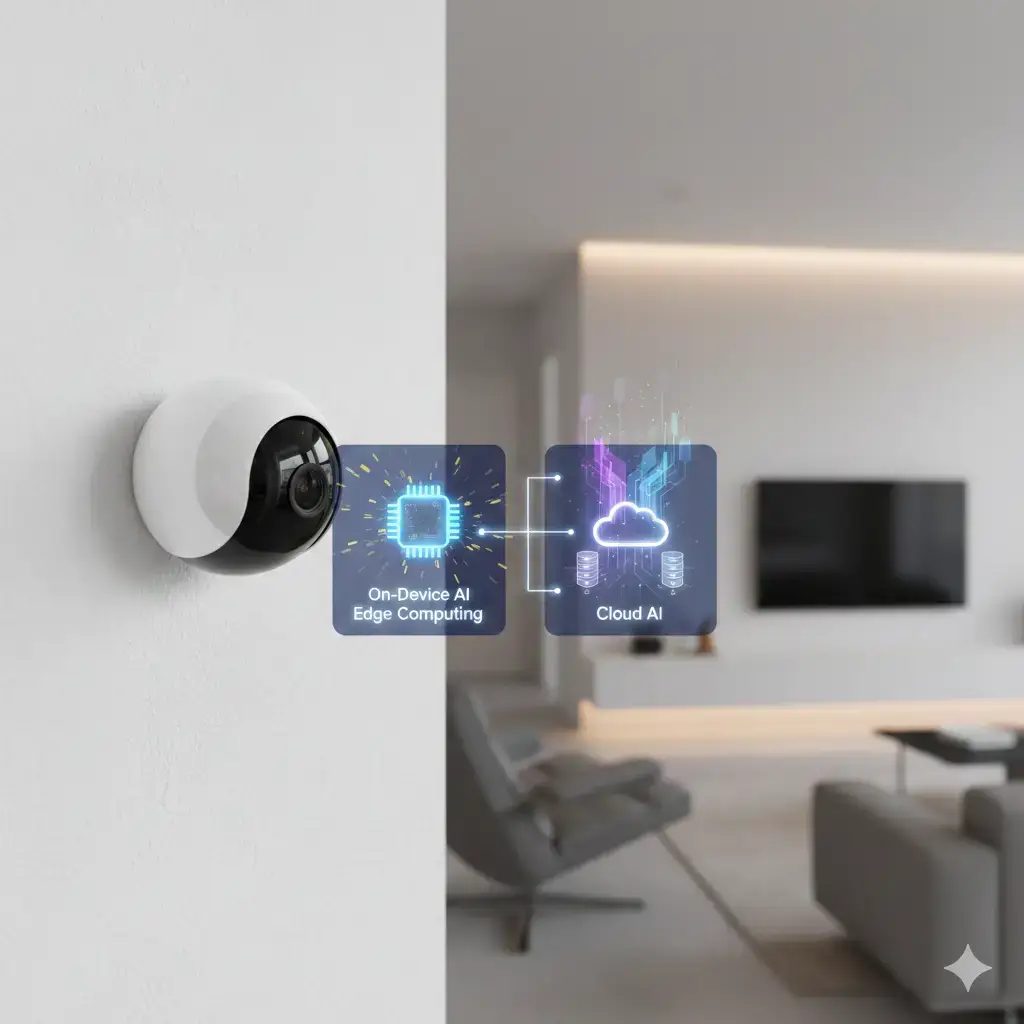
Local AI vs Cloud AI
Not every AI feature runs entirely on-device.
Some tablets process AI tasks locally using their NPUs, while others rely on cloud services for more demanding workloads. Local processing typically offers:
- Better privacy
- Faster response times
- Offline functionality
Cloud processing can provide access to larger AI models but requires an internet connection.
Understanding how a device balances local and cloud AI is often more useful than comparing TOPS numbers alone.
Real-World AI Features Matter More
Most users are not running AI benchmarks. Instead, they use features such as:
- AI note summarization
- Voice transcription
- Writing assistance
- Image editing
- Translation tools
- AI assistants
The quality and reliability of these features usually have a greater impact on daily use than benchmark results.
Bottom Line
TOPS remains a useful specification, but it should be viewed as only one part of a broader AI performance picture. Software support, memory resources, ecosystem integration, and practical AI features ultimately determine how useful an AI tablet will be in everyday use.
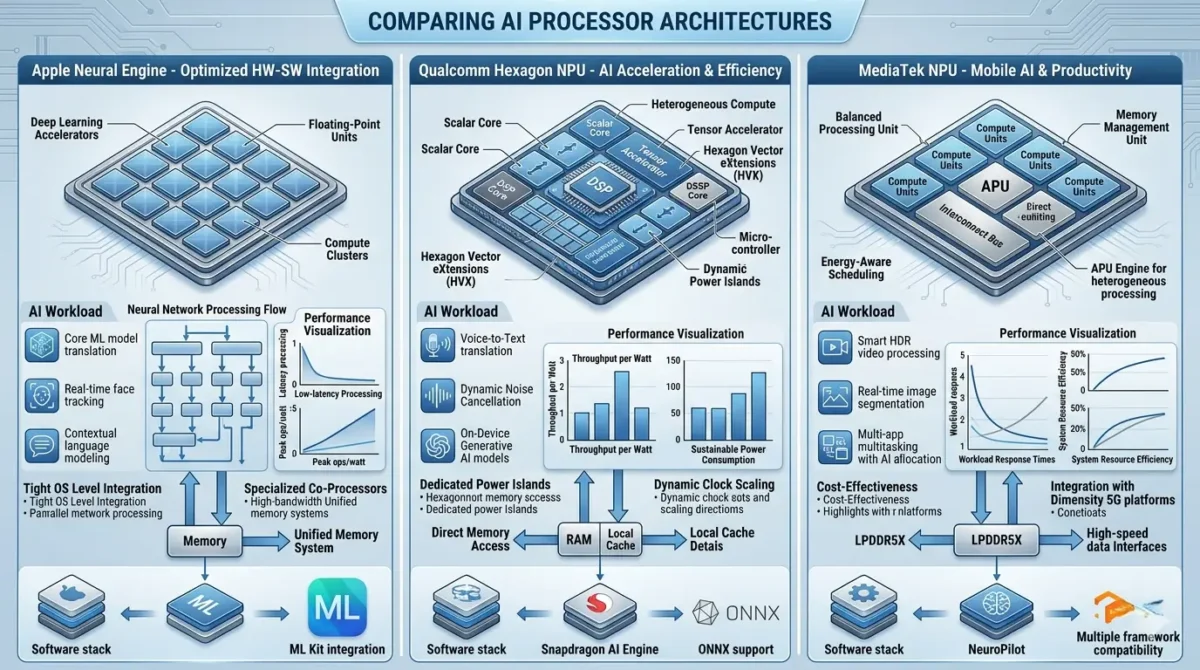
Apple Neural Engine vs Qualcomm Hexagon vs MediaTek NPU
Modern AI tablets rely on specialized neural processing hardware, but not all NPUs are designed in the same way.
| Platform | NPU | Key Strengths |
|---|---|---|
| Apple | Neural Engine | Tight hardware and software integration |
| Qualcomm | Hexagon NPU | Strong AI acceleration and efficiency |
| MediaTek | NPU 790 / NPU 890 | Balanced AI performance for Android devices |
Apple Neural Engine
Apple’s Neural Engine is integrated directly into the company’s custom silicon. Combined with Apple Intelligence, it enables features such as writing assistance, image generation, photo editing, and intelligent Siri experiences.
Apple’s greatest advantage is software optimization. Because Apple controls both hardware and software, AI features often feel highly polished and responsive.
Qualcomm Hexagon NPU
Qualcomm’s Hexagon architecture focuses on efficient AI acceleration across a wide range of workloads. It powers many modern AI PCs and mobile devices, offering strong performance for image processing, speech recognition, and generative AI applications.
The architecture is particularly effective when paired with Windows Copilot+ features and modern AI frameworks.
MediaTek NPUs
MediaTek’s AI processors power Samsung’s latest Galaxy Tab devices. While Samsung does not publish official NPU performance figures for all tablet models, Galaxy AI features demonstrate that these processors are capable of supporting advanced AI workloads, including note summarization, translation, image editing, and intelligent search.
Which Approach Is Best?
There is no single winner.
Apple currently leads in software integration and privacy-focused AI experiences.
Samsung offers one of the strongest productivity-focused AI ecosystems through Galaxy AI.
Qualcomm-powered devices excel in flexibility and support for increasingly demanding AI workloads.
The best choice ultimately depends on which ecosystem and AI features are most important to you.
How We Rank AI Tablets
Not all AI tablets are evaluated using the same criteria. For this ranking, we focus on the overall AI experience rather than a single specification such as TOPS.
Our evaluation considers the following factors:
| Factor | Weight |
|---|---|
| NPU Performance | 35% |
| AI Software Ecosystem | 30% |
| Memory & Hardware Resources | 20% |
| Efficiency & Battery Life | 10% |
| AI Feature Availability | 5% |
NPU Performance
Dedicated AI hardware plays a major role in determining how efficiently a tablet can process AI workloads. We consider the capabilities of the Neural Processing Unit along with overall platform performance.
AI Software Ecosystem
Hardware is only useful when supported by strong software. We evaluate AI platforms such as:
- Apple Intelligence
- Galaxy AI
- Windows Copilot+
- Lenovo AI Now
A mature ecosystem often delivers a better user experience than raw benchmark numbers.
Memory & Hardware Resources
AI workloads benefit from larger memory pools and fast storage systems. Tablets with more memory are generally better equipped for future AI applications.
Efficiency & Battery Life
AI processing can place significant demands on hardware. We reward devices that maintain strong AI performance without excessive battery drain.
AI Feature Availability
Real-world AI features such as note summarization, image generation, writing assistance, transcription, and translation contribute to overall rankings.
The goal is to identify tablets that deliver useful AI experiences rather than simply achieving high benchmark scores.
Explore More AI Device Rankings
The AI tablet market continues to evolve rapidly as manufacturers introduce more powerful NPUs and new AI-powered features.
For continuously updated rankings, comparisons, and device specifications, explore the AI Explorer database.
AI Explorer tracks:
- AI tablet rankings
- AI PC rankings
- NPU performance data
- Device comparisons
- AI hardware specifications
Whether you are researching your next purchase or simply exploring the latest AI hardware, AI Explorer provides a centralized resource for comparing modern AI devices.
You can explore the latest rankings here: Top AI devices
You may also be interested in:
- Best AI PCs in 2026
- NPU Architecture Comparisons
- AI Hardware Guides
- On-Device AI Learning Resources
What is an AI tablet?
An AI tablet is a tablet equipped with dedicated AI hardware, typically a Neural Processing Unit (NPU), that accelerates tasks such as image processing, voice recognition, transcription, translation, and AI assistants.
What does TOPS mean?
TOPS stands for Trillions of Operations Per Second. It is a measurement commonly used to describe AI processing capability. However, TOPS alone does not determine real-world AI performance.
Are higher TOPS numbers always better?
No. Software optimization, memory bandwidth, RAM capacity, and AI ecosystem support often have a greater impact on user experience than TOPS alone.
Which tablet is best for AI note-taking?
The Samsung Galaxy Tab S10 Ultra is currently one of the strongest options thanks to its S Pen integration, Note Assist, Transcript Assist, and Galaxy AI features.
Which tablet is best for AI image generation?
The Apple iPad Pro M4 and Samsung Galaxy Tab S10 Ultra both offer advanced AI-powered image creation and editing features through their respective software ecosystems.
Which tablet is best for students?
The Apple iPad Air M3 provides one of the best balances of performance, portability, battery life, and AI features for students.
Can AI tablets run AI models locally?
Many modern AI tablets can process certain AI workloads locally. However, some advanced features may still rely on cloud-based processing depending on the model size and software implementation.
Is Apple Intelligence better than Galaxy AI?
Both platforms have strengths. Apple Intelligence focuses on privacy and ecosystem integration, while Galaxy AI offers a broader range of productivity-focused features such as translation, note summarization, and image generation.
Conclusion
Artificial intelligence is quickly becoming a defining feature of modern tablets. As AI-powered note-taking, image generation, translation, and productivity tools become more common, dedicated NPUs are playing an increasingly important role in delivering these experiences efficiently.
For users focused on AI productivity and note-taking, Samsung’s Galaxy Tab lineup remains a compelling choice thanks to Galaxy AI and S Pen integration.
For users invested in Apple’s ecosystem, the iPad Pro M4 and iPad Air M3 deliver highly polished AI experiences through Apple Intelligence and strong hardware-software integration.
Ultimately, the best AI tablet depends on your preferred ecosystem, budget, and intended use cases. Rather than focusing solely on TOPS ratings, consider the overall AI experience, software support, and real-world features that matter most to your workflow.
As AI hardware continues to evolve, we expect tablets to become even more capable platforms for on-device intelligence, productivity, creativity, and everyday computing.