Every few months the cycle repeats: a new flagship chip, a bigger NPU number, a promise that on-device AI is about to get serious. The Snapdragon 8 Elite Gen 6 breaks the pattern — Qualcomm has not published a TOPS figure for it at all. What the company published instead says more about where phone AI is going than any integer on a spec sheet.
This guide works through what the new Hexagon NPU actually changes on-device, how the Gen 6 and the Gen 6 Extreme compare with MediaTek’s Dimensity 9600 Pro, and whether a 2026 flagship is worth waiting for.
Quick Answer
Every flagship launch leads with a bigger number. The Snapdragon 8 Elite Gen 6 breaks that habit: Qualcomm has not published a TOPS figure for it at all. What the company published instead says more about where on-device AI is going — a re-engineered Hexagon NPU built for agentic assistants, 10% more CPU performance and 37% better CPU efficiency against the Gen 5, and 20% more AI performance per watt. This guide covers what the new silicon actually changes on-device, how it compares with the Snapdragon 8 Elite Extreme Gen 6 and MediaTek’s Dimensity 9600 Pro, and whether a 2026 flagship is worth waiting for.
What the Gen 6 platform actually changes
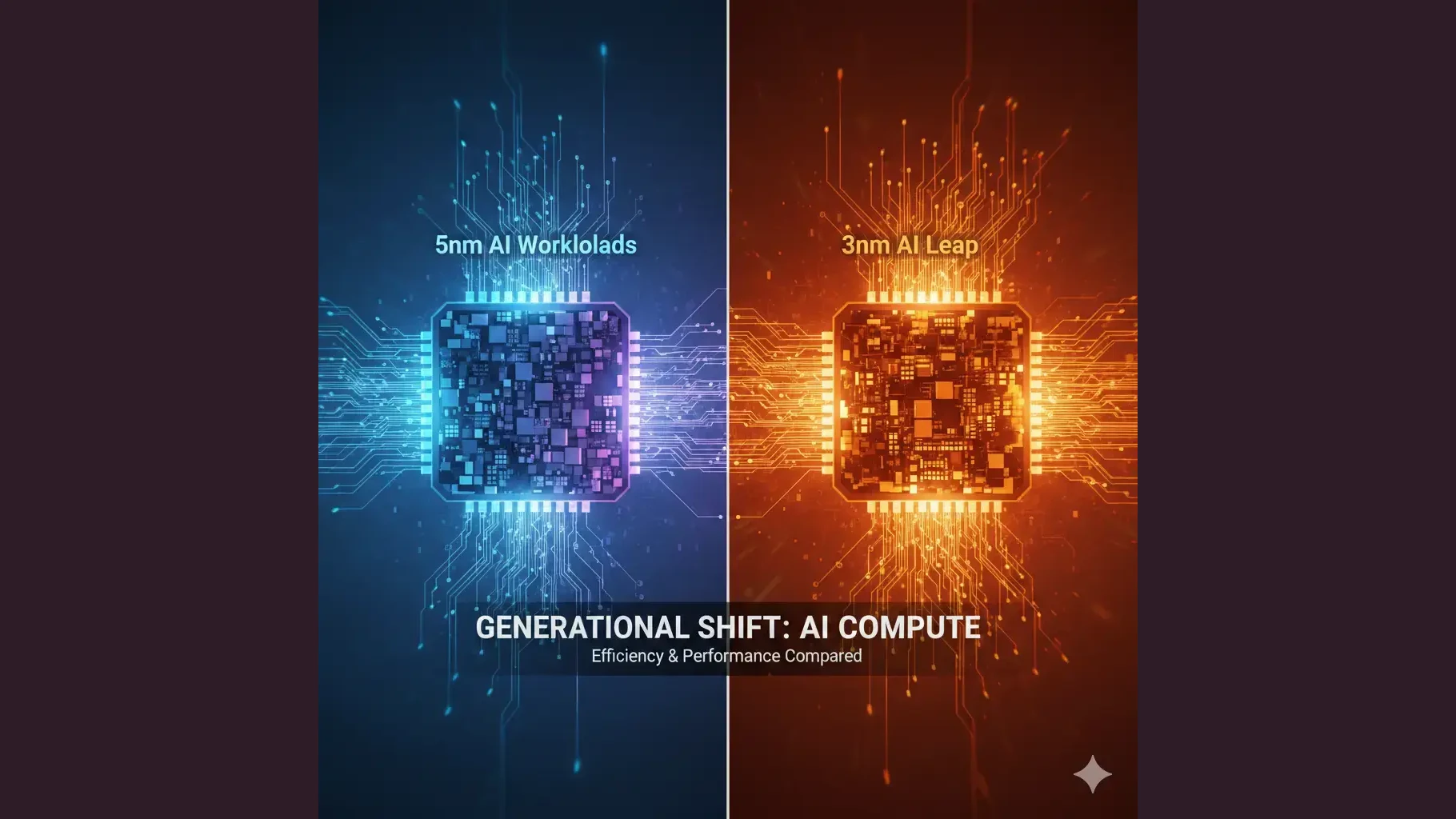
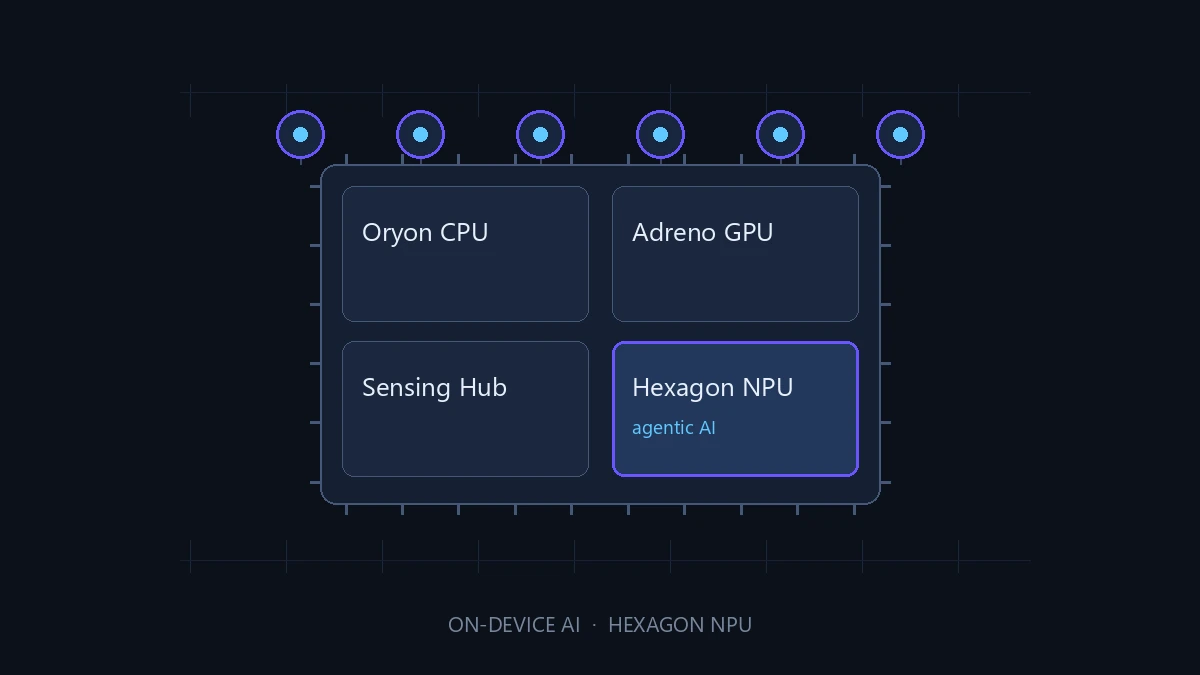
Qualcomm’s Gen 6 update is best read as a power-and-efficiency generational leap rather than a clock-speed one. The Oryon CPU keeps two prime cores and now reaches 5 GHz, which Qualcomm says is a first for a mobile processor, but the larger gains sit elsewhere in the chip.
How to read the generational gains
The generational gains are best read the way an engineer would: the CPU gain is modest, the GPU gain is substantial, and the NPU gain is deliberately framed as efficiency rather than throughput. That framing is the point of this generation.
Every figure in this guide is Qualcomm’s own published comparison against the Snapdragon 8 Elite Gen 5, taken from the official product briefs. Vendor comparisons are measured on reference designs and vary with OEM implementation; the full side-by-side sits in the comparison table below.
The Hexagon NPU is rebuilt around transformers
The NPU carries a new Element Accelerator alongside the existing scalar, vector and tensor units, in a configuration Qualcomm lists as 12 scalar, 8 vector, 1 tensor and 1 element unit. Two supporting features matter as much as the accelerator itself: Hexagon Direct Link, which lets the NPU talk to other blocks without routing through the CPU, and Micro Tile Inferencing, which breaks large operations into smaller tiles so they fit in on-chip memory. Shared memory grows by 50% on the Extreme part.
Precision support now runs from INT2 up to FP16, including mixed precision. Lower-precision formats are how a phone runs a large model on a battery, so the range matters more than the peak figure.
The Sensing Hub does the always-on work
The other half of the story sits in the Qualcomm Sensing Hub, which gains dual micro NPUs for audio, voice and sensors. This is the block that builds what Qualcomm calls personal knowledge graphs from messages, mail and conversations, and it feeds the Personal Scribe feature. Because it runs at very low power, the phone can stay contextually aware without waking the main CPU — which is where much of the battery saving comes from.
Why there is no TOPS number this year
This is the part worth pausing on, because it connects directly to how NPU performance has been marketed for years.
Qualcomm has not published an official TOPS figure for either the Snapdragon 8 Elite Gen 6 or the Snapdragon 8 Elite Extreme Gen 6. The company’s own briefs instead quote percentage improvements over the previous generation. That is a meaningful shift: TOPS measures raw multiply-accumulate throughput, but agentic workloads — an assistant that reads your mail, plans across apps and acts on your behalf — are bound by memory bandwidth, context length and latency rather than by peak math throughput.
We covered this gap between the marketing number and the real bottleneck in NPU TOPS Explained: Does 40, 50, or 80 TOPS Really Matter?, and argued in Why TOPS Doesn’t Matter that memory bandwidth and sustained behaviour decide real performance. The Gen 6 design is the strongest evidence yet that the industry agrees: the headline engineering work is a transformer accelerator and a 50% larger shared memory, not a bigger TOPS claim.
That does not make TOPS meaningless. It remains a useful rough comparison inside one vendor’s lineup, and it sets the floor for what Microsoft’s Copilot+ PC programme requires on the PC side. It is simply no longer the number that predicts whether an on-device agent feels fast.
Gen 6 versus Gen 6 Extreme versus Dimensity 9600 Pro
Two Snapdragon parts launch this generation. The table below keeps the comparison inside one vendor’s lineup, because that is the only way to compare like with like — Qualcomm publishes year-on-year percentage gains for both parts, while MediaTek describes the Dimensity 9600 Pro in architecture terms. MediaTek’s flagship is discussed separately below.
| Platform | Process | CPU | GPU | NPU | Memory |
|---|---|---|---|---|---|
| Snapdragon 8 Elite Gen 5 (comparison baseline) | Previous generation | Baseline | Baseline | Baseline | — |
| Snapdragon 8 Elite Gen 6 | 2nm | +10% perf, +37% efficiency | +35% perf, +40% efficiency | +14% perf, +20% perf-per-watt | LPDDR5x/6, up to 24 GB |
| Snapdragon 8 Elite Extreme Gen 6 | 2nm | +13% perf, +37% efficiency | +44% perf, +40% efficiency | +35% perf, +33% perf-per-watt | LPDDR5x/6, up to 24 GB |
Source notes: every Snapdragon figure is Qualcomm’s published year-on-year comparison against the Snapdragon 8 Elite Gen 5, taken from the official Gen 6 and Gen 6 Extreme product briefs. MediaTek’s Dimensity 9600 Pro is described separately in the text because the company publishes architecture rather than year-on-year percentages. All figures are vendor-stated; independent measurements were not available at the time of writing, so treat them as design targets rather than verified results.
Where the MediaTek Dimensity 9600 Pro fits
MediaTek’s flagship arrives at the same moment and is the first genuine alternative at the top end in years. The Dimensity 9600 Pro is also built on a 2nm process and is organised around what MediaTek calls a Native AI Architecture: a dual-NPU design, a 2+3+3 all-big-core CPU, a GPU with a Neural Graphics Architecture, and an ISP with AI Imaging Fusion. It supports LPDDR6 memory and UFS 5 storage, matching the Snapdragon parts on paper.
The architectural direction is strikingly similar to Qualcomm’s — both vendors now put a dedicated AI accelerator at the centre and enlarge the memory pool around it. The difference is emphasis: MediaTek leans on imaging and always-on AI, while Qualcomm leans on the Sensing Hub, the Element Accelerator and 5G Advanced connectivity. Independent head-to-head measurements were not available at the time of writing, so any claim about which chip is faster would be speculation.
The practical read: the standard Gen 6 is the volume part and the one most 2026 flagships will use, while the Extreme sits at the top with a materially stronger GPU and NPU. MediaTek’s 9600 Pro is covered in the section above.
Which phones actually ship with these chips
Qualcomm confirmed a broad OEM list at launch. The devices below have been announced or showcased.
- Xiaomi 18 Pro — Snapdragon 8 Elite Gen 6; the Xiaomi 18 Pro Max uses the Extreme part
- iQOO 16 — Snapdragon 8 Elite Extreme Gen 6, confirmed for India and showcased at IMC 2026
- Motorola Signature 27 — Snapdragon 8 Elite Extreme Gen 6
- OnePlus 16 — Snapdragon 8 Elite Extreme Gen 6
- HONOR Magic9 series, vivo, REDMI, Red Magic and OPPO — also confirmed for the Gen 6 series
- vivo X500 Pro and X500 Pro Max — MediaTek Dimensity 9600 Pro, announced September 2026
Note the split: the Extreme part is going into gaming-leaning and top-tier flagships, while the standard Gen 6 will appear across the mainstream flagship range. If you are choosing on AI capability rather than gaming, the two are closer than the naming suggests.
What this means if you are buying a phone now
Three practical conclusions follow from the specifications.
Battery life should improve more than speed. A 37% CPU power-efficiency gain and an NPU that does more per watt are the kind of numbers that show up as screen-on time, not as benchmark charts. Phones that run always-on agents need exactly that.
Storage and memory matter more than the CPU. UFS 5.0 and LPDDR6 at 5,300 MHz raise memory bandwidth, which is what feeds a local model. On a device running on-device agents, memory bandwidth is the constraint that TOPS never captured.
Wait for the Gen 6 flagships if AI is your reason to upgrade. The chip’s purpose is agentic, always-on assistance. If your interest is camera quality or gaming alone, the previous generation already handles those well, and the gains there are smaller.
What the Gen 6 NPU still cannot do
It is worth being precise about the limits, because the agentic framing invites expectations the hardware cannot always meet.
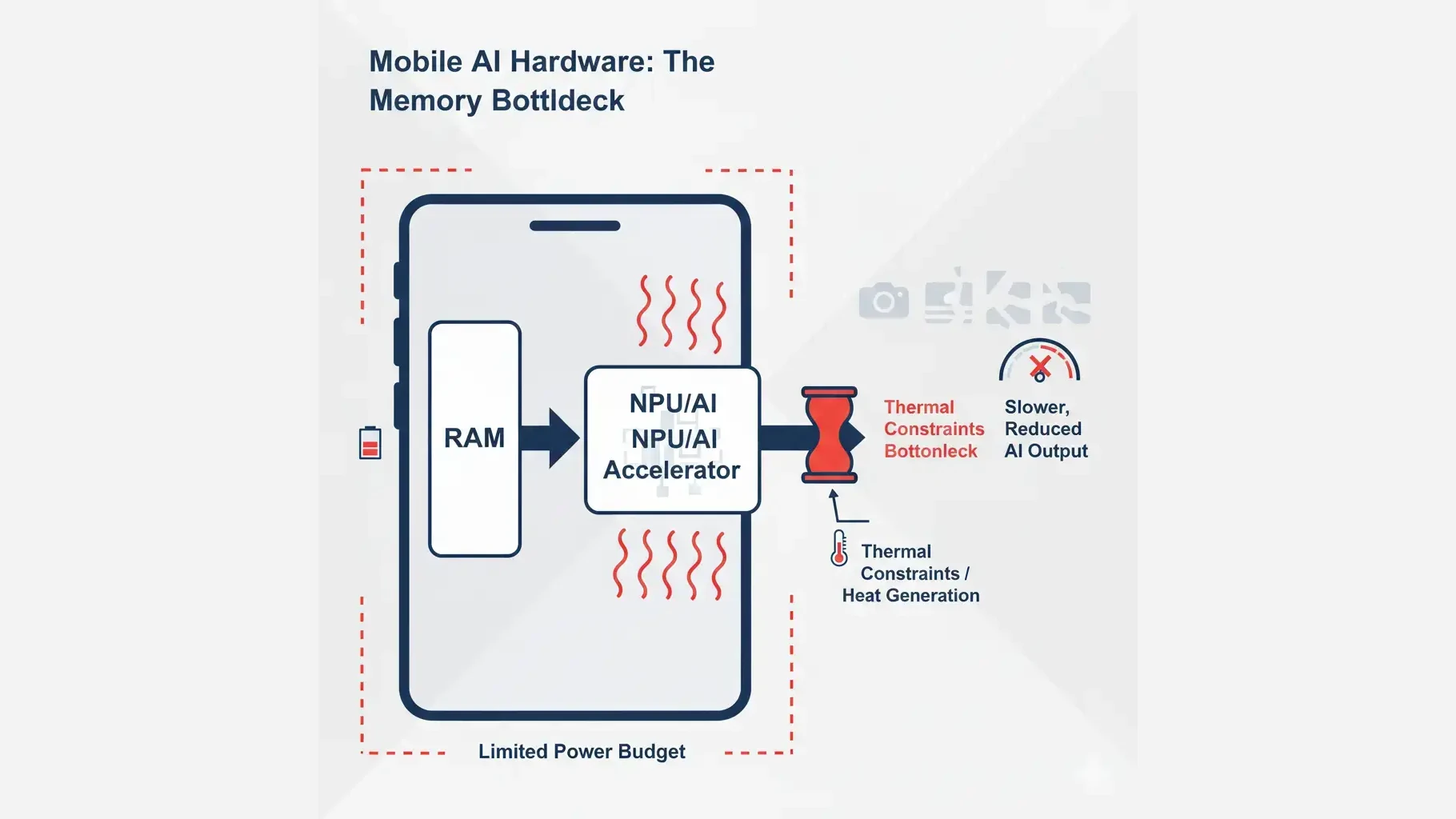
The NPU accelerates inference; it does not remove the model from the device’s memory budget. A 50% larger shared memory pool helps, but large mixture-of-experts models still have to fit alongside the operating system in a phone’s RAM. Qualcomm’s own framing for the Extreme part centres on running such models on device, which is a capability claim rather than a promise about every model size.
Sustained performance is the other open question. Every vendor figure quoted here is a peak or a controlled comparison; long agentic sessions heat the chassis, and the NPU then throttles exactly as we documented for wearables in AI Wearable Thermal Throttling. Independent sustained measurements for the Gen 6 parts were not available at the time of writing.
Finally, software decides how much of this you actually get. The hardware can run an agent; whether the agent is useful depends on the OEM’s implementation and on the Android version, since certain features are gated by the OS.
Bottom line
The Snapdragon 8 Elite Gen 6 is the first flagship mobile platform designed around agentic AI rather than around a benchmark number. The CPU gain is modest, the GPU gain is substantial, and the NPU work is aimed squarely at the always-on, context-aware assistant work that defines this generation. If that is what you are buying a phone for, the Gen 6 flagships are worth waiting for. If you mostly want camera quality or gaming, the previous generation still delivers, and the step up is smaller.
Frequently Asked Questions
What is the Snapdragon 8 Elite Gen 6?
It is Qualcomm’s 2026 flagship smartphone platform, built on a 2nm process with a re-engineered Hexagon NPU, an Oryon CPU reaching 5 GHz, LPDDR5x/6 memory and UFS 5.0 storage.
Does the Snapdragon 8 Elite Gen 6 have a TOPS rating?
Qualcomm has not published an official TOPS figure for the Gen 6 or the Gen 6 Extreme. The company quotes percentage improvements over the Gen 5 instead: 14% more NPU performance on the standard part and 35% on the Extreme.
What is the Element Accelerator?
It is a new unit inside the Hexagon NPU designed for the transformer operations that underpin generative and agentic AI, working alongside the existing scalar, vector and tensor units.
Which is better, the Gen 6 or the Gen 6 Extreme?
The Extreme adds a stronger GPU (44% versus 35% more performance than the Gen 5) and a larger NPU gain (35% versus 14%). For agentic AI and efficiency the two are closer than the naming implies; for gaming the Extreme is the clearer step up.
How does it compare with the MediaTek Dimensity 9600 Pro?
Both are 2nm flagships with a dual-NPU-style architecture aimed at on-device AI. MediaTek emphasises an all-big-core CPU and AI imaging fusion, while Qualcomm emphasises the Element Accelerator, the Sensing Hub and 5G Advanced connectivity. Independent head-to-head measurements were not available at the time of writing.
Should I wait for a Gen 6 phone?
If on-device AI and battery life are your reasons to upgrade, yes — the efficiency gains are the point of this generation. If you mostly want camera or gaming improvements, the previous generation remains capable and the step up is smaller.
Sources
- Snapdragon 8 Elite Gen 6 product brief — Qualcomm
- Snapdragon 8 Elite Extreme Gen 6 product brief — Qualcomm
- Why agentic AI needs a different mobile architecture: the Qualcomm Hexagon NPU — Qualcomm OnQ
- The vivo X500 series, powered by MediaTek Dimensity 9600 Pro — MediaTek
About the Author
Raman Kumar is the founder of Giznova and a technology professional with a background in the semiconductor industry. He covers on-device AI, AI hardware, and practical device troubleshooting across smartphones, wearables, and laptops. His work focuses on research-backed analysis of how AI runs on real devices — what it can do, where it hits limits, and what it means for everyday users.