
AI features don’t run on their own. Behind them are NPUs, GPUs, processors, memory, and specialized accelerators built to handle increasingly demanding AI workloads.
AI Hardware looks at the technology powering on-device AI, how different hardware approaches work, and what specifications like TOPS actually tell us — and what they don’t.
What You’ll Find Here
- NPUs, GPUs, and AI accelerators
- AI chips and processor architecture
- TOPS and AI performance metrics
- Memory, power, and local AI workloads
- Hardware comparisons and technical explainers
Latest AI Hardware
Explore our latest explainers, comparisons, and analysis of the hardware behind modern AI devices.

How Android and iOS Schedule AI Tasks (CPU, GPU, and NPU Explained)
Learn how Android and iOS schedule AI workloads across CPUs, GPUs, and NPUs. Discover how NNAPI, Core ML, memory architecture, and hardware design impact real-world AI performance and efficiency.
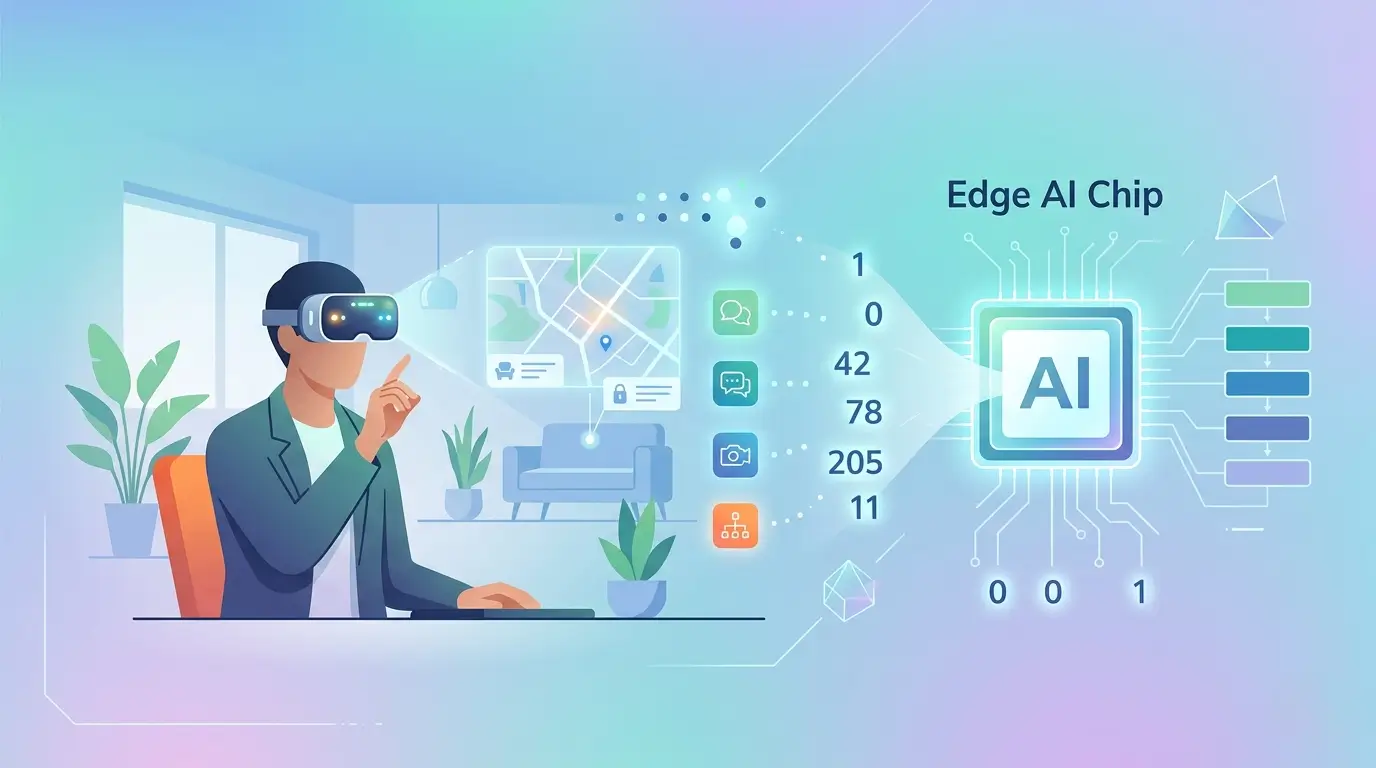
Why Edge AI Chips Use Integer Arithmetic
Image showing how edge AI processes data locally on devices, enabling faster performance, lower power consumption, and real-time decision-making without cloud dependency.

Sparse vs Dense AI Models: Which Is Better for On-Device AI?
Sparse vs dense AI models use different approaches to computation. Learn how they impact AI performance, memory efficiency, power consumption, and why modern AI systems increasingly adopt sparse architectures.

Neuromorphic vs Traditional AI Chips: The Future of Wearable AI
AI earbuds using on-device AI processing to adapt sound in real time.

AI Model Loading Time on Devices: Hidden Bottleneck Explained
AI earbuds using on-device AI processing to adapt sound in real time.
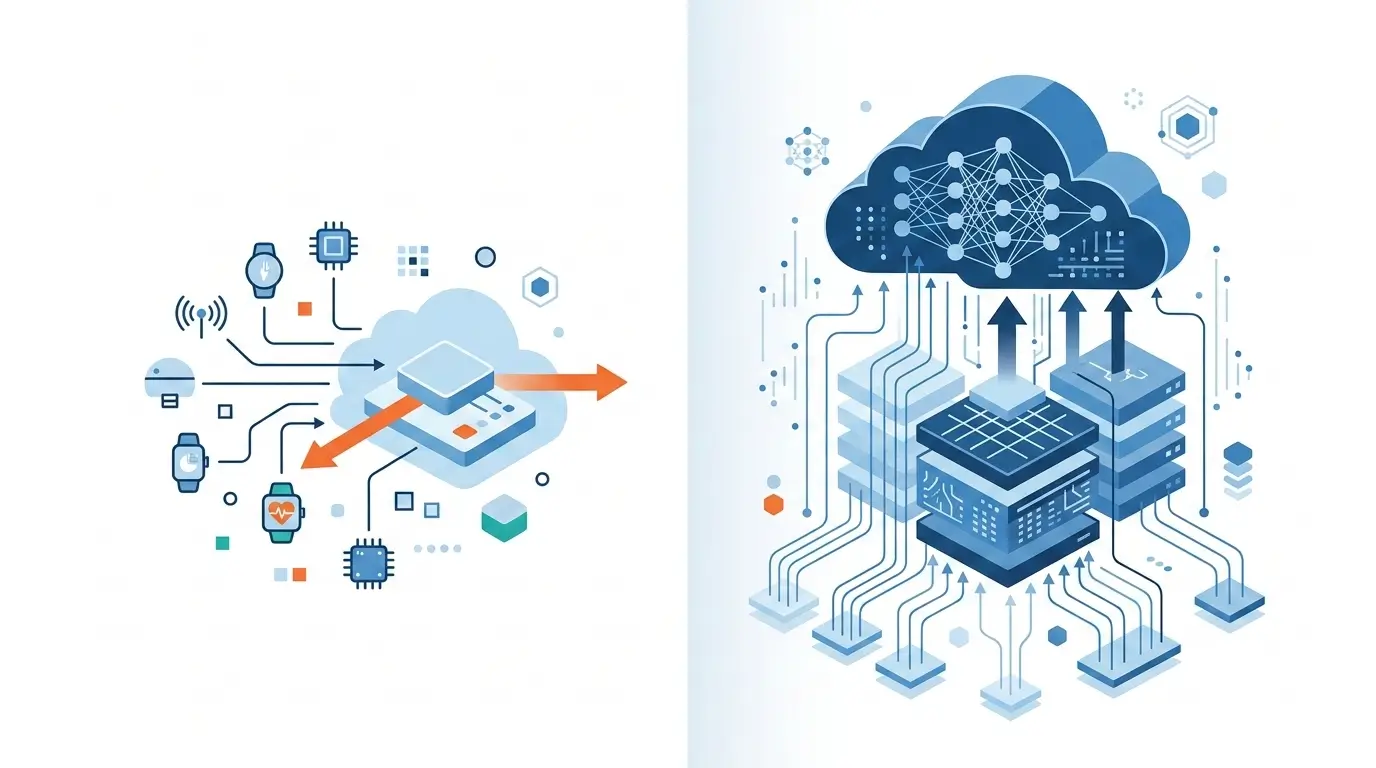
TinyML vs Large AI Models: What Works Best for Edge Devices
Technical overview explaining TinyML vs Large AI Models and its impact on AI system performance.