Blog

Sustained AI Performance vs Peak TOPS: What Benchmarks Hide

Quick Answer Peak TOPS is a best-case number; sustained performance is what you actually get. Under continuous load, thermals and power limits pull inference speed well below the peak figure, and benchmarks often hide that gap. This explains why sustained…

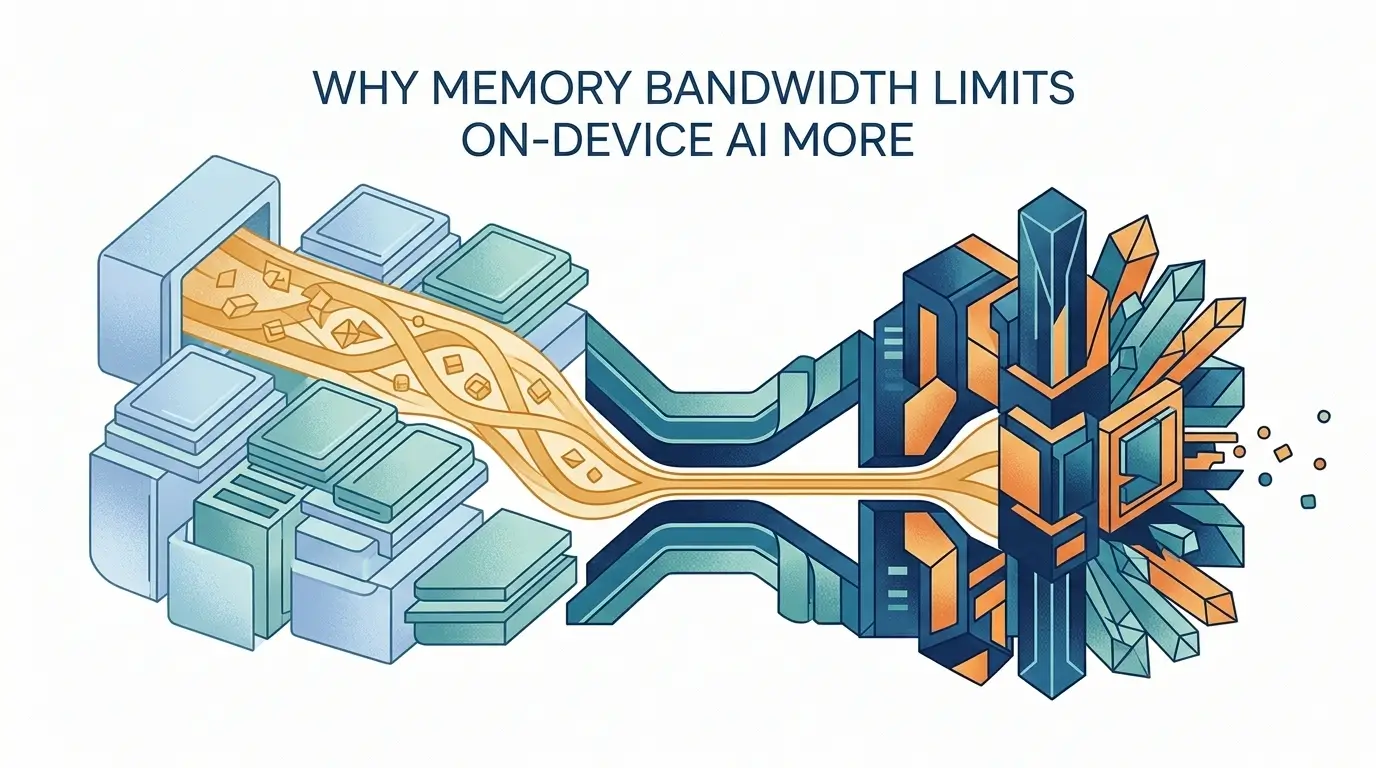
Why Memory Bandwidth Limits On-Device AI More Than Compute Power

Quick Answer Memory bandwidth, not compute, is usually the real bottleneck. Moving model weights and activations between RAM and the accelerator costs more time and energy than the math itself. This explains the constraint and which on-device AI workloads suffer…

INT8 vs FP16 vs INT4: Which Precision Is Best for Edge Devices?

INT8, FP16, and INT4 are different ways devices balance performance, power efficiency, and accuracy. FP16 offers higher accuracy but uses more power. INT8 provides the best balance between efficiency and performance, making it widely used in smartphones and laptops. INT4…

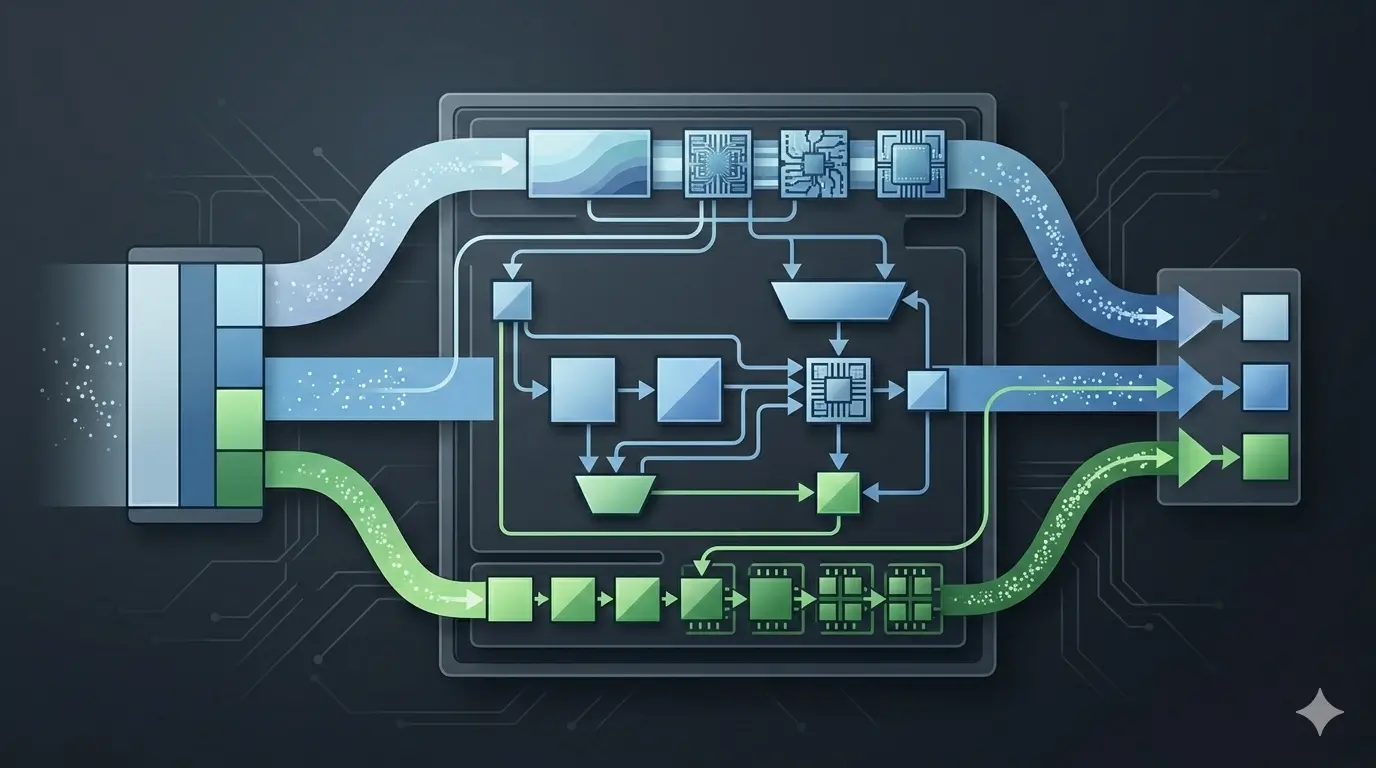
NPU vs GPU vs CPU: Which Is Best for AI Inference on Consumer Devices?

Quick Answer Each processor has a role: the CPU is flexible but inefficient for AI, the GPU is powerful but hungry, and the NPU is purpose-built for efficient inference. Real devices use all three and route tasks by load. This…

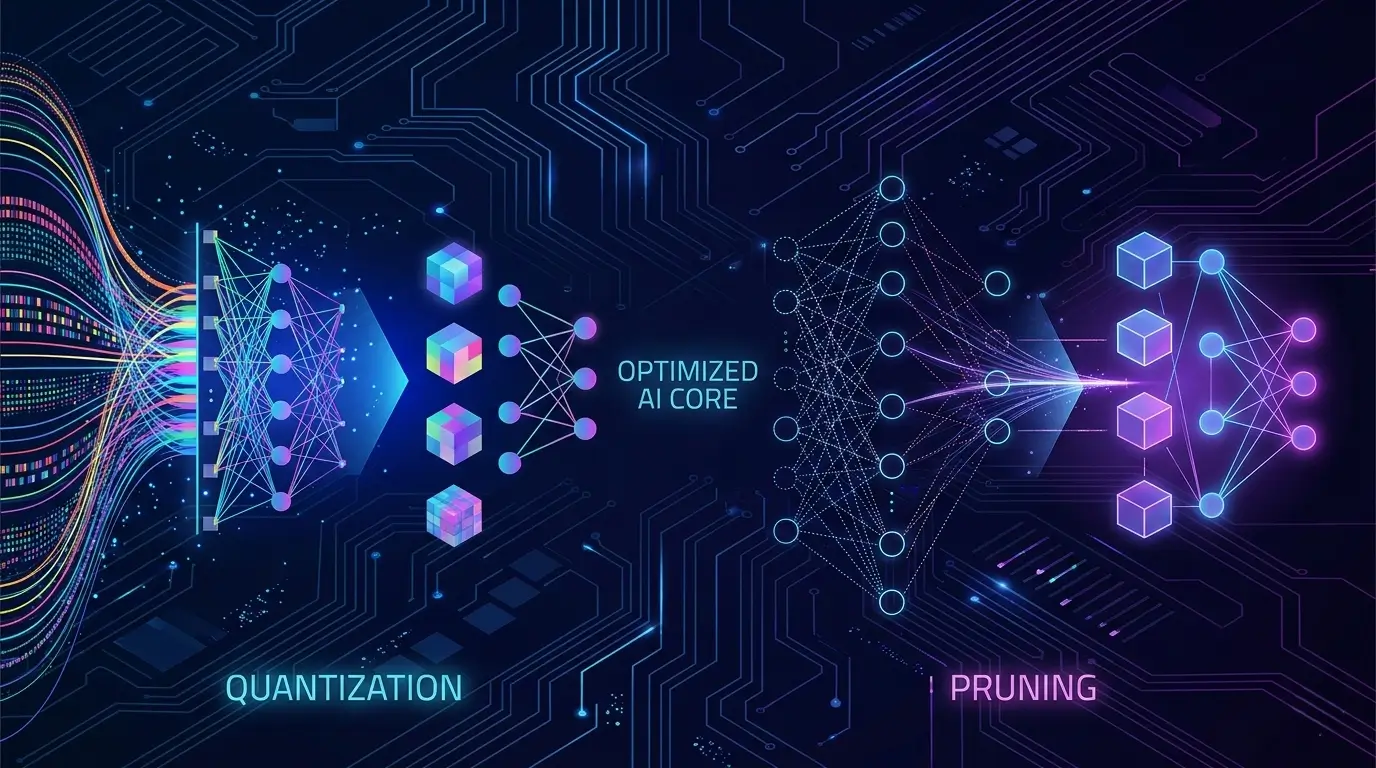
Quantization vs Pruning: Optimizing LLMs for Edge Devices

Quick Answer Both shrink models, but differently: quantization lowers the numeric precision of weights, while pruning removes weights or connections entirely. Quantization is simpler and hardware-friendly; pruning can cut more but needs retraining. This compares their effect on accuracy, latency,…

Neuromorphic Chips Explained: Brain-Inspired AI Processing for Future Wearables

Neuromorphic chips are a class of brain-inspired processors designed for event-driven, asynchronous computation, fundamentally departing from traditional von Neumann architectures. They excel at processing sparse, real-time data streams with high power efficiency and low latency for specific workloads, making them ideal for always-on AI applications…

Snapdragon X2 Elite NPU: ARM’s 80 TOPS Architecture for Copilot+ PCs

As AI features become increasingly common in modern laptops, dedicated AI hardware is becoming more important. The Snapdragon X2 Elite NPU is designed to accelerate on-device AI tasks such as real-time transcription, image enhancement, AI assistants, and local language models…

Intel Panther Lake NPU Explained: 50 TOPS AI Performance for AI PCs

The Intel Panther Lake NPU is Intel’s next-generation neural processing unit designed for AI PCs and on-device AI workloads. Built into the Panther Lake platform, the NPU delivers up to 50 INT8 TOPS while consuming significantly less power than traditional…

How On-Device AI Powers Truly Private Voice Assistants

Quick Answer On-device AI handles the sensitive part locally: wake word, speech recognition, and basic commands run on the device, so your voice data stays put and works offline. Only complex requests go to the cloud. This explains the architecture,…

AI Fitness Bands vs Smartwatches: What’s Actually Smarter?

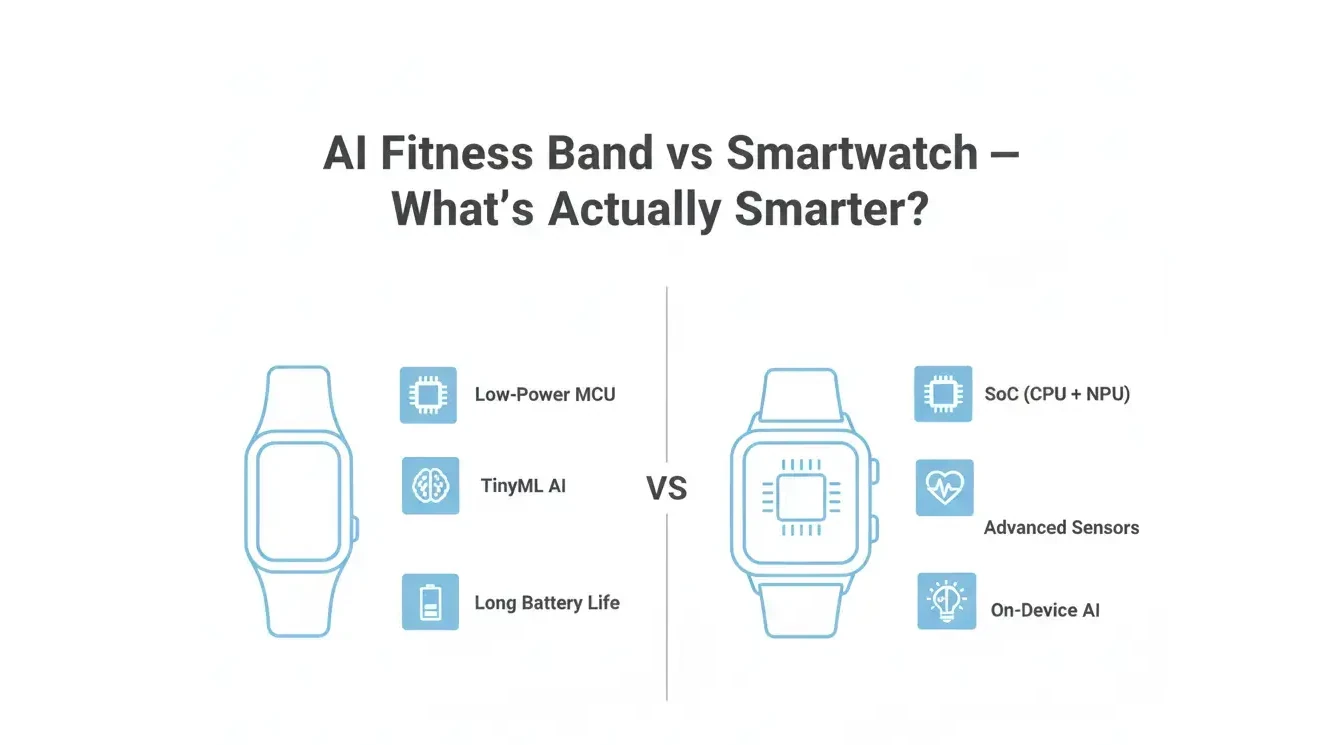
Quick Answer Fitness bands and smartwatches take opposite approaches: bands pair ultra-low-power chips with small always-on models, while watches carry bigger NPUs and more RAM for richer on-device features. Bands win on battery and continuous sensing; watches win on capability.…

Snapdragon X Elite vs Intel AI Boost vs AMD XDNA: NPU Architecture Comparison

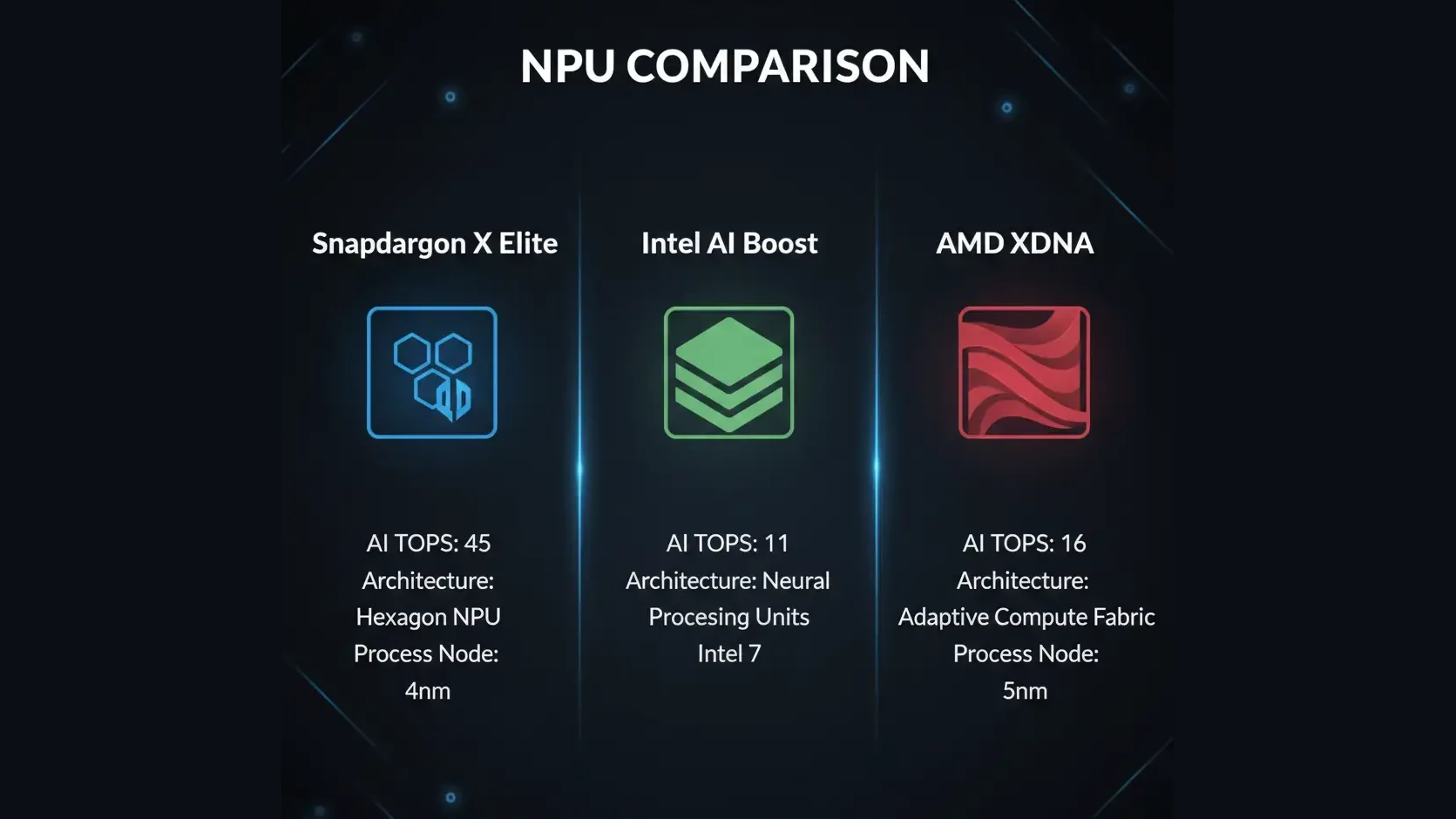
The comparison between Snapdragon X Elite, Intel AI Boost, and AMD XDNA highlights how major chipmakers are approaching on-device artificial intelligence. These dedicated Neural Processing Units (NPUs) power AI features such as real-time image enhancement, speech recognition, background effects, local…

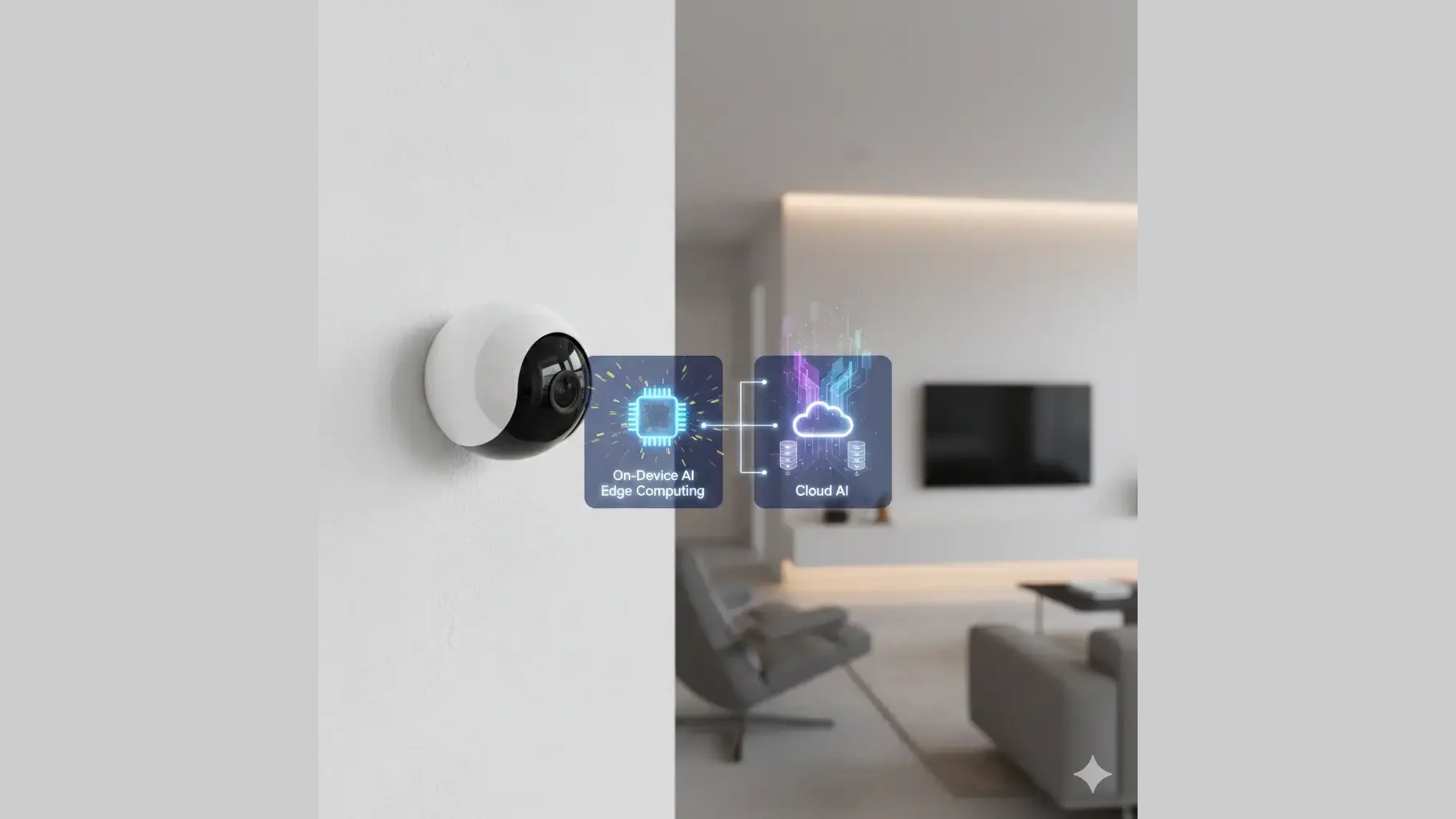
How Hybrid On-Device and Cloud AI Improves Smart Home Cameras

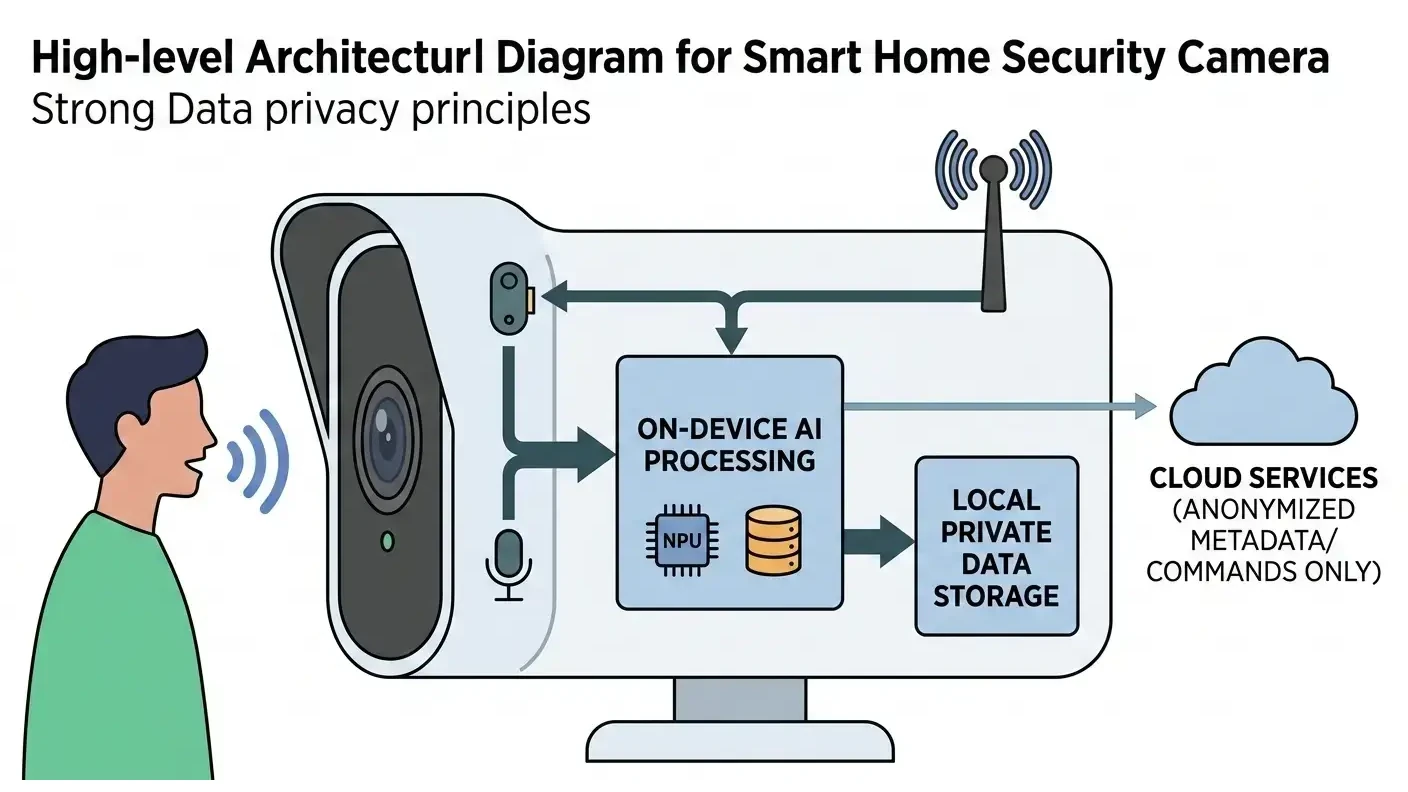
Quick Answer Hybrid AI splits the work: motion detection and local alerts run on the camera’s NPU, while long-term analytics and richer features go to the cloud. The result is low latency and low bandwidth without giving up advanced features.…