
Have you ever wondered how a smartwatch can tell when you’re stressed, recognize a workout automatically, or remind you to move after sitting too long? These aren’t just smart features—they’re powered by artificial intelligence.
AI in smartwatches uses artificial intelligence to analyze health, fitness, and behavioral data in real time. It powers features such as heart rate analysis, sleep tracking, stress detection, fall alerts, smart notifications, and battery optimization. Instead of simply collecting sensor data, AI transforms it into personalized insights that help users improve their health, fitness, and daily routines.
As AI chips become more powerful, smartwatches are evolving from simple fitness trackers into intelligent health and lifestyle companions. In this guide, you’ll learn how smartwatch AI works, where it runs, its benefits and limitations, and what the future of AI-powered wearables looks like.
Table of Contents
AI in smartwatches uses on-device machine learning to analyze health, fitness, and behavioral data in real time. It powers features like heart rate analysis, sleep tracking, stress detection, fall alerts, smart notifications, and battery optimization. Instead of only collecting data, AI turns sensor readings into personalized insights that help users improve health, performance, and daily routines.
Quick Facts About AI in Smartwatches
- What it is: AI systems that analyze biometric and behavioral data in real time
- Where it runs: Mostly on-device (Neural Engine, NPU, or AI co-processors)
- Main purpose: Turn sensor data into actionable health, fitness, and lifestyle insights
- Key signals analyzed: Heart rate, HRV, sleep stages, motion, temperature, blood oxygen
- Core technologies: Machine learning, neural networks, CNNs, pattern recognition, sensor fusion
- User benefit: Personalized feedback without manually interpreting raw data
AI Smartwatches vs Traditional Smartwatches
| Feature | Traditional Smartwatch | AI-Powered Smartwatch |
|---|---|---|
| Health Monitoring | Displays raw sensor data | Interprets health trends and patterns |
| Sleep Tracking | Records sleep duration | Analyzes sleep quality and recovery |
| Fitness Tracking | Counts activity | Provides personalized coaching and insights |
| Notifications | Shows all alerts | Prioritizes notifications based on user habits |
| Battery Management | Fixed optimization | Learns usage patterns to improve efficiency |
| Offline Intelligence | Limited | Many AI features run directly on the device |
Smartwatches have evolved far beyond simple step counters and notification mirrors. What once felt like a companion device has quietly become an intelligent health and lifestyle assistant—and artificial intelligence is the reason why. The integration of smartwatch AI is transforming the way we interact with technology.
Modern smartwatches no longer just collect data. They analyze it, learn from it, and respond in meaningful ways. From health monitoring and fitness coaching to safety alerts and battery optimization, AI transforms raw sensor data into real-world insights users can actually act on AI enables smartwatches to:
- Analyze health signals in real time
- Personalize fitness and recovery insights
- Detect unusual patterns that may affect well-being
- Improve safety features like fall detection
- Optimize battery life based on usage habits
This shift marks a fundamental change in wearable technology. Smartwatches are no longer passive trackers—they are becoming proactive, personalized companions designed to understand your body, habits, and daily routines, thanks to advancements like AI in smartwatches.
The Evolving Role of AI in Wearable Technology
Many wearable AI systems are built using techniques similar to those in TensorFlow Lite for on-device machine learning. In the early days, smartwatches mainly collected health and activity data such as steps, heart rate, and GPS routes. While this information was useful, users were often left to interpret the numbers themselves.
Artificial intelligence changed that approach. Instead of simply recording data, modern smartwatches analyze patterns across multiple sensors and transform those readings into practical insights. Rather than displaying raw metrics alone, AI helps explain what those patterns may indicate about sleep quality, stress levels, recovery, or overall wellness.
This shift has transformed smartwatches from passive tracking devices into intelligent assistants that can provide more personalized and meaningful guidance throughout the day.
From Simple Sensors to Smart Insights
Early smartwatches focused mainly on collecting data—steps, heart rate, and movement. While useful, this left users with numbers that were often difficult to interpret. The real breakthrough came when artificial intelligence began turning those raw readings into meaningful insights.
Modern smartwatches use AI to analyze patterns across multiple sensors, including heart rate, motion, temperature, and blood oxygen levels. Instead of simply displaying graphs, the device can now explain what those trends suggest about your sleep quality, stress levels, or recovery status.
This shift also enables true personalization. AI systems learn your normal patterns over time—how your heart rate behaves during rest, how you typically sleep, and how your body responds to activity. Because of this, insights are tailored to you rather than based on population averages.
Key Areas Where AI Makes Smartwatches Smarter

The way AI is integrating into smartwatches isn’t some monolithic, single application; it’s more like a multi-faceted upgrade that touches pretty much every corner of the device’s functionality. From making sense of complex physiological signals to just streamlining your everyday interactions, AI is quickly becoming this invisible intelligence that truly unlocks the full potential of wearable technology.
Decoding Your Biometrics: Advanced Health Monitoring
One of the most important applications of AI in smartwatches is health monitoring. Modern wearable devices continuously collect data from multiple sensors, but the real value comes from interpreting that information rather than simply displaying it.
AI analyzes patterns across heart rate, movement, sleep, temperature, and other biometric signals to generate personalized insights. By learning how these measurements change over time, the smartwatch can identify trends that may help users better understand their health, recovery, and daily well-being.
Heart Rate Variability and Stress Detection
Traditional heart rate monitoring, you know, just tells you how many times your heart beats in a minute. That’s useful, sure, but it’s pretty limited. Heart Rate Variability (HRV), which is all about those subtle variations in the time between consecutive heartbeats, actually gives you a far, far richer picture of how balanced your autonomic nervous system truly is. And this is where AI algorithms really shine. They’re instrumental here. They analyze these complex HRV patterns over time, going way beyond simple averages to identify trends that can correlate with your stress levels, your recovery status, and can even hint at early indicators of illness. HRV is widely studied in cardiovascular and stress research, including work referenced by the American Heart Association.
Sleep Architecture and Quality Analysis
Sleep tracking has been a smartwatch staple for ages, but AI is pushing it beyond just simple “light,” “deep,” and “REM” stage detection. We’re talking advanced AI models that can analyze micro-movements, heart rate, skin temperature, and even blood oxygen saturation throughout the night to build a much more intricate “sleep architecture.” This allows them to spot subtle sleep disturbances, patterns that might point to sleep disorders, or even environmental factors messing with your rest quality. The aspiration here is to offer truly personalized interventions to help you get better sleep hygiene.
Activity Recognition and Performance Optimization
Workout tracking has long been a core feature of smartwatches, but AI has made it far more accurate and convenient. Instead of manually logging every session, AI-powered watches can automatically detect and classify a wide range of activities—from walking and running to cycling, swimming, and certain strength exercises. This works by analyzing motion data from accelerometers and gyroscopes and comparing patterns against trained movement models.
Beyond identifying the activity itself, AI also improves calorie estimates, tracks workout intensity, and provides personalized performance insights. Over time, the watch learns how your body responds to exercise, helping tailor feedback related to recovery and training load.
While these systems continue to improve, they work best as guidance tools. Complex movements, subtle exercise variations, or perfect repetition counting can still be challenging for wrist-based sensors. For serious performance optimization, smartwatch insights are most effective when combined with proper technique, coaching, and individual awareness.
Proactive Wellness: Detecting Anomalies and Guiding Habits
Moving beyond just looking back at your data, AI empowers smartwatches to act like these proactive health guardians, potentially flagging issues before they get critical and gently nudging users toward healthier habits.
Early Warning Systems for Potential Health Shifts
One of the most promising uses of AI in smartwatches is the ability to detect subtle changes in physiological patterns over time. By learning a user’s baseline for metrics such as resting heart rate, HRV, skin temperature, and sleep behavior, AI systems can flag unusual deviations that may signal fatigue, stress, or the early stages of illness.
For example, a combination of elevated resting heart rate, disrupted sleep, and slight temperature variation could suggest the body is under strain. In these situations, the smartwatch acts as an early awareness tool, encouraging users to rest, adjust routines, or seek medical advice if symptoms persist.
These systems work best as supportive indicators rather than diagnostic tools. Normal daily factors like stress, travel, or poor sleep can also affect biometric readings. As AI models continue to improve, their role is to help users notice trends and patterns—not replace professional medical evaluation.
Personalized Recommendations for Better Living
Based on all that, after analyzing long-term health and activity patterns, AI can provide personalized recommendations that are more relevant to each user. For example, if the smartwatch consistently detects poor sleep quality, it may suggest improving bedtime habits or reducing late-night activity. If stress levels remain elevated over several days, it may recommend breathing exercises, recovery time, or lighter physical activity.
These recommendations are intended to support healthier daily habits rather than replace professional medical advice. Their usefulness depends on the quality of the collected data and how consistently the smartwatch learns an individual’s routine over time.
But the effectiveness of these recommendations hinges on more than just interpreting data; it also requires a pretty good grasp of behavioral psychology. How compelling are these AI-driven nudges in actually motivating sustained behavior change? Do users truly trust these digital recommendations as much as they would advice from a human expert? Furthermore, we’ve gotta think about the potential for algorithmic bias in these recommendations—they might fail to account for cultural differences, socioeconomic factors, or varying access to resources. That’s definitely an area that needs careful consideration and transparency during development.
Enhancing Daily Interactions: Smarter UX
AI-powered smartwatches are not limited to health tracking. It also improves everyday usability, making devices feel more intuitive and less distracting. Similar adaptive intelligence is also seen in AI-powered earbuds that adjust sound in real time based on environment and user context.
Adaptive Notifications and Contextual Awareness
Smartwatches can easily become overwhelming if every notification demands attention. AI helps manage this by learning user habits, schedules, and activity patterns. Over time, the watch can prioritize important alerts, delay non-urgent ones, and reduce interruptions during activities like workouts or meetings.
This contextual filtering aims to create a more focused experience, allowing users to stay informed without constant disruption. By understanding patterns in behavior, AI makes notifications feel more relevant rather than random.
While these systems continue to improve, users should still have control over how notifications are managed. The most effective AI-powered smartwatch experiences combine intelligent automation with clear user settings, allowing people to decide which alerts are important while reducing unnecessary distractions throughout the day.
Optimizing Battery Life Through Learned Behavior
Battery life remains a key challenge for smartwatches, and AI plays an important role in improving efficiency. By learning daily routines—such as when the user is active, resting, or typically charging—the device can adjust sensor usage, screen brightness, and background processes.
For example, the watch may reduce continuous monitoring during long inactive periods or optimize performance when it predicts the user will recharge soon. These adaptive adjustments help extend battery life while maintaining essential features, making the device more reliable throughout the day.
Smartwatch AI: A Comparative Outlook
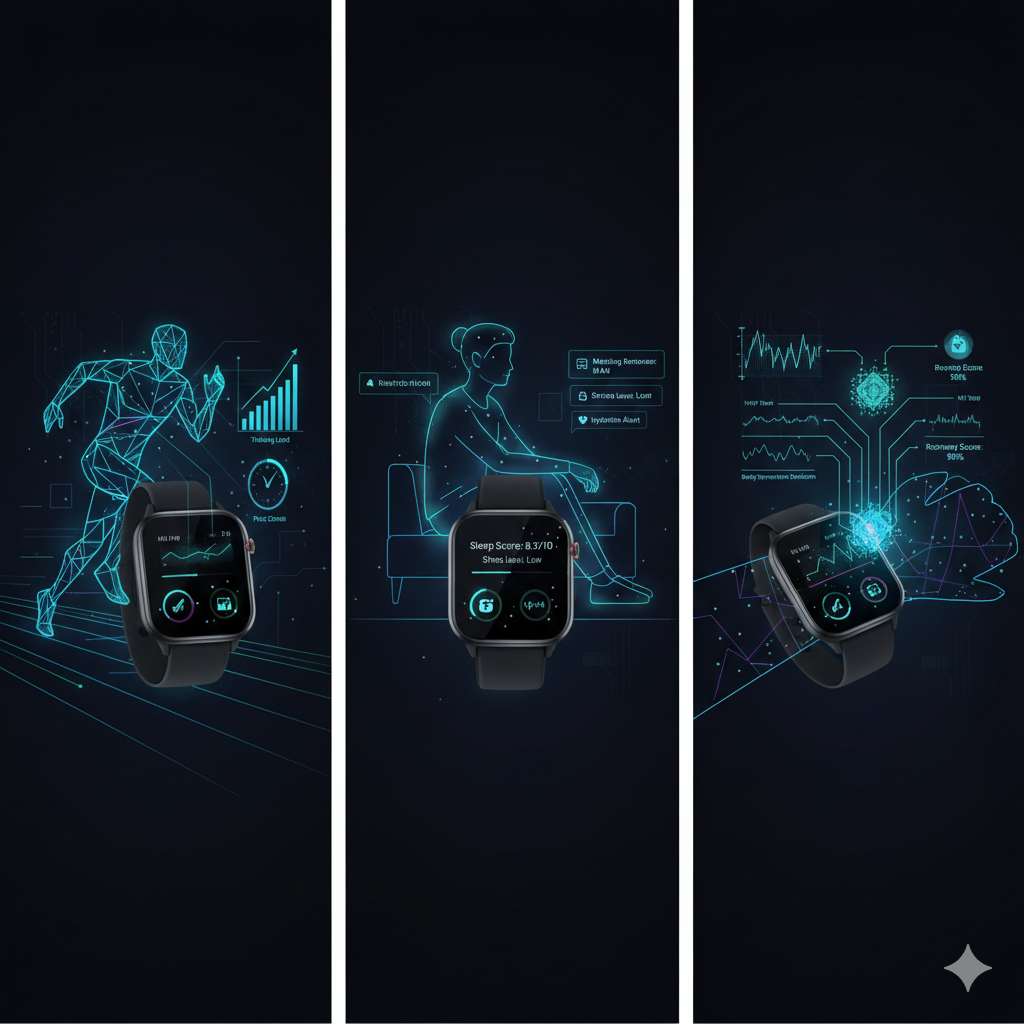
To really grasp the distinct approaches and specific focus of AI in various smartwatch segments, taking a comparative look can be super helpful. This table spotlights common archetypes of AI integration rather than specific models, generally reflecting broad industry trends you’d see across premium, sports-focused, and more accessible devices.
How Different Smartwatches Use AI
| Feature Category | Premium & General Purpose (e.g., Apple, Samsung) | Sports & Performance (e.g., Garmin, high-end Fitbit) | Accessible Wellness (e.g., entry-level Fitbits, some Huawei) | Niche Biometric (e.g., Oura, Whoop) |
|---|---|---|---|---|
| AI Focus | Holistic health, UX, lifestyle | Athletic performance, recovery, training load | Basic health trends, daily activity | Deep biometric analysis, passive monitoring |
| Key AI Applications | Advanced ECG/SpO2 interpretation, sleep stage analysis, smart notifications, fall detection, adaptive battery. | VO2 max estimation, training readiness, race predictors, recovery recommendations, advanced GPS tracking. | Step counting accuracy, basic sleep patterns, heart rate zone identification, guided breathing. | HRV trends, body temperature deviations, sleep quality scores, stress indexes, readiness scores. |
| Strengths | Deep ecosystem integration, refined UX, broad health insights, sophisticated sensor fusion. | Robust GPS, highly accurate activity tracking for diverse sports, detailed performance metrics. | User-friendly, affordable entry point, good for general motivation and basic health awareness. | Continuous, unobtrusive monitoring, extremely personalized insights for specific wellness goals. |
| Remaining Questions | High cost, proprietary data interpretations, long-term clinical validation for health claims, ecosystem lock-in. | Bulkier designs, less focus on ‘smart’ features beyond sport, complex metric overload for casual users. | Limited depth of analysis, potentially less accurate sensors, fewer advanced features, dependency on phone for deep insights. | Limited screen/interaction, high cost for single-focus device, data interpretation highly specific, potential for over-optimization. |
| Typical User Benefit | Proactive health management, seamless daily integration, advanced personal health insights. | Peak performance optimization, injury prevention, structured training guidance. | Improved daily activity, awareness of basic health parameters, motivation for movement. | Optimized recovery, stress management, deep self-understanding for specific health hacking. |
Why On-Device AI Matters in Smartwatches
Modern smartwatches increasingly rely on on-device AI to process health and fitness data directly on the watch instead of sending every request to cloud servers. This approach offers several advantages, including faster responses, improved privacy, and continued functionality even when internet access is unavailable.
On-device AI is particularly useful for features such as heart rate analysis, sleep tracking, activity recognition, and fall detection because these tasks require immediate processing. More demanding features, such as cloud-based assistants or advanced generative AI, may still rely on remote servers.
As wearable processors become more powerful, more smartwatch features are expected to move toward on-device AI, providing a better balance between performance, battery life, and user privacy.
Who This Is Actually For
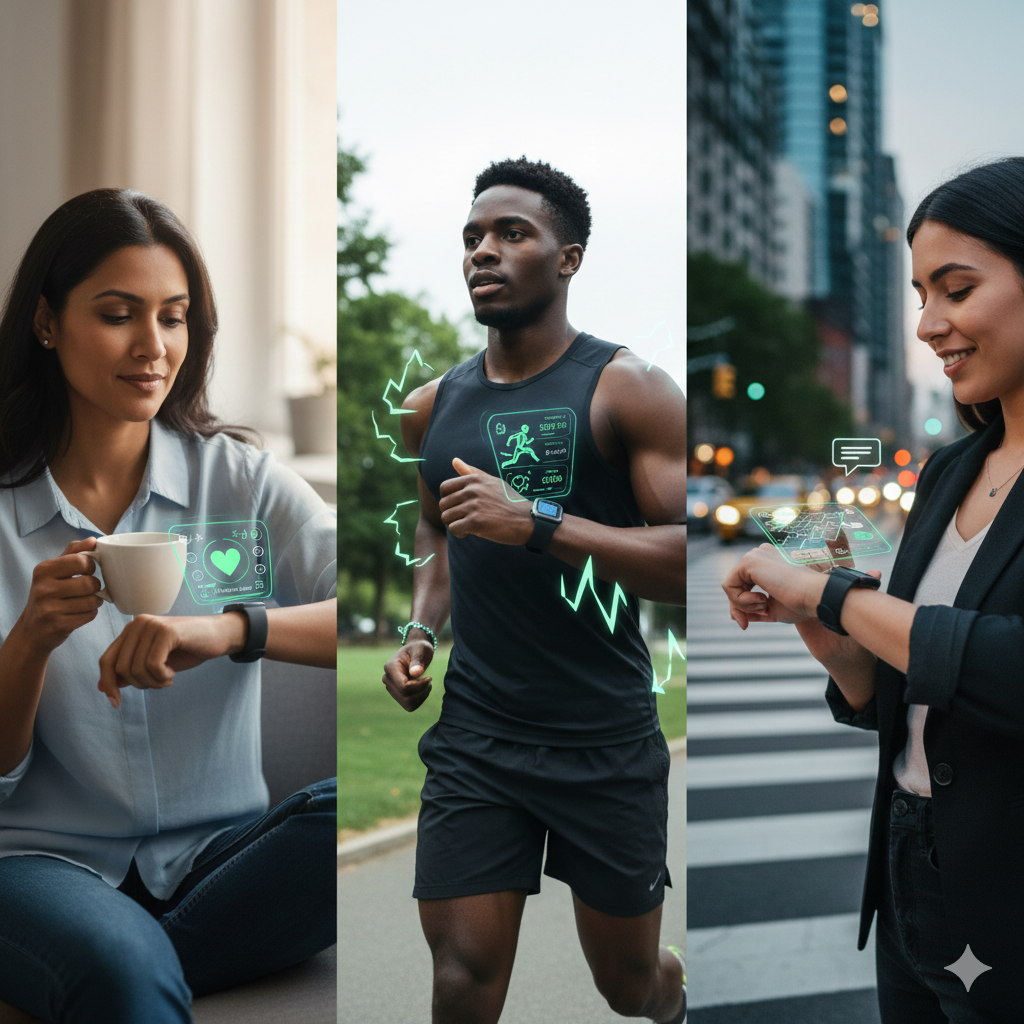
The wide range of AI features in modern smartwatches means these devices now serve very different types of users. They are no longer just fitness accessories — they are becoming intelligent companions that support health, performance, and daily life.
The Proactive Health Guardian
This reflects a broader shift toward AI wearables that work quietly in the background instead of demanding constant screen interaction.
This user is focused on preventive health and wants a holistic view of their well-being. They value AI-driven insights that highlight subtle changes in sleep patterns, stress levels, heart rate trends, and overall recovery. Rather than interpreting raw numbers themselves, they rely on the smartwatch to provide clear, personalized guidance that helps them stay aware of potential health shifts.
The Performance Maximizer
This group includes dedicated fitness enthusiasts and athletes who aim to optimize training and recovery. AI-powered activity recognition, performance metrics such as VO₂ max estimates, and recovery insights help them adjust workout intensity and avoid overtraining. For these users, detailed data on heart rate zones, sleep quality, and training load becomes actionable information for improving results.
The Seamless Integrator
This user values convenience and efficiency above all. They may not track every health metric in detail, but they appreciate a smartwatch that adapts to their routine. AI-driven notification filtering, smart assistants, and battery optimization make the device feel intuitive and unobtrusive. For them, the primary benefit is a watch that supports daily life quietly in the background.
The Bigger Shift Toward On-Device AI
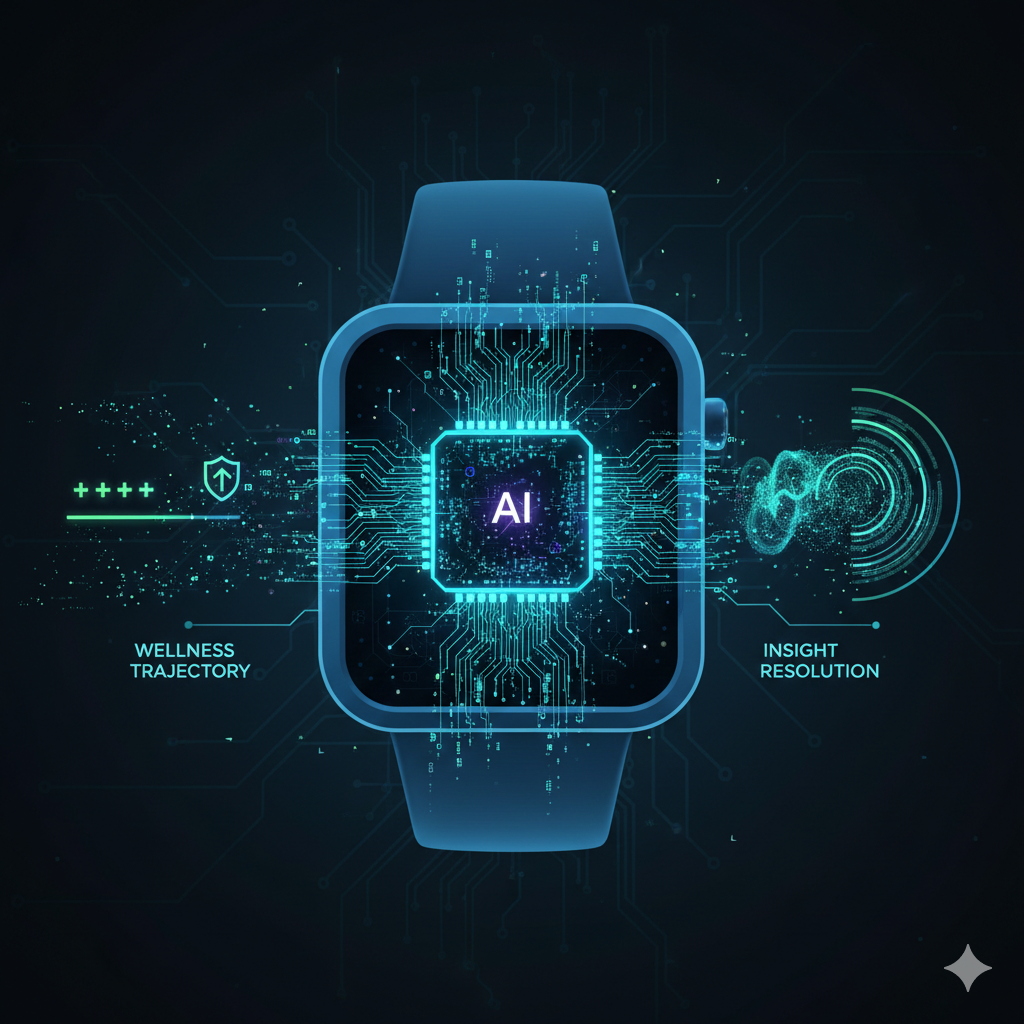
AI in smartwatches reflects a broader move toward edge computing — a concept explained when comparing on-device AI vs cloud AI. Advances in chip design now allow complex AI processing directly on the device, improving privacy, speed, and reliability. Modern smartwatches rely on dedicated AI hardware similar to mobile NPUs described by Qualcomm Snapdragon AI platforms.
Instead of sending all data to the cloud, smartwatches can analyze health patterns locally, delivering faster insights while keeping sensitive biometric information more secure.
Challenges and Considerations
As AI becomes more deeply integrated into smartwatches, important challenges remain. These devices collect sensitive health and behavioral data, making privacy and data security essential. Users must trust that their information is handled responsibly and stored securely.
Accuracy is another key factor. While AI can highlight useful patterns, smartwatch insights are not medical diagnoses. They are best viewed as early awareness tools that help users notice trends and decide when professional advice may be needed.
Building long-term trust will depend on transparency, reliable performance, and clear communication about what these systems can—and cannot—do.
The Edge of Innovation: On-Device AI and Future Capabilities
A major technical shift in smartwatches is the move toward edge AI—running advanced machine learning models directly on the device rather than relying entirely on cloud processing. This approach improves privacy, reduces latency for real-time insights, and ensures key features continue working even without a stable internet connection.
Advances in low-power AI chips and optimized algorithms are making this possible while balancing battery life and performance. As processing becomes more efficient, smartwatches will handle more health analysis locally, enabling faster responses and more personalized insights.
Looking ahead, continued improvements in on-device AI could support deeper health monitoring, smarter adaptive feedback, and better integration with other connected devices. Instead of simply tracking activity, future smartwatches will increasingly interpret data in real time, helping users make more informed decisions about their health and daily habits.
The Future of Smartwatches: How AI Is Making Them Smarter
AI has fundamentally changed what smartwatches can do. By analyzing health signals, learning routines, and adapting to user behavior, these devices have evolved from simple trackers into intelligent assistants.
From health monitoring and fitness guidance to safety alerts and smarter battery use, AI enables smartwatches to deliver insights that are more personal and actionable than ever before.
As wearable technology continues to advance, the future of smartwatches will depend less on adding new sensors and more on making the data they collect smarter, faster, and more useful in everyday life.
Frequently Asked Questions
What does AI actually do in a smartwatch?
AI analyzes data from sensors like heart rate monitors, motion trackers, temperature sensors, and blood oxygen sensors. Instead of just showing numbers, it interprets patterns to give insights about health, sleep, stress, and fitness
Does AI in smartwatches work without the internet?
Yes. Most modern smartwatches use on-device AI powered by NPUs or dedicated chips. This allows real-time health analysis, faster responses, and better privacy without constant cloud connection.
How accurate are AI health insights on smartwatches?
AI insights are helpful for spotting trends, but they are not medical diagnoses. They work best as early awareness tools and should not replace professional medical advice.
How does AI improve battery life in smartwatches?
AI learns your usage habits and adjusts background processes, sensor activity, and screen behavior. This helps extend battery life without disabling important features.
Can AI detect health problems early?
AI can notice unusual changes in patterns like heart rate, sleep, or stress levels. It may alert users to potential issues, but it cannot confirm medical conditions.
What is the difference between regular tracking and AI tracking?
Regular tracking just records data. AI tracking analyzes, learns patterns, and provides personalized insights, making the information easier to understand and act on.