
AI wearables are redefining personal technology by moving intelligent assistance beyond smartphones and into devices worn daily. Instead of demanding constant screen interaction, these wearables use on-device AI, context awareness, and ambient computing to provide timely help through audio, visual, or haptic feedback. From smart earbuds that summarize conversations to rings that deliver subtle reminders and glasses that overlay real-time information, the goal is to reduce digital overload while increasing productivity, wellness, and convenience. As hardware improves, AI wearables are becoming proactive companions designed to support daily life quietly and efficiently.
AI wearables are emerging as the next big shift in personal technology, moving intelligence beyond the smartphone and into devices we wear daily.
Smartphones promised convenience, but constant notifications, screen time, and digital overload have created a different problem: cognitive fatigue.
A new wave of AI-powered wearables aims to reduce that friction. Instead of requiring users to constantly check a screen, these devices work quietly in the background — listening, analyzing, and offering help only when needed.
From smart earbuds that summarize meetings to rings that give subtle reminders and glasses that overlay useful information in real time, AI is becoming proactive rather than reactive. The goal is simple: to make technology assist daily life without demanding attention.
Quick Facts About AI Wearables
• What they are: Wearable devices using on-device AI to assist daily tasks
• Main goal: Reduce screen time and digital overload
• Key technologies: Edge AI chips, contextual awareness, biometric sensors
• Common forms: AI earbuds, smart rings, smart glasses, wearable pins
• Core benefit: Proactive assistance without constant phone use
• Privacy trend: More processing happening locally on the device
Table of Contents
Why AI Wearables Are the Next Step Beyond Smartphones
Most AI today is reactive. We ask a voice assistant a question, issue a command, or open an app for help. The interaction always starts with the user.
AI wearables shift this model toward ambient computing — systems that operate in the background, understand context, and provide assistance without constant prompts. Instead of waiting for instructions, these devices learn routines, recognize situations, and offer support when it’s relevant.
This change addresses a growing problem: digital overload. Frequent notifications, app switching, and screen dependence create friction throughout the day. AI wearables aim to reduce that by moving simple tasks — reminders, information lookup, translation, or note capture — into devices that work quietly alongside daily life.
Rather than replacing smartphones, these wearables handle micro-interactions, allowing users to stay present while still benefiting from intelligent assistance.
Five AI Wearables Set to Simplify Your Daily Tasks
Okay, so let’s dive into some of the most compelling concepts that are currently on the horizon. We’re going to explore their massive promises, but also hit on some of the remaining questions that, frankly, still need some solid answers. Remember, this is all based on early reports, some informed speculation, and a healthy dose of tech blogger optimism, not hands-on reviews just yet. But it gives you a good idea of where things are heading.

1. Contextual Audio Assistant (AI Earbuds / Clip-on)
AI-powered earbuds and clip-on audio devices use advanced microphones, real-time audio processing, and on-device AI to understand conversations and surroundings — similar to how modern AI earbuds improve noise cancellation using intelligent sound analysis.
What it Promises
Meeting Summarization
These devices could transcribe and summarize conversations in real time, highlighting key decisions, action items, and speaker contributions. Instead of taking notes, users receive structured summaries after meetings, allowing them to focus on participation rather than documentation.
Intelligent Noise Management
Beyond traditional noise cancellation, AI can distinguish important sounds from background noise. Alerts like someone calling your name or alarms remain audible, while distractions such as chatter or clatter are reduced. This creates a controlled sound environment without removing situational awareness.
Proactive Reminders
By combining calendar data, location awareness, and conversation context, the device can deliver timely voice prompts — reminders about upcoming calls, errands, or commitments — without requiring users to check their phones.
Where Questions Remain:
Privacy and Data Handling
Always-on microphones raise concerns about continuous audio capture. Users will need clear information on what data stays on the device and what is sent to the cloud.
Transcription Accuracy
Real-time speech recognition can struggle in noisy environments or group conversations. Errors in summaries could misrepresent key decisions.
Battery Life
Continuous audio processing and AI analysis consume significant power. All-day battery performance remains uncertain.
User Experience Balance
Voice prompts and reminders must be subtle and well-timed. Poorly tuned alerts could become distracting instead of helpful.
2. The Proactive Reminder Ring/Band
Small, incredibly discreet, and just brimming with potential, smart rings and slim wristbands are poised to become so much more than just health trackers. With miniaturized sensors and increasingly capable localized AI engines, these tiny wearables could offer incredibly subtle, truly context-aware nudges throughout your day, fundamentally redefining how we receive information and, crucially, how we manage our overall well-being. I’m talking about a gentle tap on your finger rather than a screen buzz.
What it Promises:
- Task Nudging: Moving light-years beyond simple calendar alerts, these devices could use haptic feedback – those subtle, distinct vibrations – to gently, almost imperceptibly, remind you of upcoming appointments or pending tasks. Based on learned patterns of your day and your schedule, the AI would recognize the optimal, least intrusive moments for a reminder. So instead of a jarring, blaring alarm, you might feel a gentle pulse on your finger a few minutes before you need to leave for a meeting, or a series of rhythmic taps indicating it’s time to follow up on that important email. This integrates reminders so seamlessly into your natural rhythm, it barely registers as an interruption.
- Digital Well-being Guardian: These wearables could honestly go a significant step further than just tracking. By intelligently detecting prolonged screen time, extended sedentary behavior, or even early stress indicators through advanced biosensors, the AI could gently prompt you to take a much-needed break, stand up and stretch, or even guide you through a quick breathing exercise. They are designed as subtle, almost subconscious suggestions to foster healthier digital habits and promote physical activity, all without demanding you actually look at a screen. It’s a silent partner in your health journey.
- Contextual Alerts: Imagine this: integrating effortlessly with your smart home and other connected devices, a smart ring could provide critical alerts without you ever needing to frantically check your phone. Picture a discreet vibration and maybe a simple message (perhaps projected onto your hand or communicated via a paired audio device) saying, “Front door unlocked” or “Garage door open.” This moves truly essential notifications off your phone, providing a far less disruptive and much more integrated awareness of your immediate environment. It’s about feeling more in control, not just constantly checking.
Where Questions Remain:
Again, battery life is absolutely paramount for a device that’s meant to be worn continuously, 24/7, especially with always-on sensors and AI processing churning away. How robust and distinct will the haptic feedback truly be, and can it be customized effectively enough to avoid becoming annoying rather than helpful? That’s a fine line.
The privacy of your biometric and activity data is a huge concern here. What exactly are these devices gathering? Where is that highly personal data stored? And, critically, who, if anyone, has access to it? These are questions that demand transparency.
The effectiveness of these subtle nudges relies heavily, heavily, on the AI’s ability to accurately understand user context and individual preferences. Misfires here could easily lead to frustration rather than genuine helpfulness. And then there’s the broader question of social acceptance—how comfortable will users truly be wearing devices that are constantly, if subtly, monitoring their behavior, even if the stated goal is for their own good? It’s a bit of a societal tightrope walk.
3. The Hands-Free Vision Assistant (Smart Glasses/Visor)
Building on those early, somewhat clunky forays into smart glasses, the next generation is promising a truly hands-free visual interface. Think lightweight, stylish designs, discreetly integrated cameras, and subtle augmented reality (AR) overlays that are designed to enhance your perception of the world, rather than obscuring it with overwhelming information. This category, in my humble opinion, is all about offloading visual information from that smartphone screen directly into your natural line of sight. It’s the sci-fi dream finally getting real, folks.
What it Promises:
- Real-time Information Overlay: This is the stuff of classic sci-fi movies, finally becoming tangible. Imagine looking at a famous landmark and having its history, its architectural details, or perhaps tourist information subtly appear right there in your field of vision. Or glancing at a product in a store and instantly seeing its reviews, its nutritional facts, or even price comparisons. With your explicit consent, these glasses could even display little identification tags or memory aids for people you meet, offering a discreet prompt in social or professional settings. This provides context exactly when and where you need it, enriching your understanding of the world without ever breaking eye contact or fumbling for your phone. It’s like having Google search projected onto reality.
- Guided Task Completion: For those complex physical tasks that usually require you to constantly look back and forth at instructions, the AI vision assistant could be absolutely invaluable. Whether you’re wrestling with assembling IKEA furniture, trying to repair a finicky bicycle chain, or following a new, intricate recipe, the glasses could display step-by-step instructions directly over the objects you’re working with, highlighting specific parts or the right tools. This drastically reduces errors and frustration, making intricate tasks far more manageable and accessible to everyone, not just the experts.
- Visual Search & Recognition: Point your gaze, quite literally, at an object, a piece of foreign text, or an unfamiliar landmark, and the AI could instantly identify it, provide detailed information, or even offer real-time translation of foreign language text. Imagine strolling through a brand-new city, effortlessly translating street signs or restaurant menus, or identifying an unfamiliar plant in a botanical garden without breaking your stride. This capability effectively turns your natural vision into an incredibly powerful search engine, offering instant knowledge and understanding on demand. That’s pretty mind-blowing if you ask me.
Where Questions Remain:
Okay, but we have to talk about this: the integration of cameras into daily wear is going to be a major privacy flashpoint. Concerns about constant recording, potential surveillance, and the security of that visual data are paramount. How will these devices really ensure the privacy of bystanders? This isn’t just a technical challenge; it’s a societal one.
Then there’s the sheer discreetness and style of the glasses. That’s absolutely critical for broad user adoption and, crucially, social acceptance. Bulky, overtly “techy” designs have historically struggled, and I don’t think that’s going to change. Battery life for continuous AR processing and those hungry camera feeds is, let’s be honest, a significant engineering challenge. We’re talking about a lot of power in a small package.
Furthermore, the accuracy of AR overlays and visual recognition, especially in diverse lighting conditions and dynamic environments, needs to be incredibly high to be genuinely useful and not just a distracting nuisance. AI “hallucinations” or misinterpretations, particularly in critical information overlays, could lead to some pretty serious errors or, at the very least, a lot of user frustration.
4. The Real-time Language & Transcription Pin
Small, wonderfully unobtrusive, and potentially incredibly powerful, this wearable takes the form of a discreet pin or a small badge, designed to be worn effortlessly on your clothing. Its primary focus? Advanced audio capture combined with dedicated, specialized language AI. It aims to tear down communication barriers and, frankly, revolutionize how spoken information is captured and documented. This one feels like a truly universal tool.
What it Promises:
- Instant Translation: Okay, this could be a genuine breakthrough for global communication, no exaggeration. These little pins could offer real-time, bidirectional voice translation during live conversations. You speak in your native language, the pin instantly translates it for your interlocutor, and then vice versa. This could enable truly seamless, natural conversations with people speaking entirely different languages, fostering much deeper connections and massively facilitating international travel, business negotiations, or even just making new friends abroad. This moves light-years beyond those often clunky smartphone translation apps towards a far more fluid, more natural human interaction.
- Lecture/Interview Transcription: For students, for journalists, for anyone who regularly attends lectures, workshops, or interviews, this pin is a godsend. It promises live, incredibly highly accurate transcription of spoken content. This utterly simplifies note-taking, capturing almost every word, allowing you to focus so much more fully on the speaker and the content, rather than frantically scrambling to write everything down. The AI could even intelligently tag or summarize key points as the conversation unfolds, making post-event review and synthesis much, much more efficient.
- Voice Memo Integration: Beyond just formal transcription, the pin could double as an incredibly intelligent voice recorder. Imagine seamlessly recording spontaneous thoughts, sudden ideas, or quick observations, with the AI automatically organizing, tagging, and summarizing these voice notes for you. You could then quickly search for specific concepts or keywords later, transforming those fleeting, spontaneous thoughts into genuinely actionable insights. It’s like having a super-powered thought catcher.
Where Questions Remain:
You guessed it: privacy concerning audio recording is, once again, a primary concern. Gaining clear, explicit consent for recording conversations, especially in sensitive or private contexts, is absolutely crucial. We can’t just assume everyone is okay with being recorded.
The accuracy and, just as importantly, the latency of real-time translation are still significant technical challenges. Even a slight delay or a subtle misinterpretation could dramatically impact the flow and understanding of a conversation, making it more awkward than helpful. How will the device truly handle multiple speakers, or deal with significant background noise? These are tough problems.
Battery life for continuous, high-fidelity audio capture and that demanding AI processing is, yet again, a concern. And then there’s the social acceptance factor. Wearing an always-on recording device, even a small, discrete one, might be quite difficult in certain social or professional settings. Will it genuinely feel natural and comfortable to converse with someone who’s openly wearing a device that’s transcribing everything you say? I think we’ll have to see how that plays out culturally.
5. The Adaptive Wellness Monitor (Advanced Smart Patch/Wearable)
Moving far beyond traditional fitness trackers that merely count your steps or monitor your heart rate, this category envisions a truly non-intrusive adhesive patch or a highly specialized wearable packed with a suite of advanced biosensors and cutting-edge AI. Its core purpose? To provide a holistic, proactive approach to your personal health and well-being, shifting the paradigm from purely reactive tracking to genuinely predictive guidance. This is about preventing problems before they even start. This approach is similar to how AI enhances health tracking in smartwatches by turning raw sensor data into personalized insights.
What it Promises:
- Stress & Mood Prediction: Utilizing a wider, more sophisticated array of biosensors than anything currently on the market, alongside sophisticated AI models, these devices could actually predict stress levels or subtle mood shifts before they even become overwhelming. By analyzing things like heart rate variability, skin conductance, sleep patterns, and other critical physiological markers, the AI could offer proactive coping strategies, such as gentle guided breathing exercises or timely suggestions for a short break. This truly shifts wellness from intervention to prevention, empowering users to manage their mental state far more effectively and with greater foresight.
- Personalized Recovery Guidance: Based on a truly comprehensive understanding of your activity levels, your sleep quality, and your real-time physiological data, the AI could provide tailored, ultra-personalized recommendations for rest, nutrition, or even exercise adjustments. So instead of generic, one-size-fits-all advice, you might receive guidance like, “Your HRV indicates you need more rest today; consider a lighter workout,” or “Your recent sleep quality suggests increasing magnesium intake.” This aims to optimize recovery and performance with highly individualized, data-driven insights.
- Sleep Optimization: Going way beyond simply tracking how long you sleep, these devices could deeply learn your unique sleep patterns and precisely identify environmental factors that are negatively impacting your rest. The AI could then seamlessly integrate with your smart home devices to subtly optimize conditions – perhaps adjusting the thermostat a few degrees, gently dimming lights at a specific time, or playing calming ambient sounds at precise moments to encourage deeper, more restorative sleep. The ultimate goal is to create a truly personalized, perfectly tuned sleep environment that significantly improves your overall rest quality. That’s a massive win for quality of life.
Where Questions Remain:
First off, the sensitivity and, crucially, the accuracy of these advanced biosensors are absolutely critical. Can they reliably measure those subtle physiological changes required to predict complex states like stress or mood? The interpretation of this incredibly sensitive data by AI needs to be highly accurate to avoid false positives or negatives, which could cause undue anxiety or provide unhelpful, even harmful, advice. We need ironclad reliability.
Data privacy and security are, as you can imagine, paramount, given the highly sensitive nature of health information. Who truly owns this data? How is it protected from breaches or misuse? These are questions that must be answered with absolute clarity.
User adherence to recommendations is also a significant factor. Even the most perfect, scientifically sound AI advice is utterly useless if it’s not followed. Finally, the comfort and wearability of a continuous adhesive patch or a specialized device need to be absolutely excellent for long-term, consistent adoption. Nobody wants to wear something irritating for days on end.
The Efficiency Choice: INT8 vs. FP16 in Wearables
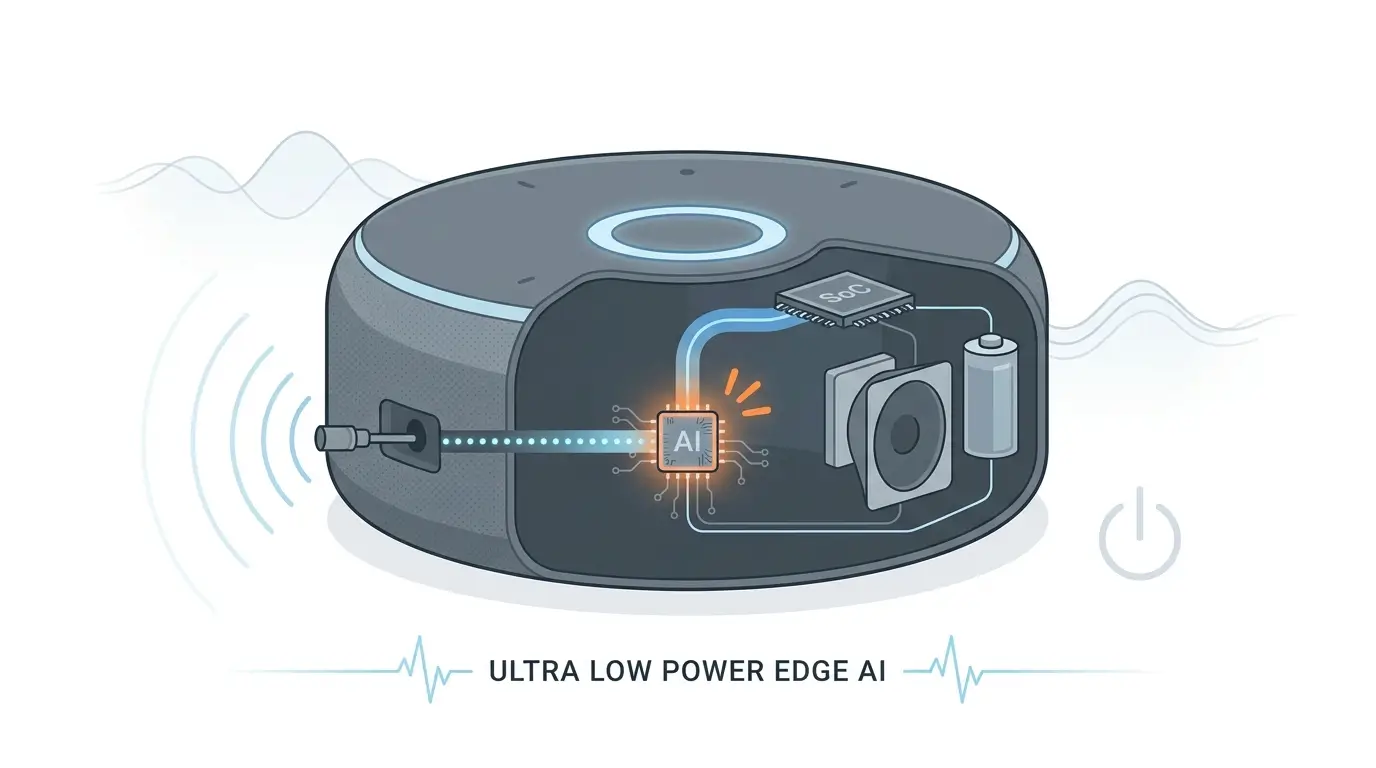
When designing or evaluating AI-powered wearables, one of the most critical architectural decisions is the precision of the neural network. For always-on sensor fusion, the industry has reached a technical consensus: INT8 is the practical efficiency sweet spot.
- INT8 (The Low-Power Standard): Major NPU architectures—including the Qualcomm Hexagon HTP, Arm Ethos-U series, and Google Coral NPU—are explicitly optimized for INT8/INT16 integer inference. By using INT8, devices significantly reduce memory bandwidth, data movement, and arithmetic costs—the three primary drivers of battery drain in wearables.
- FP16 (The Precision Fallback): While platforms like the Qualcomm HTP support FP16, it is generally treated as a supported precision for tasks requiring higher numerical headroom, rather than the low-power default for sensor fusion.
- The Verdict: For always-on tasks like IMU-based activity tracking, gesture recognition, or environmental sound analysis, engineers must prioritize models optimized for INT8 quantization to maximize battery longevity.
NPU Architecture: Provider Comparison
| Provider | Wearable Focus | Key Precisions | Efficiency Signal |
|---|---|---|---|
| Qualcomm Hexagon | High | INT4, INT8, INT16, FP16 | Low power; quantized modes preferred |
| Arm Ethos-U | High | INT8, INT16 | Integer-first for energy efficiency |
| Google Coral | Very High | INT8, INT16 | Ultra-low-power, sensor fusion optimized |
Source: Qualcomm, Arm, and Google documentation.
Comparison: A Snapshot of Emerging AI Wearables
To clarify the distinct roles these different form factors might play, here’s a quick comparison of their primary focus and interaction modes. Hopefully, this helps make sense of the different approaches:
| Wearable Category | Primary Form Factor | Core AI Focus | Primary Interaction | Key Benefit Proposed | Remaining Question |
|---|---|---|---|---|---|
| Contextual Audio Assistant | Earbuds/Clip-on | Audio Processing/Context | Voice/Audio Feedback | Effortless Information Capture | Privacy of constant audio |
| Proactive Reminder Ring/Band | Ring/Slim Wristband | Pattern Learning/Biometrics | Haptic/Subtle Alerts | Ambient Task & Well-being Nudges | Battery life for continuous use |
| Hands-Free Vision Assistant | Smart Glasses/Visor | Visual Processing/AR | Gaze/Visual Overlay | Contextual Visual Information | Bystander privacy (camera) |
| Real-time Language & Transcription Pin | Pin/Badge | Language/Voice Processing | Voice/Translation | Seamless Cross-Lingual Communication | Translation accuracy/latency |
| Adaptive Wellness Monitor | Adhesive Patch/Specialized Wearable | Biosensor Data/Prediction | Silent/Personalized Guidance | Proactive Health Optimization | Sensitivity of biosensor data |
Who This Is Actually For: Personas for Proactive AI

Let’s be honest, these emerging AI wearables aren’t designed for absolutely everyone, and they’re certainly not one-size-fits-all solutions. They’re specifically targeting certain pain points and lifestyles. So, who’s going to benefit the most from these cutting-edge gadgets? Here are a few personas I expect to really embrace them:
- The Overwhelmed Professional (Sarah, 30s, Project Manager): Sarah is juggling multiple projects, back-to-back meetings, and an inbox that, let’s just say, never sleeps. She’s constantly trying to remember those critical details from calls, follow up on tasks, and desperately avoid missing crucial deadlines. For Sarah, the Contextual Audio Assistant for instant meeting summaries and the Proactive Reminder Ring for gentle task nudging would be absolutely invaluable. It would essentially free her cognitive load from manual note-taking and the constant, nagging need to check her calendar. Imagine how much more present and effective she could be!
- The Curious Explorer (David, 20s, Digital Nomad): David absolutely loves traveling, immersing himself in new cultures, and learning on the go. He constantly finds himself pulling out his phone to translate signs, ask for directions in a foreign language, or look up information about that cool building he just saw. For David, the Hands-Free Vision Assistant for real-time information overlays and visual search, combined with the Real-time Language & Transcription Pin for effortless cross-cultural communication, would utterly transform his travel experiences. It’s like having a knowledgeable local guide and translator always by his side, without ever having to look down at a screen.
- The Health-Conscious but Busy Parent (Maria, 40s, Entrepreneur): Maria is fiercely dedicated to her family and running her business, but often, let’s face it, her own well-being ends up taking a back seat. She struggles to maintain healthy habits amidst a hectic, unpredictable schedule and often feels the effects of stress and poor sleep. The Adaptive Wellness Monitor would provide her with the personalized, proactive guidance she truly needs to optimize her health, all without adding yet another layer of demanding screen time to her already packed day. It’s about fitting wellness seamlessly into her life, not adding another chore.
- The Lifelong Learner (Ben, 50s, Retired Professor): Ben attends numerous lectures, loves going to workshops, and genuinely enjoys delving deep into complex topics. He appreciates capturing every single detail but finds traditional note-taking increasingly cumbersome and distracting. The Real-time Language & Transcription Pin would allow him to effortlessly capture and summarize spoken content, enhancing his entire learning experience without any distraction. He could just listen, engage, and know all the important points are being taken care of.
The Bigger Trend in AI and Gadgets: Towards Seamless Ambient Intelligence

The rise of AI wearables represents more than a wave of new gadgets. It signals a broader shift in how people interact with technology. Instead of relying on general-purpose assistants that wait for commands, devices are moving toward specialized, context-aware AI embedded directly into everyday hardware.
Several forces are driving this change.
- Maturing AI Models
Advances in AI now allow devices to process audio, visual, and biometric data more efficiently, often using on-device or edge AI — a shift we explored in detail when comparing on-device AI vs cloud AI. - . This reduces latency, improves responsiveness, and strengthens privacy by limiting cloud dependence.
- Demand for Lower Digital Friction
Users increasingly want technology that works in the background rather than demanding constant attention. The goal is to reduce “app fatigue” and minimize the need to repeatedly open screens for routine tasks. - Shift from Reactive to Proactive Computing
AI systems are evolving from responding to commands to anticipating needs. By learning routines and preferences, devices can offer timely prompts, automate small tasks, and support decision-making without explicit input.
This trend does not eliminate smartphones. Instead, it redistributes responsibilities. Wearables and ambient devices handle quick, context-driven interactions, while phones remain central for complex tasks.
Major technology companies and emerging startups alike are investing in this direction, aiming to create ecosystems where AI operates seamlessly across devices. The long-term vision is a unified digital environment where assistance feels natural, continuous, and largely invisible.
The Road Ahead: What to Expect from AI Wearables in 2026 and Beyond

AI wearables promise a future where technology works quietly in the background, supporting daily life without constant screen interaction. However, several challenges must be addressed before this vision becomes mainstream.
Key Challenges
- Battery Life
Always-on sensors and AI processing demand efficient power use. Advances in low-power chips and battery technology will be essential. - Privacy and Data Security
Wearables process sensitive audio, visual, and biometric data. Strong on-device processing and transparent data policies will be critical for user trust. - Social Acceptance
Devices that continuously analyze surroundings may raise concerns about surveillance and consent. Design and usage norms will shape adoption. - Accuracy and Reliability
AI systems must perform consistently in real-world conditions. Errors or misinterpretations in wearable AI could have more serious consequences than simple app glitches.
What This Means
As hardware improves and AI models become more efficient, wearable devices are likely to shift from experimental gadgets to practical daily tools. The long-term success of AI wearables will depend not just on innovation but on how responsibly companies handle privacy, reliability, and user experience.
The future of personal technology may not revolve around bigger screens, but smarter devices that work quietly alongside us.