
Table of Contents
What Is AI Noise Cancellation in Earbuds?
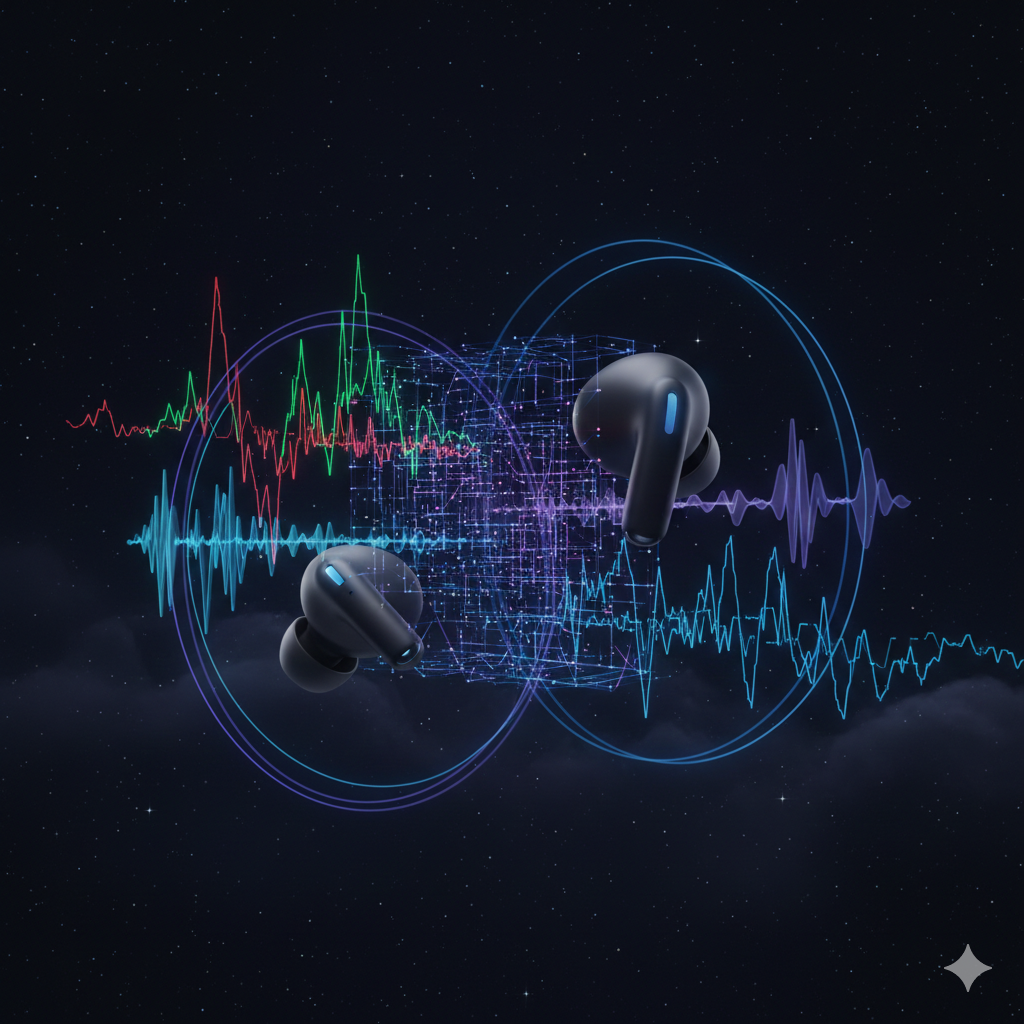
AI noise cancellation in earbuds combines traditional active noise cancellation (ANC) with machine learning to reduce unwanted sounds and adapt to changing environments in real time. Instead of using fixed filters, AI models analyze background noise like traffic, wind, or voices and automatically adjust anti-noise signals, transparency levels, and voice enhancement. This makes modern earbuds smarter at blocking noise, improving call clarity, and creating a more natural listening experience.
Quick Facts About AI Noise Cancellation in Earbuds
- Technology type: AI-enhanced Active Noise Cancellation (ANC)
- Where AI runs: On-device chips inside the earbuds
- Main function: Adaptive noise reduction and voice clarity
- Core methods: Neural networks, DSP, destructive interference
- Typical latency: Under 10 milliseconds
- Power impact: 15–25% more battery than basic ANC
- Best for: Commuting, calls, travel, changing environments
AI noise cancellation in earbuds is changing how we experience sound in noisy environments. From busy streets to crowded cafés, modern earbuds now use artificial intelligence along with traditional active noise cancellation (ANC) to reduce unwanted noise and adapt to your surroundings in real time.
Early ANC already felt revolutionary. It smoothed out airplane engine drone, reduced traffic rumble, and made travel more comfortable. But now we keep hearing a new term: “AI-powered noise cancellation.”
So what does that actually mean? Is this just marketing, or is there real science behind it?
To understand how AI improves earbuds, we first need to understand how traditional ANC works.
How Traditional Active Noise Cancellation Works
Unlike traditional systems, AI noise cancellation in earbuds adapts in real time to different sound environments. At its core, ANC relies on a physics principle called destructive interference.
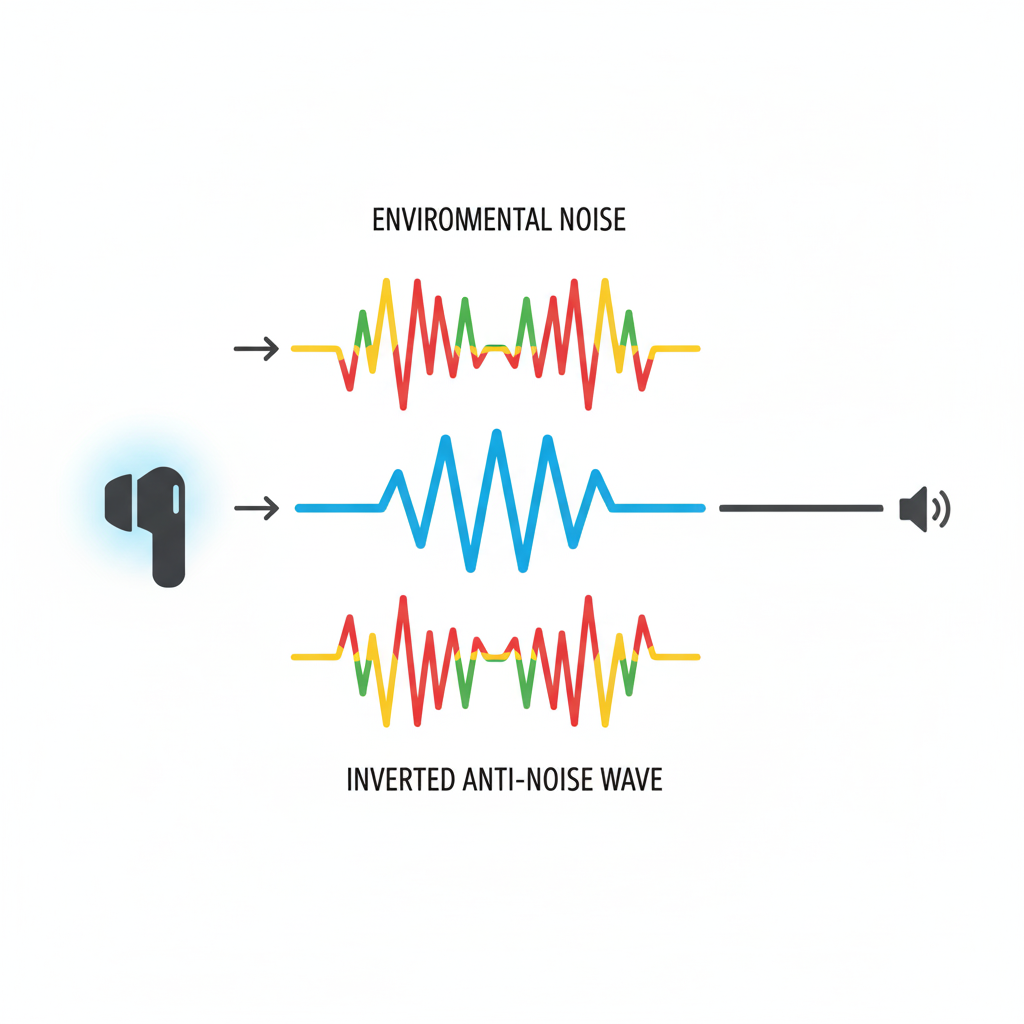
Sound travels as waves made of peaks and troughs. If you generate a second sound wave that is the exact opposite (anti-phase) of unwanted noise, the two waves cancel each other out. The result is reduced sound energy — what we experience as silence.
Inside your earbuds, this happens in milliseconds:
- Microphones pick up outside noise.
- A processor analyzes the sound.
- The system creates an inverted sound wave.
- That anti-noise plays through the speaker.
- Both waves cancel each other before reaching your ear.
This method works especially well for steady, low-frequency sounds like engines, AC hum, or train noise. High-frequency or unpredictable sounds are harder to cancel because they change too quickly.This is where AI noise cancellation in earbuds becomes different from traditional ANC systems.
Feedforward, Feedback, and Hybrid ANC
ANC performance depends heavily on microphone placement.
Feedforward ANC uses microphones outside the earbud. It predicts noise before it reaches your ear. It handles mid-to-high frequencies well but may struggle with sudden or sharp sounds.
Feedback ANC places microphones inside the ear canal. It measures noise that actually reaches your ear and corrects it. This improves low-frequency control but depends on a tight ear seal.
Hybrid ANC combines both systems. External mics predict noise, internal mics verify results. This delivers the widest frequency coverage and better real-world performance.
Traditional ANC is powerful, but it uses fixed algorithms. It treats environments in a general way. The real world, however, is dynamic — and that’s where AI enters.
Where AI Comes In
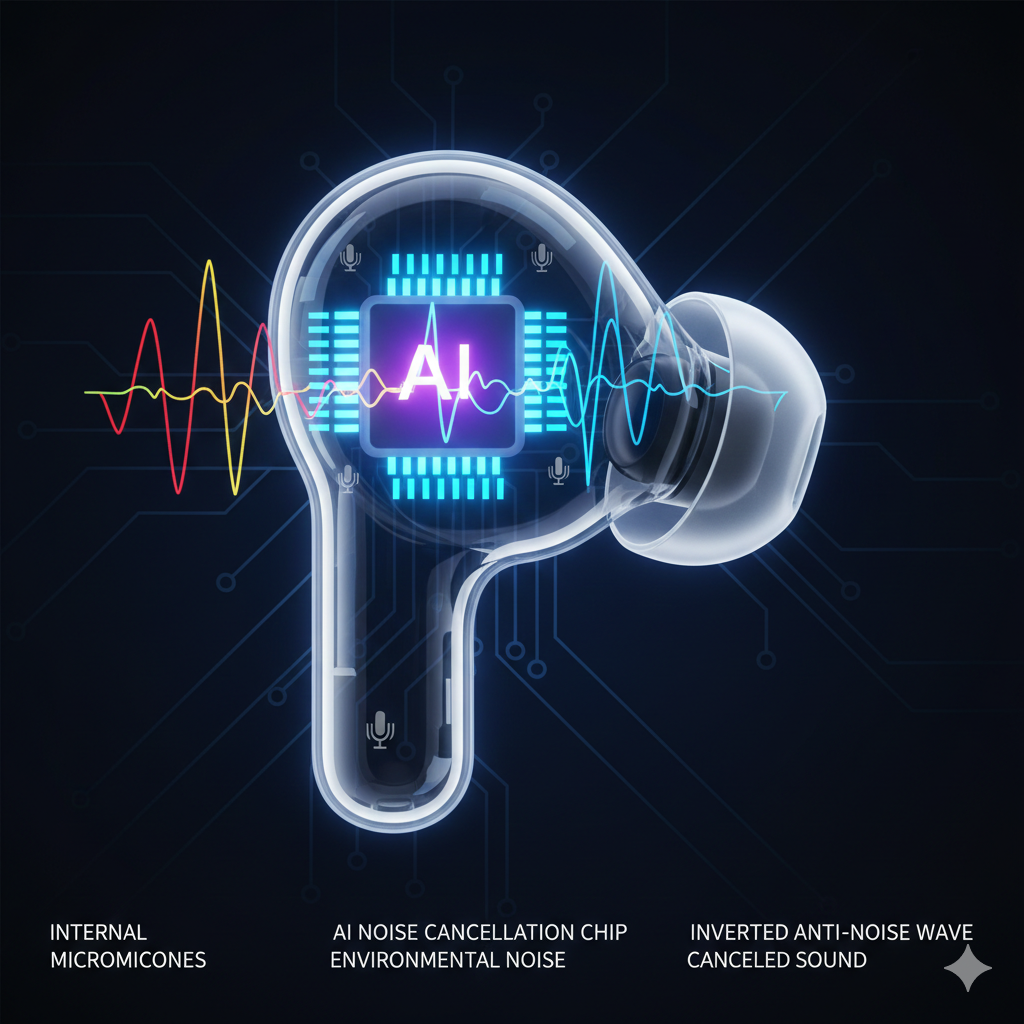
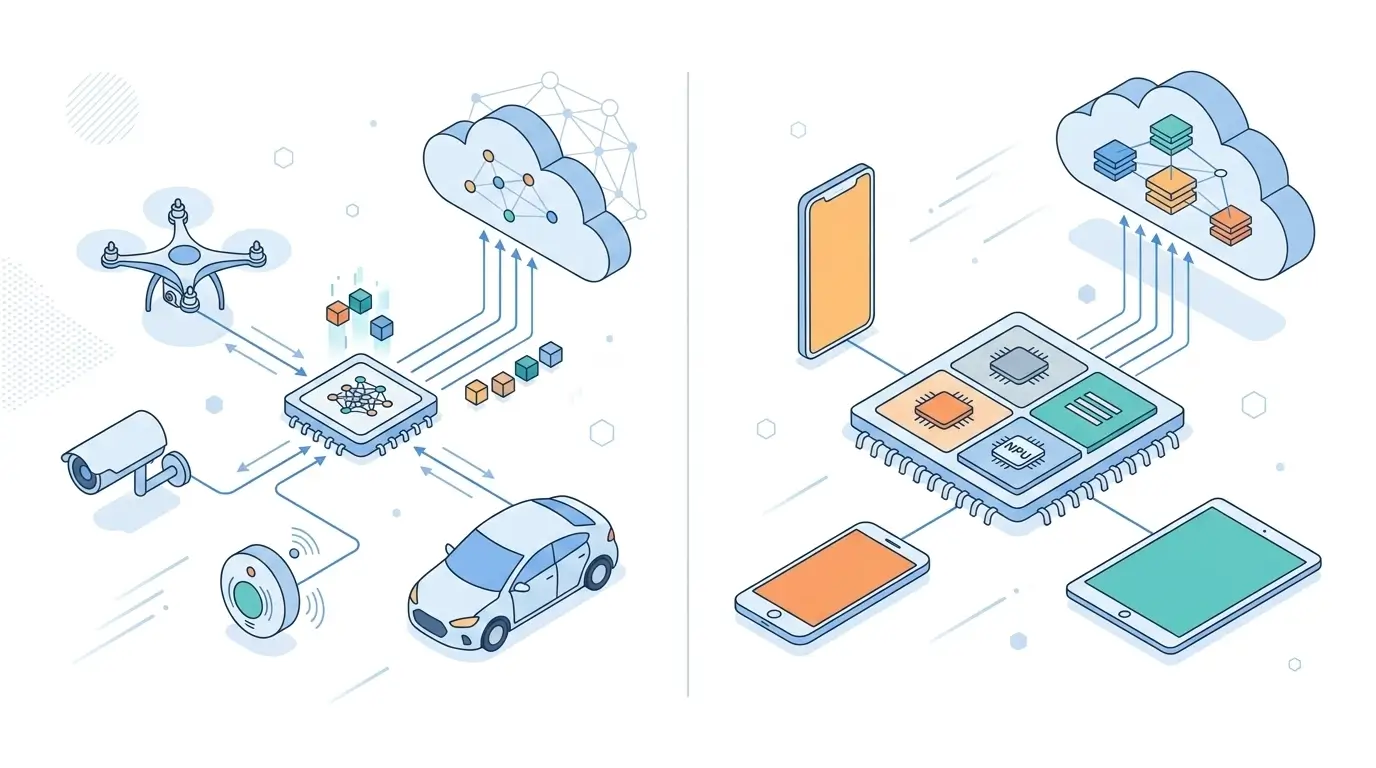
When brands say “AI noise cancellation,” they usually mean machine learning models are being used alongside traditional signal processing. This is where AI noise cancellation in earbuds becomes smarter than standard active noise cancellation. Modern AI noise cancellation in earbuds often runs directly on tiny chips inside the device, a concept known as on-device AI, which is becoming common across smart gadgets. If you want to understand how local processing differs from cloud AI, check out our guide on how on-device AI compares to cloud AI in modern gadgets.
There are two layers here:
1. Advanced Digital Signal Processing (DSP)
Modern DSP is already very smart. It filters frequencies, enhances voices, and removes distortion. Many improvements over the years came from better DSP, not true AI.
2. Machine Learning (ML)
This is the real AI layer. Models are trained on massive sound datasets: traffic, wind, voices, cafés, aircraft cabins, construction noise, and more. The system learns patterns in these sounds.
Instead of applying one fixed noise profile, AI systems classify the environment and adjust cancellation in real time.
Adaptive Noise Cancellation in Action

AI makes ANC context-aware.
As you move from a quiet room to a busy street to a subway train, the system can:
- Identify noise type (engine rumble vs. voices)
- Change cancellation strength
- Avoid over-cancelling speech if transparency is active
- Adapt when wind or sudden bursts occur
This creates smoother transitions and more natural performance than traditional ANC alone.
AI Processing Pipeline Inside Earbuds
Here’s how this works technically:
- Microphones capture audio at 44.1–48 kHz
- Signals are split into small frames (20–50 ms)
- FFT converts sound into frequency data (mel spectrograms)
- Features are fed into neural networks
Common models include:
- CNNs (Convolutional Neural Networks) → detect noise patterns
- RNNs / LSTMs → track changes over time
- CRNs (CNN + RNN) → strong for speech and background separation
- Transformers → use attention mechanisms (emerging in audio)
The model predicts optimal anti-noise parameters. Processing must stay under 5–10 ms latency, or cancellation fails.
Chips like Qualcomm S7 Pro, Apple H2, Sony V1, and BES AI co-processors run quantized INT8 models at low power (1–5 mW). AI increases battery drain by about 15–25% compared to non-AI ANC.
AI and Transparency Mode
AI also improves how earbuds let sound in, not just block it.
Traditional transparency just amplifies outside sound. AI enables selective transparency:
- Speech isolation for conversations
- Passing through important alerts (sirens, announcements)
- Reducing background clutter while staying aware
This makes transparency feel natural instead of harsh or overwhelming.
Real-World Benefits of AI ANC
AI-driven ANC provides:
- Smoother adaptation across environments
- Better voice call clarity
- Improved wind noise control
- Reduced “ear pressure” feeling
- More natural transparency
- Personalized listening profiles
It’s not about “more cancellation” — it’s about smarter cancellation.
Trade-Offs and Limitations
AI doesn’t break physics.
- High-frequency sounds (>2 kHz) remain difficult
- Sudden transients can’t always be predicted
- More processing = more battery use
- Tiny earbuds limit model size (1–10M parameters)
- Marketing sometimes exaggerates “AI” claims
True AI systems focus on adaptation, not miracle silence.
Who Benefits Most

For commuters and remote workers, AI noise cancellation in earbuds provides a major advantage in maintaining focus. AI ANC helps:
- Urban commuters
- Remote workers
- Travelers
- Fitness users outdoors
- Podcast/music listeners
- Professionals on calls
Anyone in changing environments benefits from adaptive sound control.
The Bigger Industry Trend
AI in earbuds reflects larger shifts:
- AI moving to edge devices
- Computational audio replacing static tuning
- Personalized tech experiences
- Context-aware interfaces
Earbuds are becoming intelligent audio systems, not just speakers. AI-powered earbuds are just one part of a much larger shift happening in consumer technology. The same kind of adaptive intelligence is now being built into health trackers, smart rings, and watches, where AI helps analyze biometric data, improve battery efficiency, and personalize user experiences. We’ve explored this trend in detail in our guide on how AI improves modern smartwatches, showing how wearables are becoming smarter beyond just audio.
The Future of AI Earbuds
The future of AI noise cancellation in earbuds will include deeper personalization and environment awareness. Expect:
- Personalized hearing profiles
- Scene-aware automatic mode switching
- Real-time translation
- Health and biometric sensing
- Directional “audio bubbles”
AI will move earbuds beyond noise control into ambient intelligence.
Final Thoughts
AI in earbuds isn’t hype — it’s an evolution. Traditional ANC cancels noise using physics. AI adds awareness, classification, and adaptation. AI earbuds are also part of a broader shift where intelligence is moving beyond phones into wearables, similar to the practical AI devices we covered in our article on AI wearables transforming daily routines.
The result isn’t perfect silence. It’s something more practical:
smarter sound management that adjusts to real life.
As chips get more efficient and models improve, earbuds will become increasingly context-aware companions — shaping your sound environment without you needing to think about it. As hardware improves, AI noise cancellation in earbuds will become more personalized, efficient, and intelligent.
Frequently Asked Questions
What is AI noise cancellation in earbuds?
AI noise cancellation in earbuds uses machine learning models along with traditional active noise cancellation (ANC) to recognize different sound environments and adjust noise reduction in real time.
How is AI noise cancellation different from regular ANC?
Regular ANC uses fixed algorithms to cancel sound waves, mainly low-frequency noise. AI-powered ANC analyzes the type of noise (traffic, voices, wind, etc.) and dynamically changes cancellation strength and processing.
Does AI noise cancellation work without the internet?
Yes. Most AI noise cancellation in earbuds runs on-device using specialized chips. This allows real-time processing with low latency and without needing cloud connectivity.
Why can’t earbuds cancel all noise completely?
Physics limits noise cancellation. High-frequency and sudden sounds are harder to predict and cancel. AI improves performance, but total silence isn’t possible.
Does AI noise cancellation drain battery faster?
Yes, slightly. AI processing increases power use by about 15–25% compared to traditional ANC, but modern chips are designed for efficient low-power AI tasks.
What devices benefit most from AI ANC?
AI noise cancellation is most helpful for commuters, travelers, remote workers, and people in changing environments where background noise constantly shifts.
What is adaptive noise cancellation?
Adaptive noise cancellation means the earbuds automatically change how strongly they block sound depending on your surroundings, using AI scene and noise classification.

3 thoughts on “AI in Earbuds Explained: Decoding the Science Behind Noise Cancellation”